
Adaptation
Credit: US National Parks Service · Public domain
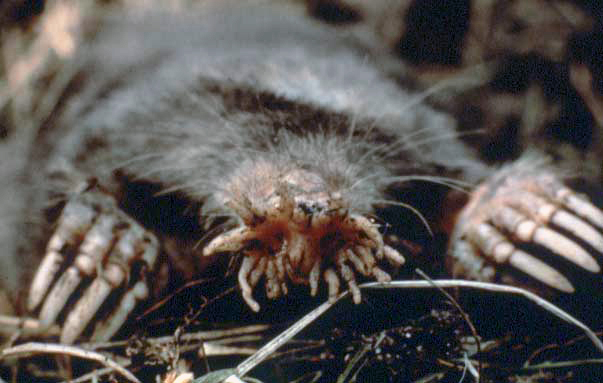
Adaptation is a feature of a living thing that helps it survive in its environment. Adaptations can be body parts, like a giraffe's long neck. They can be behaviors, like a bear sleeping through winter. They can even be chemicals inside the body, like the venom in a snake's bite. Every animal, plant, and microbe alive today has adaptations that fit the place where it lives.
Adaptations do not appear on purpose. They build up slowly over many generations through a process called natural selection. In any group of animals, some are born a little different from the others. If a difference helps an animal survive and have babies, those babies may inherit it. Over thousands or millions of years, the helpful trait spreads through the whole species. Traits that do not help tend to disappear.
Polar bears are a clear example. They live in one of the coldest places on Earth. Their bodies are built for it. They have two layers of fur, a thick layer of fat under the skin, and small ears that lose less heat than big ones. Even their black skin is an adaptation, because black soaks up more warmth from the sun. A polar bear dropped into a jungle would overheat in hours.
Plants have adaptations too. A cactus stores water inside its thick stem so it can survive in the desert. Its sharp spines are really leaves, shaped that way to keep animals from eating it and to lose less water to the hot air. A water lily is the opposite. Its broad, flat leaves float on the surface of a pond to catch as much sunlight as possible.
Some adaptations are behaviors rather than body parts. Monarch butterflies fly up to 3,000 miles south every fall, a distance greater than the width of the United States. Geese fly in a V shape so each bird can ride on the air pushed up by the wings of the bird in front. Meerkats take turns standing guard while the rest of the group hunts for food.
Adaptations only work for the environment an animal lives in. If the environment changes too fast, a species can be left with traits that no longer help. This is one reason climate change worries biologists. Coral reefs, for example, are built by tiny animals adapted to a narrow range of ocean temperatures. When the water gets too warm, the coral dies, even though nothing about the coral itself has changed.
Related
Last updated 2026-04-23