
Natural Selection
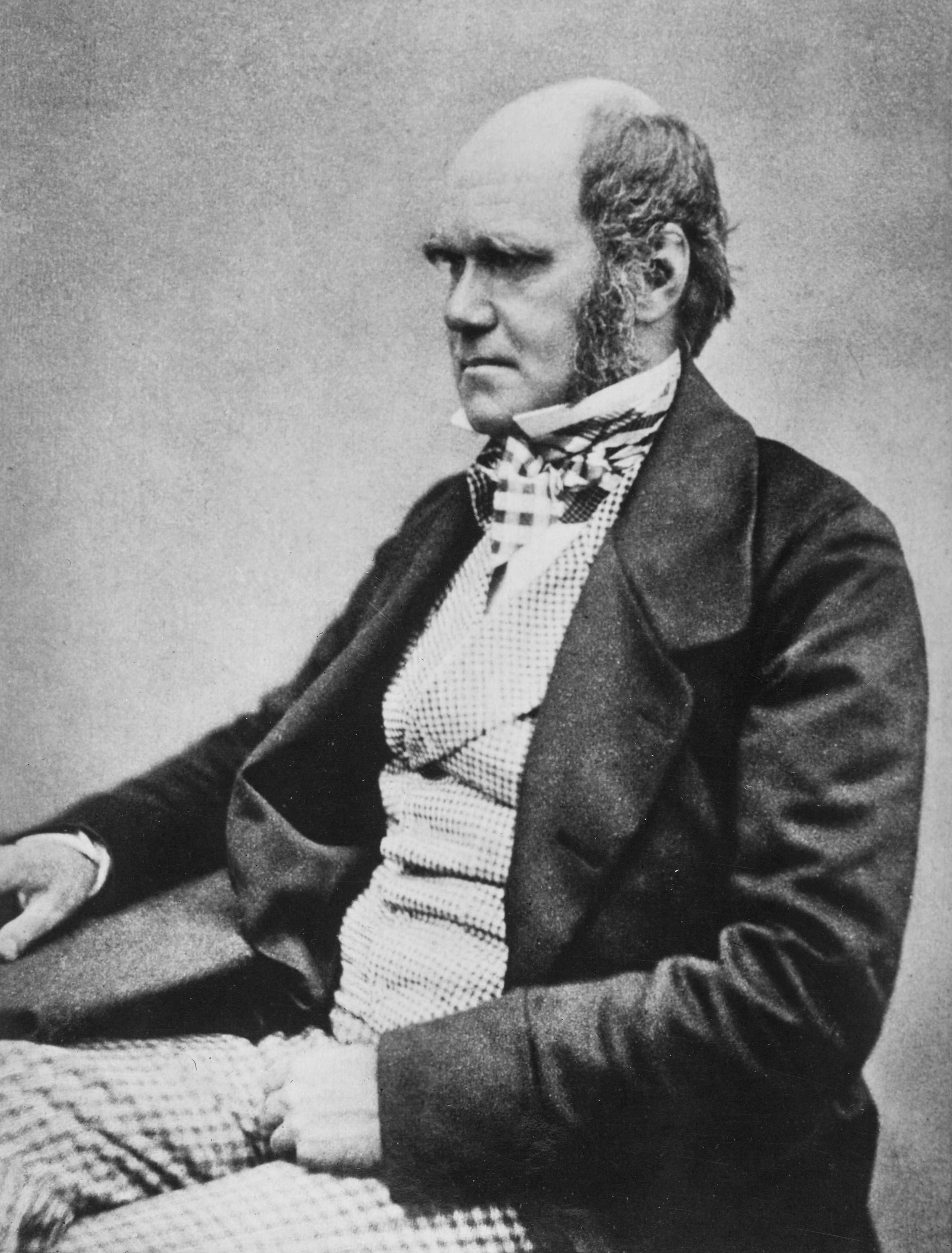
Credit: Charles_Darwin_seated.jpg: Henry Maull (1829–1914) and John Fox (1832–1907) (Maull & Fox) [3] derivative work: Beao · Public domain
Natural selection is the process by which living things that are better suited to their environment tend to survive and have more babies than those that are not. Over many generations, this process changes what a group of animals or plants looks like and how it behaves. Natural selection is the main engine of evolution, the slow change of life on Earth over time.
The idea was worked out by the English scientist Charles Darwin in the 1800s. A second scientist, Alfred Russel Wallace, came up with almost the same idea at almost the same time. In 1859, Darwin published a book called On the Origin of Species that explained how natural selection works.
Natural selection rests on three simple facts. First, living things within a species are not all the same. Some rabbits are faster, some beetles are greener, some finches have bigger beaks. Second, many of these differences are passed down from parents to children through genes. Third, more babies are born than can survive. There is not enough food, space, or safety for all of them.
Put those three facts together and something important happens. The ones with traits that help them survive, such as better camouflage, sharper eyesight, or stronger beaks, are more likely to live long enough to have babies. Their babies inherit those helpful traits. Over thousands of generations, the whole species slowly changes.
A famous example comes from the Galápagos Islands, where Darwin studied finches. On different islands, the finches had beaks of different shapes. Birds on islands with hard seeds had thick, strong beaks. Birds on islands with insects had thin, pointy beaks. Each group had been shaped by the food it could find.
Natural selection does not have a goal or a plan. It does not make animals "better" in some general way. It only favors whatever works in a particular place at a particular time. A trait that helps in a cold forest might be useless in a desert. When the environment changes, what counts as "fit" changes too.
The framework of evolution by natural selection is settled science. Biologists use it every day to study diseases, protect endangered species, and understand how antibiotic-resistant bacteria appear. But many details are still debated. Scientists argue about how fast evolution can happen, how big a role chance plays, and exactly how new species split off from old ones. The big idea is solid. The finer points are still being worked out.
Related
Last updated 2026-04-23