
Virus
Credit: domdomegg · CC BY 4.0
A virus is a tiny particle that can only make copies of itself by invading a living cell. Viruses are much smaller than bacteria. A single virus is so small that you cannot see it with a regular microscope. You need a powerful electron microscope to see one. Viruses live almost everywhere on Earth, from the ocean to the soil to the insides of plants and animals.
Scientists argue about whether viruses are alive. A virus does not eat, breathe, or grow. It cannot move on its own. It cannot even make copies of itself without help. But a virus does carry genetic instructions, and it can change over time through evolution. So is it alive or not? Most biologists say viruses sit on the edge between living and nonliving things.
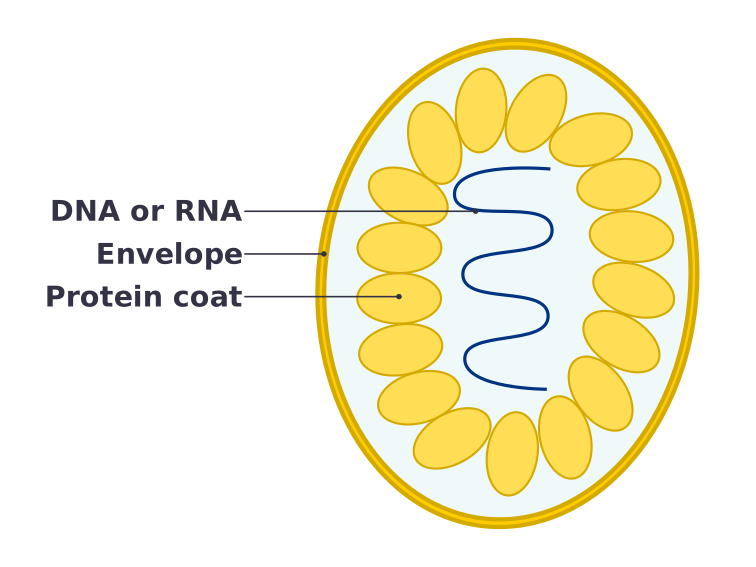
A virus has a simple design. Inside is a small set of instructions, written in DNA or a close cousin called RNA. A protein shell called a capsid wraps around the instructions. Some viruses also have a fatty outer layer taken from the cells they came from. That is it. No nucleus, no organs, no machinery for making energy.
Viruses make copies of themselves by hijacking cells. A virus lands on a cell and slips its instructions inside. The cell reads the virus's instructions by mistake, thinking they are its own. The cell then builds thousands of new viruses. Finally the cell bursts open, releasing the new viruses to infect more cells. This is what makes you sick when you catch a cold or the flu.
Not every virus attacks humans. Some infect only plants, some only insects, some only bacteria. The viruses that attack bacteria are called bacteriophages, and they look a little like tiny moon landers. Scientists estimate there are about 10 nonillion viruses on Earth, which is a 1 followed by 31 zeros. That is more than the number of stars in the known universe.
Your body fights viruses with the immune system. White blood cells hunt down infected cells and destroy them. After you beat a virus, your body usually remembers it and can fight it off faster next time. Vaccines use this trick. A vaccine shows your immune system a safe piece of a virus so your body learns to fight the real one. Vaccines have saved hundreds of millions of lives from diseases like smallpox, polio, measles, and COVID-19.
Related
Last updated 2026-04-23