
Element (Chemical)
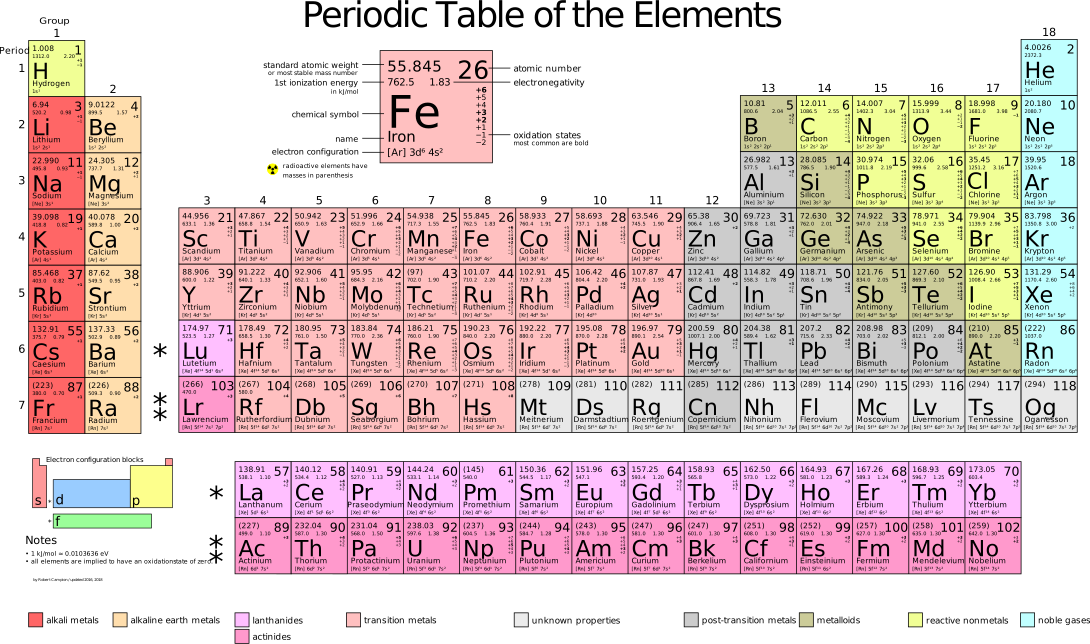
Credit: 2012rc · CC BY 3.0
A chemical element is a pure substance made of only one kind of atom. Every element has its own kind of atom, and every atom of that element is the same on the inside. Gold is an element. So is oxygen. So is iron. You cannot break an element down into anything simpler using normal chemistry.
What makes one element different from another is the number of protons in its atoms. Protons are tiny particles in the center of an atom. Hydrogen atoms have one proton. Helium atoms have two. Carbon atoms have six. Gold atoms have 79. This number is called the atomic number, and it is like an ID card for each element.
Scientists have found 118 different elements so far. Of those, 94 are found in nature. The rest were made in labs by smashing atoms together. Most of the lab-made elements are so unstable that they fall apart in less than a second.
Elements combine to make almost everything you see. When two or more atoms of different elements stick together, they form a molecule. Water is a molecule made of two hydrogen atoms and one oxygen atom. Table salt is made of one sodium atom and one chlorine atom. Just 118 elements can mix and match to build every substance on Earth, from a blade of grass to a cell phone.
Elements are sorted on a chart called the periodic table. A Russian scientist named Dmitri Mendeleev published the first version in 1869. He lined up the known elements by weight and noticed a pattern. He even left blank spaces where he predicted new elements should be. Within a few years, scientists found those missing elements, and Mendeleev's pattern held up.
Elements also shape the universe. Hydrogen and helium are the two most common elements in space. Together they make up almost everything in the Sun and stars. Heavier elements like iron and gold were not around when the universe began. They were forged inside stars and blasted into space when those stars exploded. The calcium in your bones and the iron in your blood were both made inside stars that died long before Earth existed.
Some elements are everywhere. Oxygen makes up about one fifth of the air and most of the weight of the ocean. Others are rare. Francium is so unstable that scientists think less than an ounce of it exists on the entire planet at any moment.
Last updated 2026-04-23