
Hibernation
Credit: Photochrom Print Collection · Public domain
Hibernation is a long, deep sleep-like state that some animals enter to survive the winter. During hibernation, an animal's body slows down in big ways. Its heart beats much more slowly. Its breathing becomes shallow. Its body temperature drops. Animals hibernate when food becomes hard to find and the weather turns cold. By slowing their bodies down, they can live off stored fat for weeks or even months.
Hibernation is not the same as regular sleep. A sleeping animal can wake up quickly. A true hibernator is hard to wake. Its body is using so little energy that it takes hours to warm up and move around again.
Ground squirrels are some of the deepest hibernators in the world. The arctic ground squirrel's body can cool to about 27 degrees Fahrenheit. That is below the freezing point of water. Somehow its blood does not turn to ice. Scientists still study how this works, because it might one day help doctors keep human organs safe during surgery.
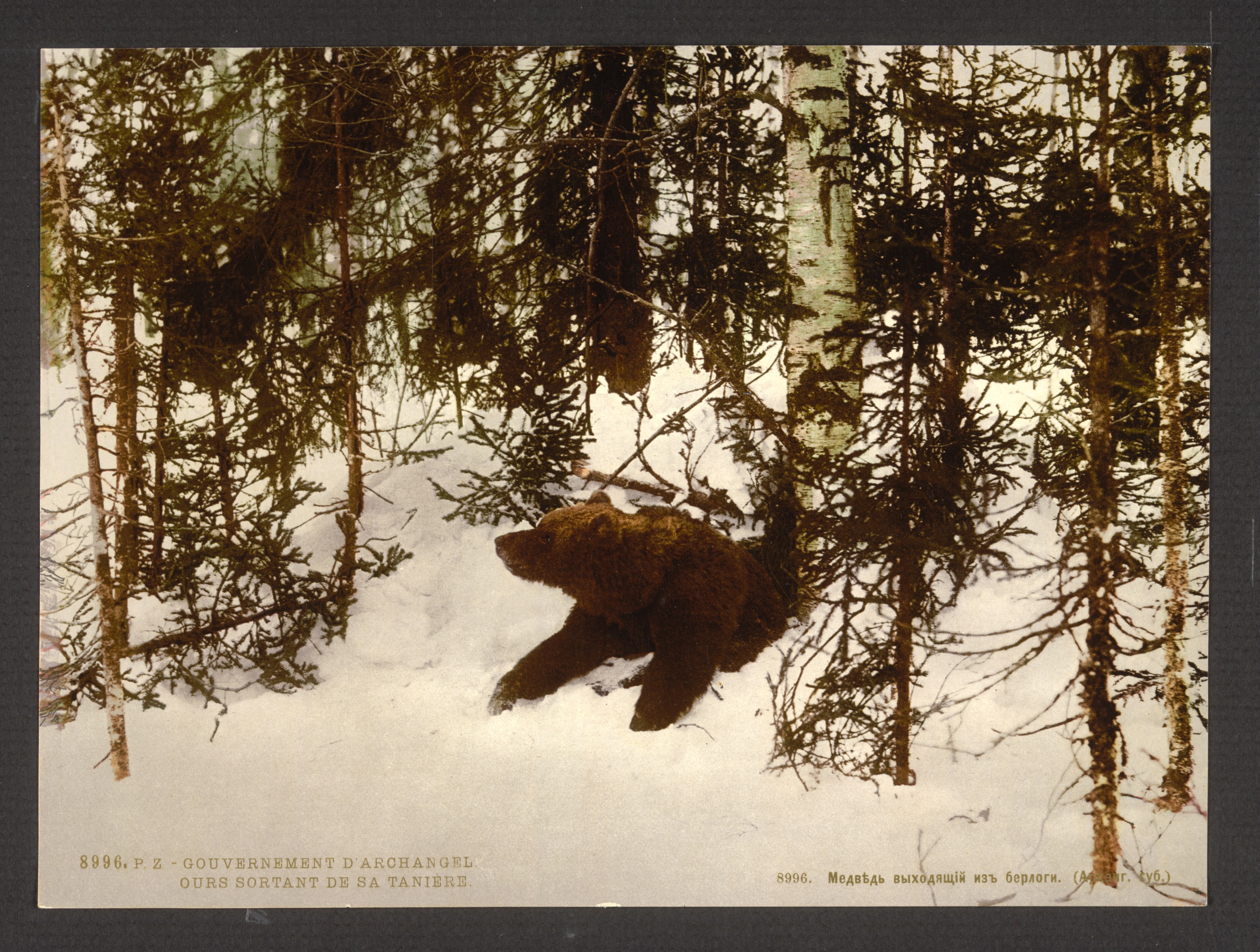
Bears are the most famous hibernators, but their winter sleep is different. A bear's heart slows down and its breathing gets slow, but its body temperature only drops a few degrees. Because of this, some scientists call bear hibernation "torpor" instead of true hibernation. Other scientists still call it hibernation. The debate has been going on for years. What is clear is that bears can go more than 100 days without eating, drinking, or going to the bathroom. Mother bears even give birth and nurse their cubs while in this state.
Many other animals hibernate too. Bats hang in caves with their heart rate slowed way down. Chipmunks sleep in underground burrows and wake up every few days to nibble on stored food. Some frogs and turtles spend the winter buried in mud at the bottom of ponds. A few, like the wood frog, even let parts of their body freeze solid and then thaw out in spring.
To get ready for hibernation, animals eat as much as they can in the fall. A grizzly bear may eat for 20 hours a day and gain more than 3 pounds of fat each day. That stored fat becomes the fuel that keeps the animal alive all winter.
When spring arrives and food returns, hibernating animals slowly warm up, stretch, and come out hungry. For them, winter passed in what felt like one long night.
Last updated 2026-04-23