
Rocket
Credit: Bill Ingalls · Public domain
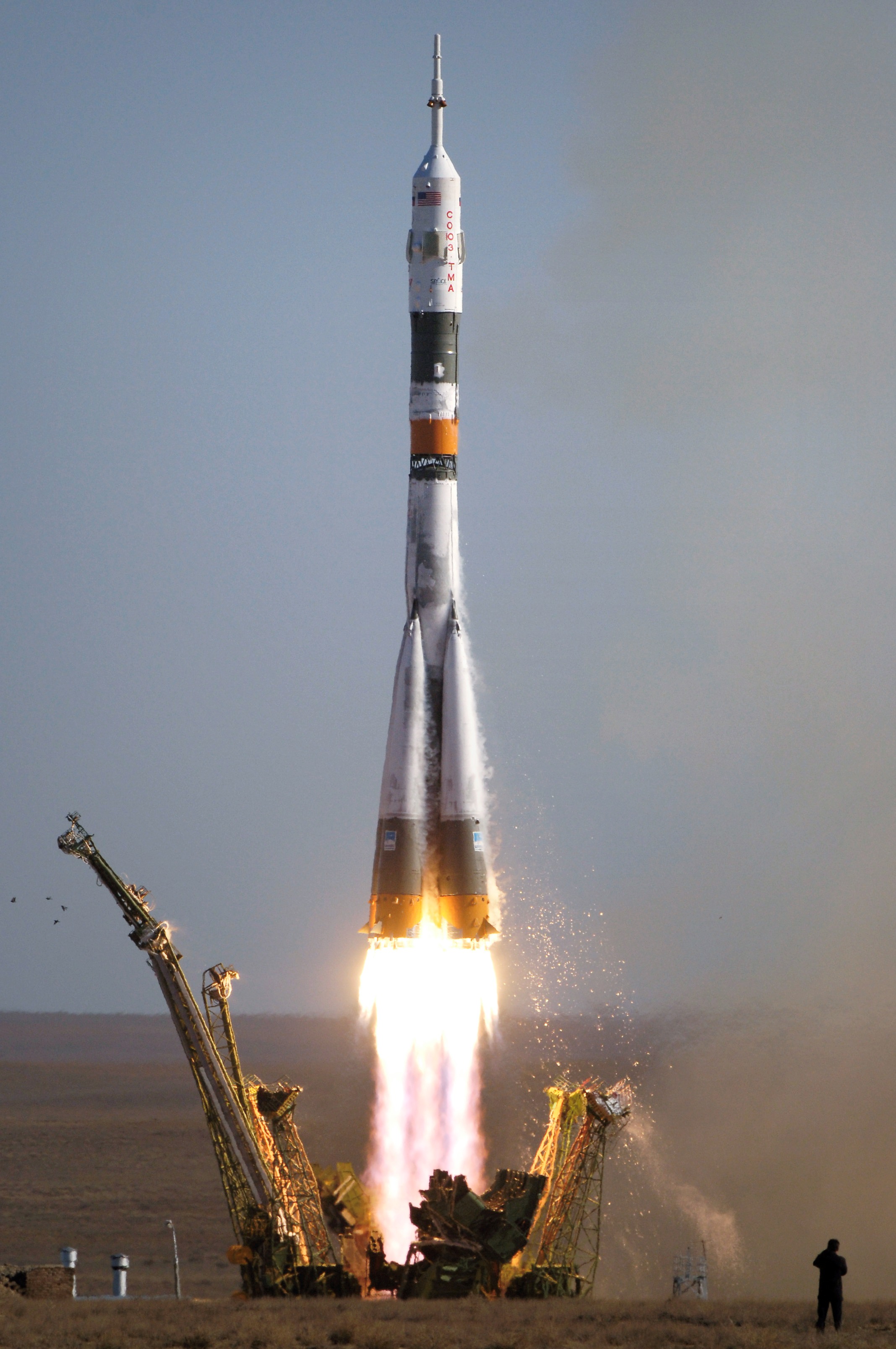
A rocket is a machine that pushes itself through the air or through space by shooting hot gas out the back. Rockets are the only vehicles powerful enough to escape Earth's gravity and reach space. They carry astronauts, satellites, and science tools beyond the atmosphere.
Rockets work because of a simple rule of physics. When gas shoots out one end of the rocket, the rocket gets pushed the other way. You can feel this yourself if you let go of a blown-up balloon. The air rushes out and the balloon flies forward. A rocket does the same thing, but with burning fuel instead of air.
Unlike a jet plane, a rocket does not need air to fly. A jet engine pulls oxygen from the air to burn its fuel. Rockets carry their own oxygen in tanks. That is why they can work in space, where there is no air at all.
Rockets were invented in China about 800 years ago. The first ones were simple tubes of gunpowder used in fireworks and later in war. For centuries they stayed small. That changed in the twentieth century. In 1926, an American scientist named Robert Goddard launched the first rocket that used liquid fuel. His rocket only flew 41 feet, about the length of a school bus. But his design became the model for every space rocket that followed.
The biggest rocket ever used was the Saturn V, built by NASA in the 1960s. It stood 363 feet tall, taller than the Statue of Liberty. It carried the Apollo astronauts to the Moon between 1969 and 1972. At liftoff, its engines burned 20 tons of fuel every second and made more noise than almost anything humans have ever built.
Most rockets have been used only once. After the fuel ran out, the parts fell into the ocean and were lost. This made space travel very expensive. In 2015, the company SpaceX changed that. Its Falcon 9 rocket launched a satellite and then flew back down and landed upright on a platform. Today, reusable rockets are flown again and again. They have lowered the cost of reaching space and opened the door to new missions.
Rockets now launch weather satellites, space telescopes, Mars rovers, and crews heading to the International Space Station. Engineers are already building bigger ones to carry people to the Moon again, and someday to Mars.
Last updated 2026-04-22