
Computer
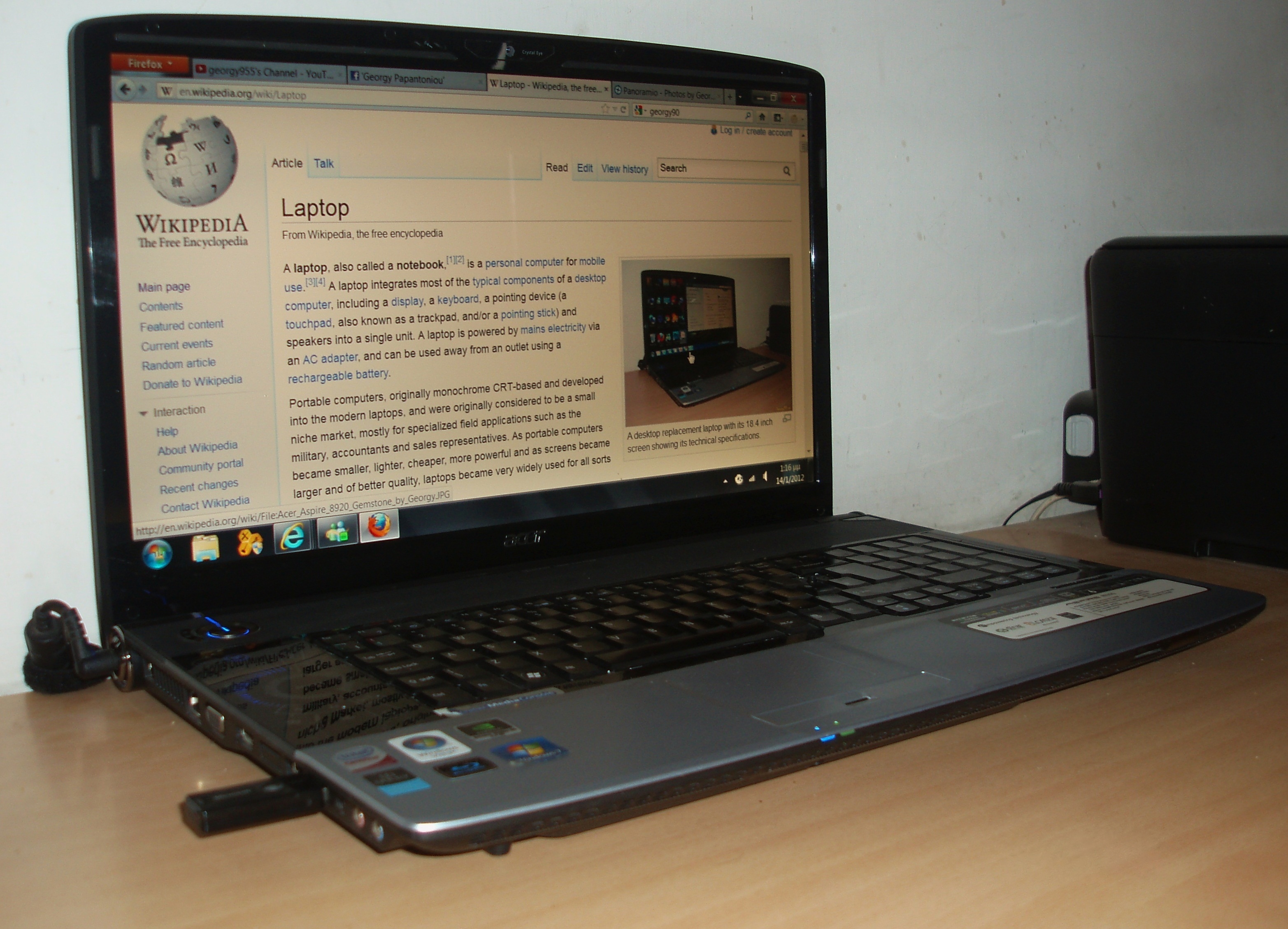
Credit: Georgy90 · CC BY-SA 3.0
A computer is a machine that follows instructions to work with information. It takes in data, stores it, changes it in some way, and shows the results. The phone in your pocket, the laptop on a desk, and the giant machines that run weather forecasts are all computers. So is the chip inside a microwave or a car.
Every computer does four basic jobs. It takes in information through input, like a keyboard, mouse, or touchscreen. It stores that information in memory. It processes the information using a part called the central processing unit, or CPU. Finally, it shows the results through output, like a screen, speaker, or printer.
Inside the CPU, billions of tiny switches called transistors flip on and off. Each switch stands for a 1 or a 0. Computers use only those two numbers, called binary. By stringing 1s and 0s together in long patterns, a computer can store words, photos, music, and videos. A modern smartphone has more than 10 billion transistors packed onto a chip the size of a fingernail.
The instructions a computer follows are called software. The physical parts you can touch are called hardware. Software is written by programmers using special languages like Python, Java, or C++. A program is just a long list of clear steps the computer carries out, one after another, very fast.
The first computers were not small or quiet. ENIAC, built in 1945, filled an entire room and weighed 30 tons, about as much as five elephants. It used over 17,000 glowing glass tubes instead of transistors. Today's smartphones are millions of times faster than ENIAC and fit in one hand.
The idea of a computer is older than the electronics that made it possible. In the 1830s, an English mathematician named Charles Babbage designed a mechanical computer called the Analytical Engine. His friend Ada Lovelace wrote what many people consider the first computer program for that machine, more than 100 years before any computer actually ran. In the 1930s, a British mathematician named Alan Turing worked out the math that showed what computers could and could not do. His ideas still shape computer science today.
Computers now help fly airplanes, find new medicines, edit movies, and search through almost everything humans have ever written down. They cannot truly think, though many people argue about how close they are getting. That question keeps getting harder to answer.
Related
Last updated 2026-04-25