
Internet
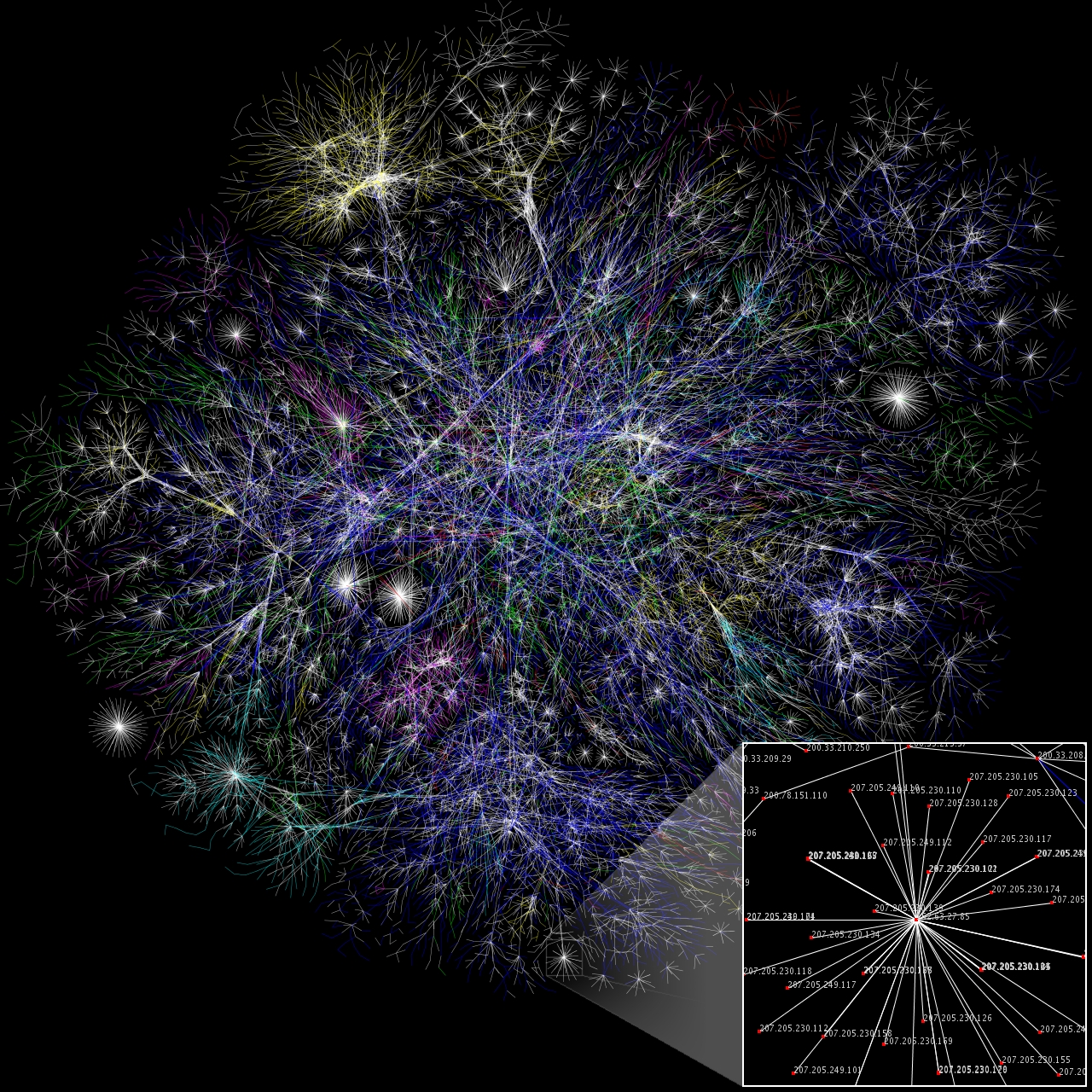
Credit: The Opte Project · CC BY 2.5
The internet is a giant network that connects computers all over the world. It lets those computers share information with each other almost instantly. When you watch a video, send a text, play an online game, or look something up for school, you are using the internet. Today, more than five billion people use it. That is more than half of everyone on Earth.
How it works
The internet is not one big computer. It is millions of smaller networks linked together. A network is just a group of computers connected so they can share information. The internet is the network of all those networks. The word "internet" actually comes from "interconnected networks."
Most of the internet's information travels through cables. Long underwater cables stretch across the ocean floors and connect the continents. There are more than 800,000 miles of these cables under the sea. That is enough to wrap around Earth more than 30 times. Other cables run under streets and into buildings. Some signals also travel through the air using Wi-Fi, cell towers, or satellites in space.
When you click a link, your computer sends a request through these cables. The request travels to another computer called a server. The server stores the website, video, or game you want. It sends the information back to your screen. All of this usually happens in less than a second.
Addresses and packets
Every device on the internet has its own address. It is called an IP address, which stands for Internet Protocol address. An IP address is a string of numbers that works like a home address. It tells other computers where to send information.
Information does not travel as one big chunk. It gets broken into tiny pieces called packets. Each packet is labeled with where it came from and where it is going. The packets travel by different paths and meet up at the other end. Then your computer puts them back together. If one path is blocked, the packets find another way around. This is part of why the internet is so hard to break.
Where it came from
The internet started as a project of the United States government in the late 1960s. It was called ARPANET. Scientists wanted a way for computers at different universities to share research. The first message was sent in 1969 between two computers in California.
For about 20 years, only scientists, soldiers, and college students used it. Then in 1989, a British scientist named Tim Berners-Lee invented the World Wide Web. The web is the system of websites and links that most people use on the internet today. It made the internet easy enough for anyone to use. By the mid-1990s, families were getting online at home for the first time.
What the internet does
The internet has changed almost every part of daily life. People use it to send email, video chat with relatives, take classes, work jobs, watch movies, listen to music, shop, and play games together. Doctors can look at X-rays from far away. Scientists can share data in seconds. Kids in different countries can be friends.
The internet is also where most news now travels. A photo posted in one country can be seen in every other country a few minutes later. This can be wonderful and dangerous at the same time. True news spreads fast, but so do rumors and lies.
The hard parts
The internet has problems too. Not everyone has it. About a third of the world is still offline, often because cables and towers have not reached their towns. This gap is called the digital divide.
The internet also raises questions about privacy. Companies and governments can collect a lot of information about what people do online. Bullying, scams, and harmful content are real problems. Adults and kids both have to learn how to be safe and kind on the internet.
There are debates about who should control it. Some people think governments should set more rules for what can be posted. Others worry that too many rules would take away free speech. Different countries handle this in very different ways. China blocks many sites that work freely in the United States. The argument over how the internet should be run is far from settled.
Always growing
The internet keeps changing. New tools like artificial intelligence, video calls, and cloud storage are built on top of it. Smart watches, doorbells, refrigerators, and cars now connect to it too. Sixty years ago, only a few computers were linked together. Today, tens of billions of devices are. The wires under the ocean are quietly carrying almost all of it.
Related
Last updated 2026-04-25