
Light Bulb
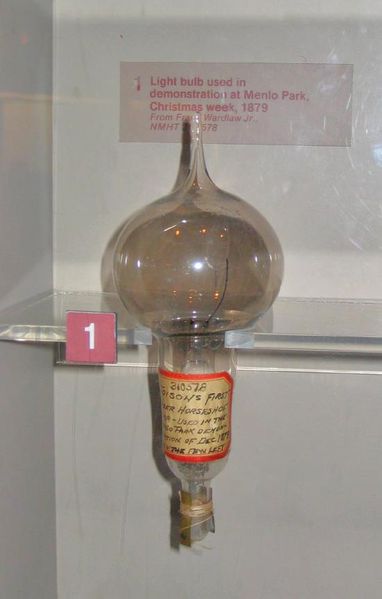
Credit: Uploaded at enwp by User:Alkivar · CC BY-SA 3.0
A light bulb is a small device that turns electricity into light. Most light bulbs are made of glass, with metal parts at the bottom that screw into a socket. When electricity flows through the bulb, it heats a thin wire or excites a gas inside, and the bulb gives off light. Light bulbs let people work, read, and play long after the sun goes down.
Before light bulbs, people lit their homes with fire. They burned candles, oil lamps, and gas lamps. These flames were dim, smoky, and dangerous. A knocked-over lamp could burn down a whole house.
The first practical light bulb was made in 1879 by the American inventor Thomas Edison. People often say Edison "invented" the light bulb, but the real story is more crowded. More than 20 inventors had been working on electric lights for decades before him. A British scientist named Humphry Davy made an electric arc light back in 1802. Another British inventor, Joseph Swan, built a working bulb around the same time as Edison. Edison's team did not start from nothing. What they did was make a bulb that lasted long enough and cost little enough for ordinary people to use.
The trick was the filament. A filament is the thin wire inside the bulb that glows when electricity passes through it. Edison's team tested more than 6,000 different materials, including bamboo, cotton thread, and even hairs from a worker's beard. They finally found that a carbon filament could burn for over 1,200 hours. Later, tungsten metal worked even better, and tungsten is still used in some bulbs today.
The bulb that Edison made famous is called an incandescent bulb. It glows because the filament gets so hot. But it wastes a lot of energy. About 90 percent of the electricity going into an incandescent bulb turns into heat instead of light. That is like paying for ten cookies and only getting one.
Newer bulbs are much better. Fluorescent bulbs, used in many schools and stores, send electricity through a gas to make light. LED bulbs, short for light-emitting diodes, use tiny chips. An LED uses about one-tenth the electricity of an old Edison bulb and can last more than 20 years. Many countries have stopped selling incandescent bulbs to save energy.
The light bulb did more than brighten rooms. It changed how people sleep, work, and travel. Cities began to glow at night. Factories ran around the clock. The bulb is one of the inventions that built the modern world.
Related
Last updated 2026-04-25