
Electricity
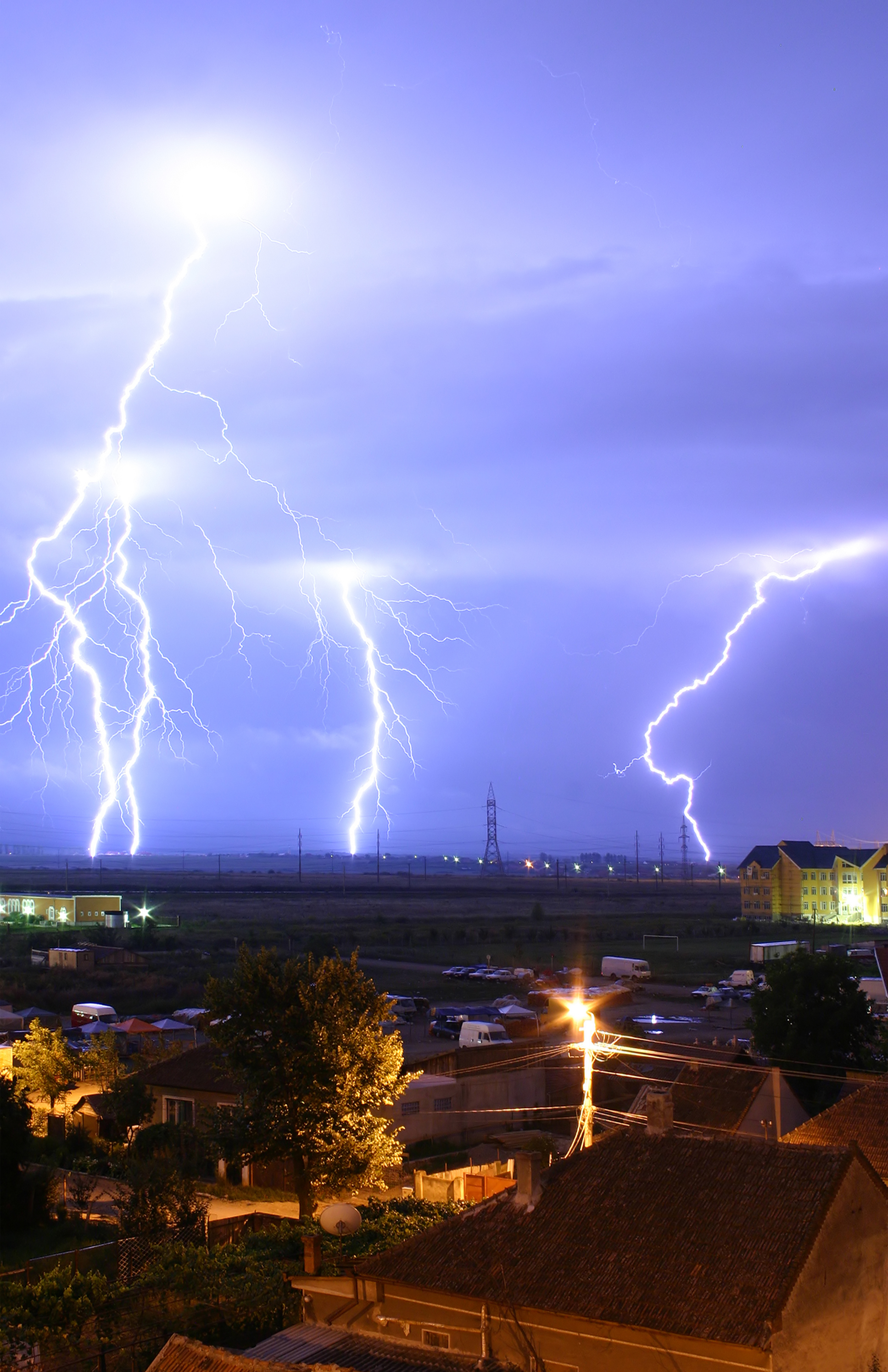
Credit: Mircea Madau · Public domain
Electricity is a form of energy that comes from the movement of tiny particles called electrons. Electrons are parts of atoms, which are the building blocks of everything around you. When electrons flow from one place to another, they carry energy with them. That flow of energy is what we call electricity.
Every atom has a center called a nucleus, with electrons moving around it. In some materials, like copper and other metals, electrons can move from one atom to the next fairly easily. Materials like these are called conductors. In other materials, like rubber, plastic, and glass, electrons stay put. These materials are called insulators. Wires are usually made of copper on the inside and plastic on the outside, so the electricity travels through the copper but does not shock your hand.
There are two main kinds of electricity. Current electricity is a steady flow of electrons through a wire, like the kind that lights up a lamp. Static electricity is a buildup of electrons on one object, like when you rub a balloon on your hair. The balloon steals electrons from your hair and sticks to the wall.
Lightning is a giant spark of static electricity. Inside a storm cloud, ice and water droplets crash into each other and separate electric charges. When the charges build up high enough, they jump through the air in a flash. A single bolt can carry about one billion volts, more than enough to power a house for a month.
Humans have only been using electricity in everyday life for about 150 years. For most of human history, people lit their homes with fire. In the 1800s, scientists like Michael Faraday figured out how to make electricity flow on purpose using magnets. In 1879, Thomas Edison built a light bulb that could glow for hours. Soon after, cities started running wires to homes and factories.
Today, electricity powers almost everything: lights, phones, refrigerators, hospitals, and trains. Most of it is made at power plants. Some plants burn coal or natural gas to spin giant generators. Others use wind, falling water, sunlight, or nuclear reactions. Generators work by spinning a coil of wire near a magnet, which pushes electrons through the wire.
Your own body runs on electricity too. Nerve cells send tiny electric signals to tell your muscles to move and your brain to think. Every time you wiggle a finger, a small flash of electricity traveled from your brain to your hand to make it happen.
Related
Last updated 2026-04-23