
Civil Rights Movement
Credit: Rowland Scherman · Public domain
The Civil Rights Movement was a long struggle by Black Americans and their allies to end racial segregation and gain equal rights under the law. It happened mostly between the 1950s and the late 1960s, though its roots reach back much further. The movement used protests, marches, court cases, and speeches to change unfair laws across the United States.
Life under Jim Crow
To understand the movement, you have to understand what came before it. After slavery ended in 1865, many Southern states passed laws called Jim Crow laws. These laws kept Black Americans separate from white Americans in almost every part of daily life. Black children went to different schools. Black families used different waterfountains, bathrooms, train cars, and sections of buses. The schools, hospitals, and parks for Black people usually got far less money. In many places, Black citizens were blocked from voting through unfair tests and threats of violence.
The Supreme Court had said in 1896 that "separate but equal" was legal. In practice, things were almost never equal.
Brown v. Board of Education
The first big crack in Jim Crow came in a courtroom. A lawyer named Thurgood Marshall argued a case called Brown v. Board of Education before the Supreme Court. In 1954, the Court ruled that separating children by race in public schools was against the Constitution. It was a huge victory. But many white officials in the South refused to obey. In 1957, nine Black students tried to enter Central High School in Little Rock, Arkansas. The governor sent soldiers to block them. President Eisenhower had to send federal troops to walk the students into class.
Rosa Parks and the bus boycott
In December 1955, in Montgomery, Alabama, a Black woman named Rosa Parks refused to give up her seat on a city bus to a white passenger. She was arrested. Black residents of Montgomery answered by refusing to ride the buses at all. They walked, carpooled, and took taxis instead. The boycott lasted 381 days, more than a year. A young minister named Martin Luther King Jr. helped lead it. In the end, the Supreme Court ruled that segregated buses were illegal.
Sit-ins and Freedom Riders
Young people pushed the movement forward. In 1960, four Black college students sat down at a "whites only" lunch counter in Greensboro, North Carolina. They asked to be served. They were refused, but they came back the next day, and the next, with more students. Sit-ins spread to more than 50 cities.
In 1961, groups called Freedom Riders rode buses through the South to test new laws against segregated travel. White mobs attacked them in Alabama. One bus was firebombed. The riders were beaten. News pictures of the violence shocked the country and pushed the federal government to act.
The March on Washington
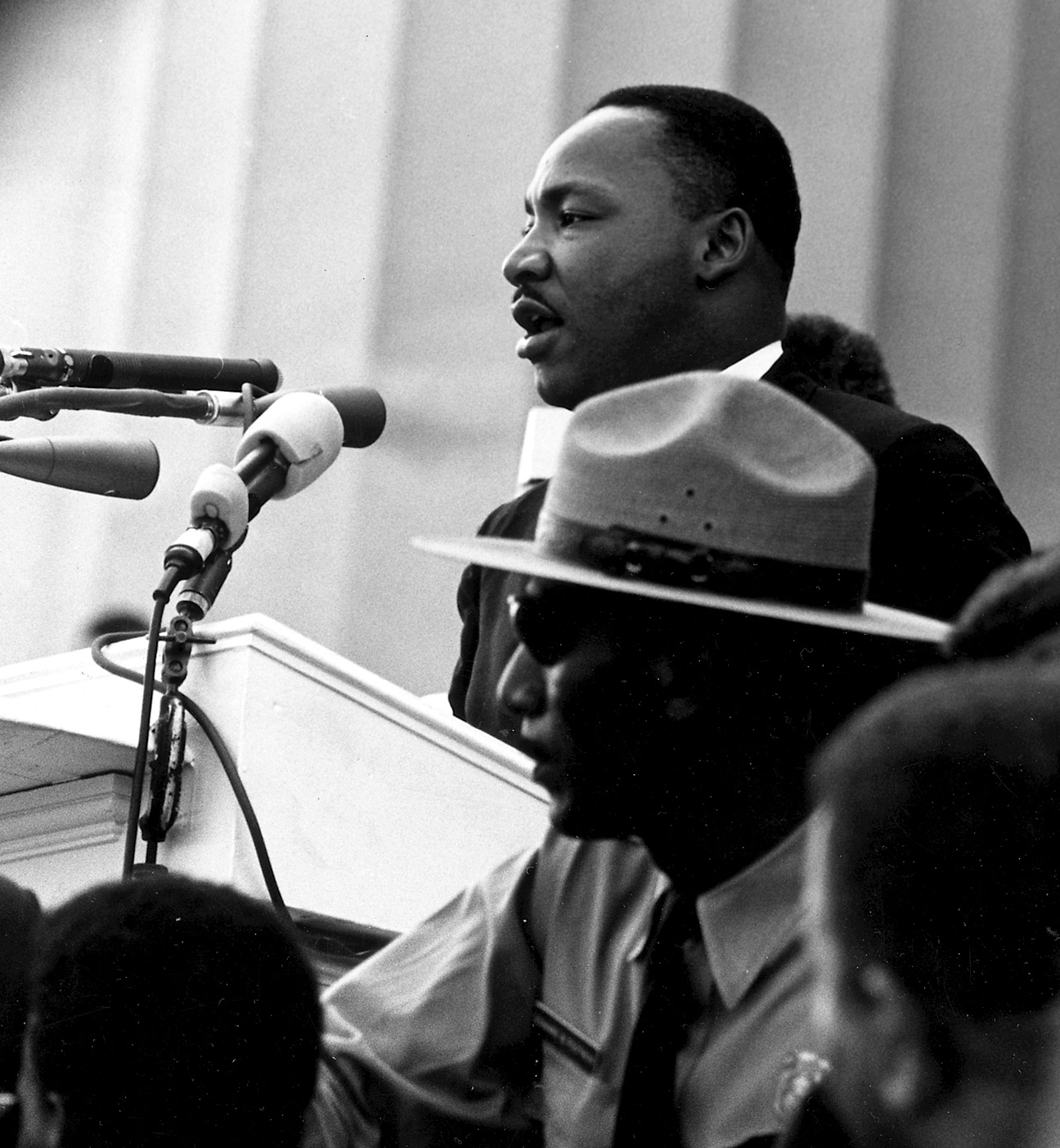
On August 28, 1963, more than 250,000 people gathered at the Lincoln Memorial in Washington, D.C. The crowd was so large it stretched almost half a mile down the National Mall. Martin Luther King Jr. gave his most famous speech there, telling the country, "I have a dream that my four little children will one day live in a nation where they will not be judged by the color of their skin but by the content of their character." The march helped push Congress toward new laws.
The big laws
The movement won two enormous victories in the mid-1960s. The Civil Rights Act of 1964 made it illegal to treat people differently in public places, schools, and jobs because of their race, color, religion, sex, or where their family was from. The Voting Rights Act of 1965 banned the unfair tests and tricks used to stop Black citizens from voting. Within a few years, millions of new Black voters were on the rolls in the South.
Cost and courage
People paid a high price for these changes. Four Black girls were killed when a church in Birmingham was bombed in 1963. Civil rights workers were murdered in Mississippi in 1964. State troopers beat marchers, including a young John Lewis, on a bridge in Selma, Alabama, in 1965. Martin Luther King Jr. himself was assassinated in Memphis in 1968.
What changed and what didn't
The Civil Rights Movement transformed the United States. Schools, restaurants, hotels, and voting booths were finally open to all citizens by law. Black Americans entered Congress, the courts, and state offices in numbers never seen before. But many problems the movement raised, including unequal schools, unequal pay, and unequal treatment by police, are still being argued about today. Historians often say the Civil Rights Movement was not the end of the struggle for equality. It was a powerful new beginning.
Related
Last updated 2026-04-26