
Thurgood Marshall
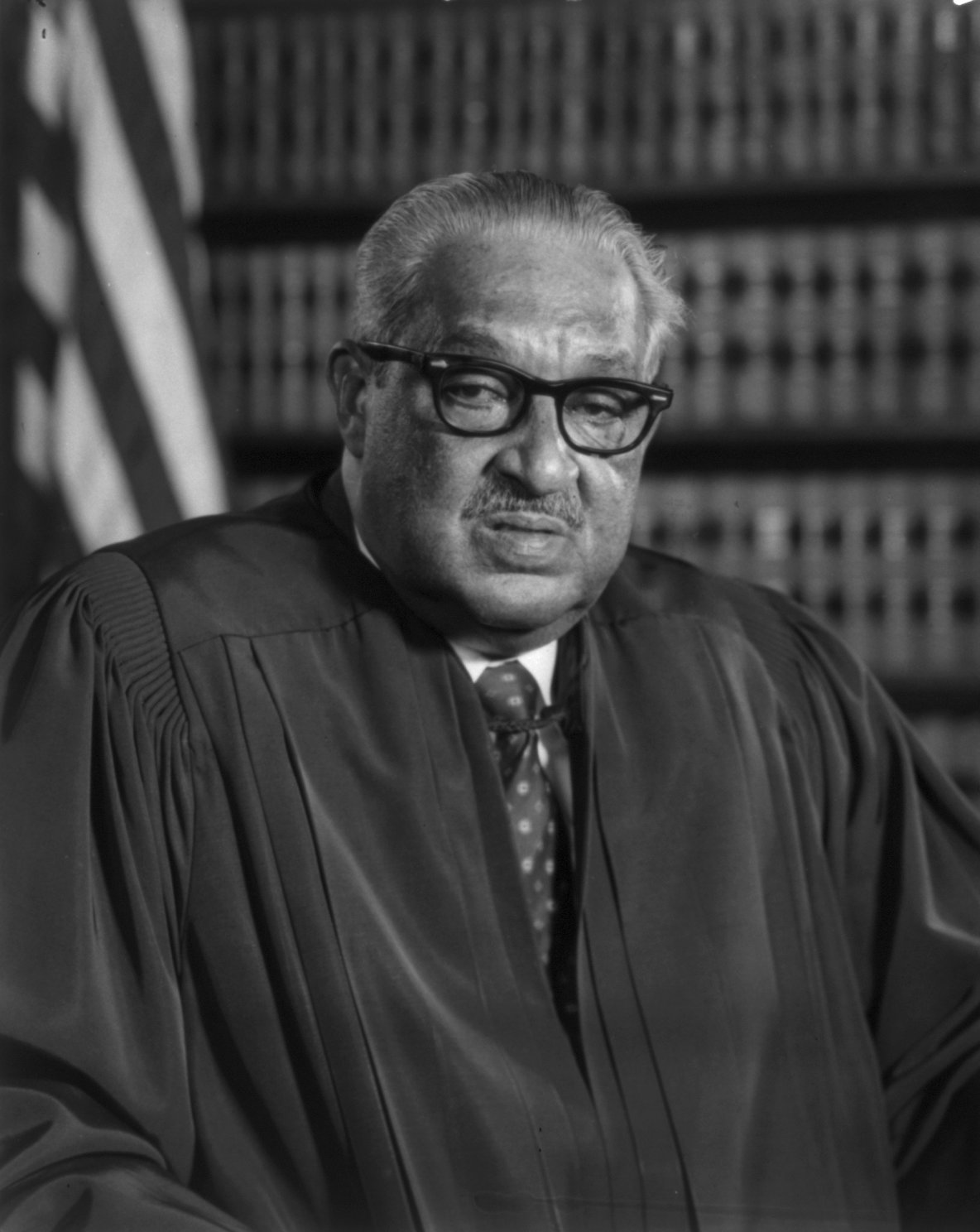
Credit: Robert S. Oakes · Public domain
Thurgood Marshall was an American lawyer and judge who became the first Black justice on the United States Supreme Court. He lived from 1908 to 1993. Before he ever sat on the Supreme Court, he was already one of the most important lawyers in American history. He won the case that ended legal school segregation in the United States.
Marshall was born in Baltimore, Maryland. His father worked as a railroad porter and his mother was a teacher. As a boy, he loved to argue. His father once told him that arguing well was a kind of art. Marshall took that advice seriously. In school, when he got in trouble, his punishment was to memorize parts of the U.S. Constitution. By the time he graduated, he knew the whole document by heart.
He wanted to study law at the University of Maryland. The school turned him away because he was Black. Instead, he went to Howard University Law School in Washington, D.C., a famous Black college. He graduated first in his class in 1933. A few years later, he sued the University of Maryland for refusing to admit another Black student, and he won.
Marshall became the chief lawyer for the NAACP, a civil rights group. For more than 20 years, he traveled the country and argued cases against unfair laws. The South still had Jim Crow laws, which forced Black Americans to use separate schools, restaurants, water fountains, and train cars. Marshall argued 32 cases in front of the Supreme Court. He won 29 of them.
His most famous case was Brown v. Board of Education in 1954. Marshall argued that separating Black and White children in public schools was against the Constitution. The Supreme Court agreed. All nine justices voted with him. The ruling made school segregation illegal across the country. It is one of the most important court decisions in American history.
In 1967, President Lyndon B. Johnson chose Marshall to serve on the Supreme Court itself. He became the first Black justice in the court's 178-year history. He served for 24 years. As a justice, he often defended the rights of poor people, women, and people accused of crimes. He also strongly opposed the death penalty.
Marshall retired in 1991 and died two years later. He once said his goal was simple: "to make sure that everybody has the same chance." Today, schools, airports, and law libraries across the country carry his name. The desegregated classrooms that millions of American kids sit in every day exist partly because of the cases he won.
Related
Last updated 2026-04-26