
Reconstruction Era
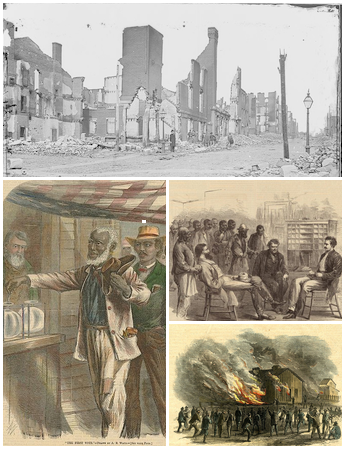
Credit: Excel23 · CC0
The Reconstruction Era was the time after the Civil War when the United States tried to rebuild the South and bring formerly enslaved people into American life as free citizens. It lasted from 1865 to 1877. During these twelve years, the country passed three new amendments to the Constitution, set up new governments in the Southern states, and faced the huge question of what freedom would actually mean.
The Civil War ended in April 1865. About four million enslaved Black Americans were now free. But freedom alone did not give them homes, jobs, schools, or safety. Much of the South lay in ruins. Cities were burned, farms were destroyed, and families on both sides were grieving. President Abraham Lincoln had hoped to bring the South back gently, but he was killed just days after the war ended. The job fell to Congress and the new president, Andrew Johnson.
Three big changes to the Constitution came out of this time. The Thirteenth Amendment, passed in 1865, ended slavery for good. The Fourteenth Amendment, in 1868, made all people born in the United States citizens with equal rights under the law. The Fifteenth Amendment, in 1870, said that no state could keep a man from voting because of his race. For the first time, Black men could vote and run for office.
And many did. During Reconstruction, more than 2,000 Black men held public office in the South. Sixteen served in Congress. Black communities built their own churches and started schools. A new agency called the Freedmen's Bureau helped people find work, settle disputes, and learn to read. By 1870, hundreds of thousands of formerly enslaved children and adults were attending school for the first time.
But many white Southerners refused to accept these changes. Groups like the Ku Klux Klan formed and used violence to scare Black voters away from the polls. Southern states slowly passed laws to take back what had been won. Congress sent federal troops to protect Black citizens, but support in the North faded over time.
In 1877, after a disputed presidential election, the federal government pulled its troops out of the South. Reconstruction ended. Soon after, Southern states passed Jim Crow laws that forced Black and white people apart and blocked Black men from voting. Many of the gains of Reconstruction were rolled back.
Historians often call Reconstruction "America's unfinished revolution." The amendments it gave us are still the law today. The full promise of equal citizenship took another hundred years, and the Civil Rights Movement of the 1960s, to push forward again.
Related
Last updated 2026-04-26