
Castles
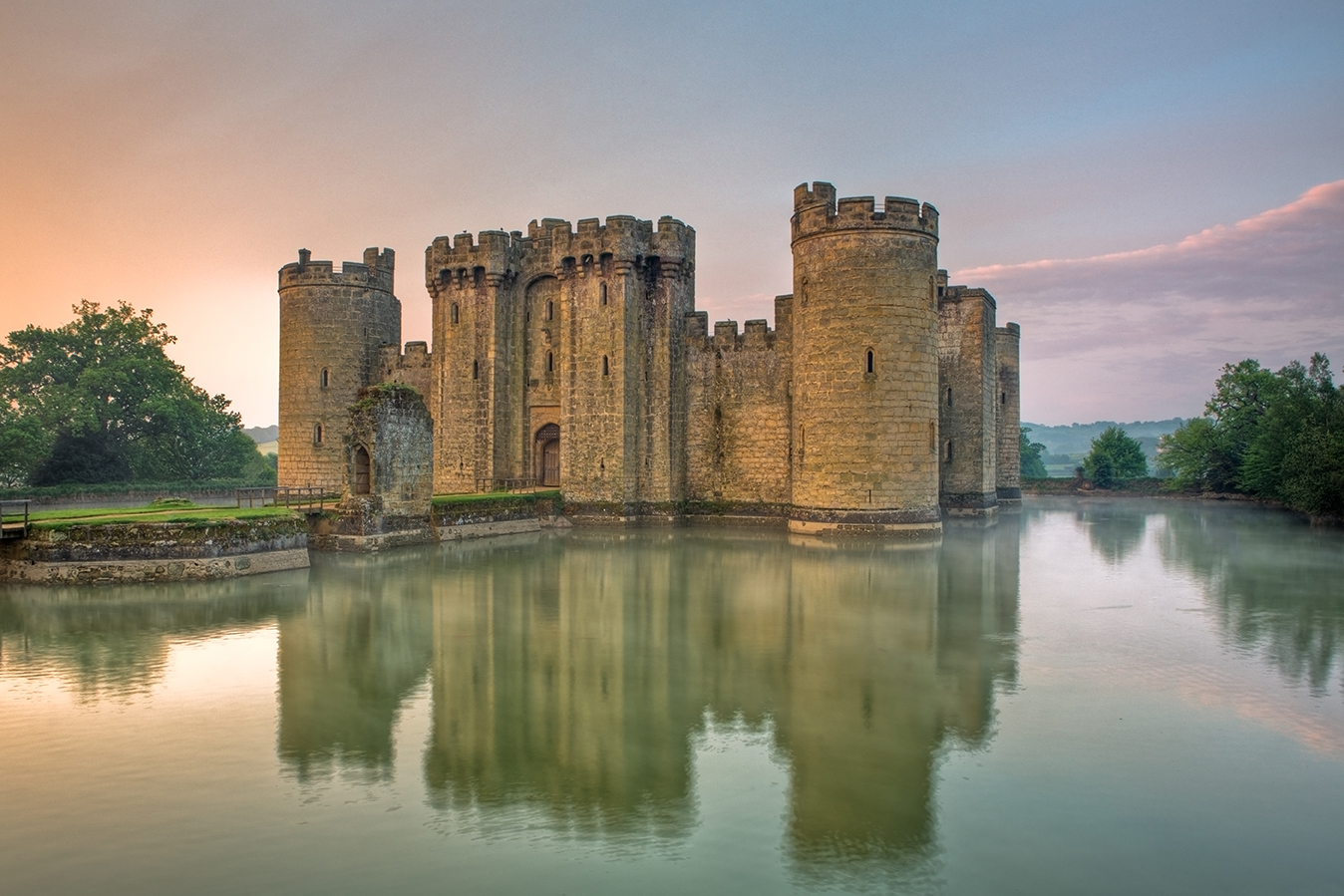
Credit: Antony McCallum · CC BY-SA 3.0
A castle is a strong building that was built to be both a home and a fort. Castles were used by kings, queens, and powerful lords during the Middle Ages in Europe. The first true castles appeared in the 800s and 900s. Builders kept making them for about 700 years. Most stand in Europe, but castles also appear in the Middle East and parts of Asia.
The earliest castles were small and made of wood. They had a tall mound of dirt called a motte, with a wooden tower on top. A fenced yard called a bailey sat next to the mound. Wooden castles were quick to build, but they could burn. By the 1100s, lords were rebuilding their castles in stone.
A stone castle had thick outer walls, sometimes 20 feet thick at the base. Round towers stood at the corners so guards could see attackers coming from any side. A wide ditch called a moat circled the walls. Sometimes the moat was filled with water. The only way in was over a drawbridge that could be pulled up. Just inside the gate, a heavy iron grate called a portcullis could drop down to block the entrance.
Castles were also homes. Inside the walls lived the lord, his family, soldiers, servants, cooks, and stable hands. Hundreds of people might sleep, eat, and work in one castle. The great hall was the biggest room, used for meals and meetings. Bedrooms were small and cold. There was no running water. Bathrooms were stone seats built into the wall, and waste dropped straight down the outside.
When enemies attacked, castles were hard to crack. Defenders shot arrows through narrow slits in the walls. They poured boiling water or hot sand on attackers below. An attacker had a few choices. He could try to climb the walls with ladders. He could batter the gate with a giant log. He could build a tall wooden tower and roll it up to the wall. Or he could simply wait outside and starve the people inside, a tactic called a siege. Some sieges lasted more than a year.
Castles slowly became useless after gunpowder spread across Europe in the 1400s. Cannons could smash even the thickest stone walls in days. Lords began building grand palaces instead, choosing comfort over defense.
Thousands of castles still stand today. Some are ruins, with grass growing in the great halls. Others, like Windsor Castle in England, are still in use after almost 1,000 years. Visitors can walk the same stone steps that knights, kings, and servants climbed long before anyone alive today was born.
Related
Last updated 2026-04-26