
Middle Ages
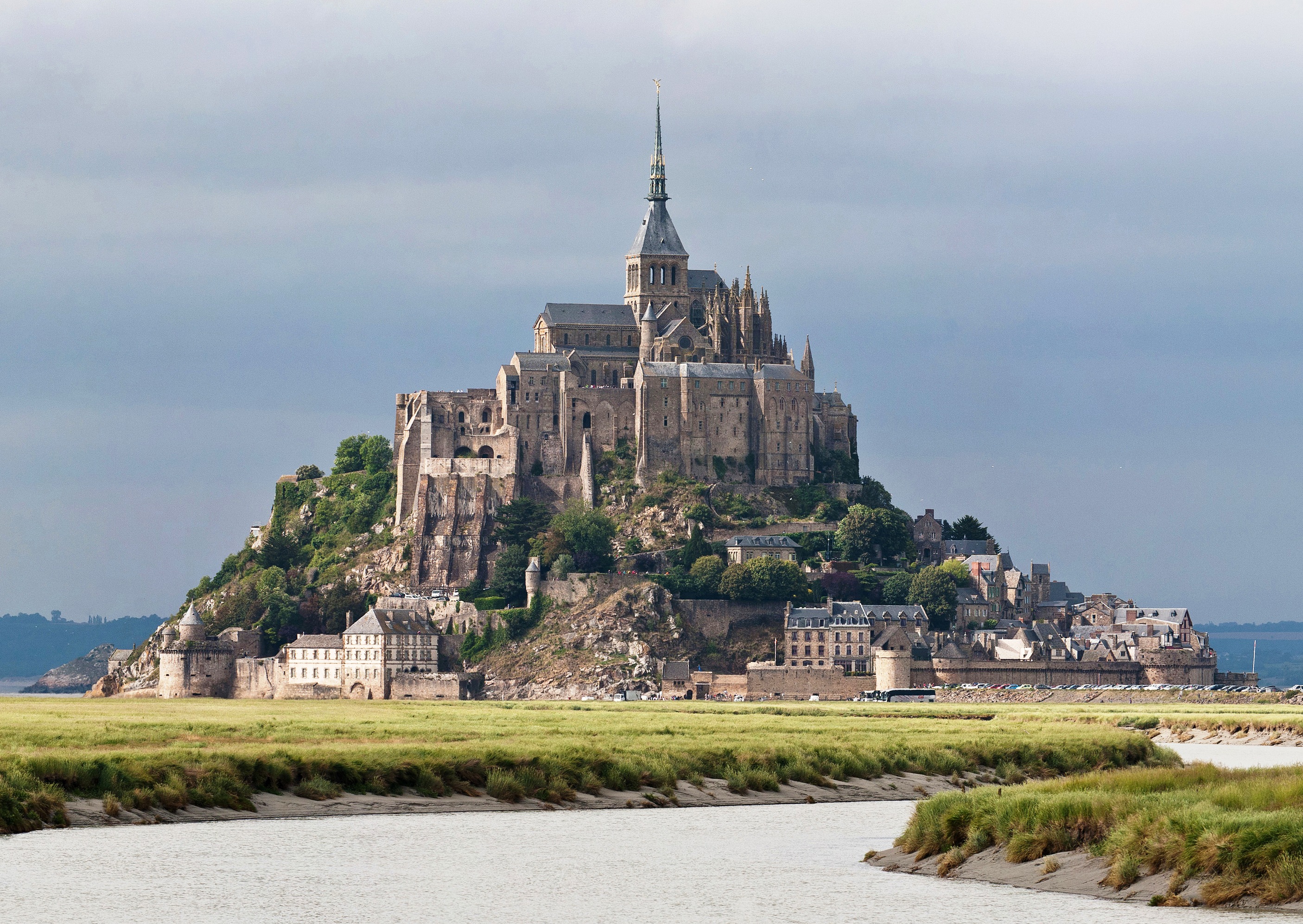
Credit: Diliff · Public domain
The Middle Ages was a long period of European history that lasted about a thousand years. It began around the year 500, after the fall of the Western Roman Empire. It ended around the year 1500, when the Renaissance and the Age of Exploration began. Historians sometimes split it into three smaller parts: the Early, High, and Late Middle Ages.
When Rome fell, much of Europe broke into smaller kingdoms. Roads, schools, and trade networks that Rome had built slowly fell apart. Many people stopped reading and writing. For a long time, people in later centuries called this the "Dark Ages." Today most historians do not use that name. They have learned that art, learning, and trade were still alive, especially in places like the Byzantine Empire and the Islamic world.
Most people in medieval Europe were peasants. Peasants worked the land for a noble who owned it. This system was called feudalism. A king gave land to nobles. Nobles let peasants farm the land in exchange for crops, labor, and loyalty. Knights were trained warriors who fought for their lord, often on horseback in heavy armor. Stone castles were built as homes and fortresses for nobles. Some castle walls were 30 feet thick, thicker than a school bus is long.
Religion shaped almost every part of life. In western Europe, the Catholic Church was the most powerful organization. Towering cathedrals, like Notre Dame in Paris, took 100 years or more to build. Monks in quiet monasteries copied books by hand, which is how many ancient writings survived. In the Middle East and parts of Spain, Islamic scholars were making big advances in math, medicine, and astronomy. Words like "algebra" and "algorithm" come from Arabic and date to this time.
The Middle Ages had hard years. From 1347 to 1351, a disease called the Black Death swept through Europe. It killed about one in three people, more than the population of many countries today. The Crusades were a series of religious wars between Christians and Muslims over the Holy Land. Knights, kings, and ordinary people fought in them for almost 200 years.
By the late 1400s, life was changing fast. Towns grew bigger, trade picked up, and a new invention called the printing press made books cheap for the first time. Sailors began crossing oceans. Artists looked back to ancient Greece and Rome for fresh ideas. The Middle Ages were ending, but their castles, cathedrals, and stories still shape how we picture knights, dragons, and far-off kingdoms today.
Related
Last updated 2026-04-26