
Dictatorship
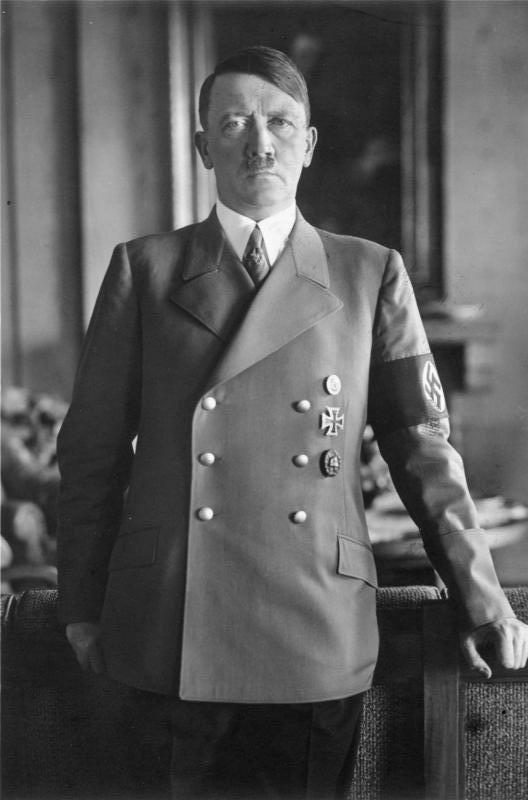
Credit: Heinrich Hoffmann · CC BY-SA 3.0 de
A dictatorship is a kind of government where one person, or sometimes a small group, holds nearly all the power. The leader is called a dictator. In a dictatorship, the people do not get to freely choose their leaders. Laws are often made by the dictator alone, and citizens who speak out against the government can be punished, jailed, or worse.
The word "dictator" comes from ancient Rome. Long ago, when Rome faced a war or a serious crisis, the Senate could pick one person to take total control. This Roman dictator only ruled for six months. Then he had to give the power back. Over time, the word changed meaning. Today it almost always describes a leader who takes power and refuses to let go.
Dictatorships work in different ways. Some begin with a military takeover, called a coup, where army officers seize the government by force. Others begin when an elected leader slowly changes the rules to stay in office. A few are passed down inside a family, like the rulers of North Korea. What ties them together is the lack of real choice. Elections may still happen, but they are not fair. Newspapers may still print, but they print what the government wants.
The twentieth century saw some of the most powerful and harmful dictatorships in history. Adolf Hitler ruled Germany from 1933 to 1945 and led the country into World War II and the Holocaust. Joseph Stalin ruled the Soviet Union for almost 30 years. Historians estimate that millions of people died in his prison camps and forced famines, more people than live in many entire countries today. Mao Zedong led China through huge changes that also cost millions of lives.
Why do dictatorships keep appearing? Historians and political scientists still debate this. Some argue that hard times, like wars or economic collapse, push frightened people to accept a strong leader who promises order. Others say weak courts and weak free press let ambitious leaders grab power before anyone can stop them. Most experts agree that no single cause explains every case.
Not every country with one strong leader is a true dictatorship, and the line can be blurry. That is why people who study governments look at specific signs: Are elections fair? Can judges rule against the leader? Can reporters criticize the government without being arrested? When the answers are no, a country has slipped from democracy toward dictatorship.
Related
Last updated 2026-04-26