
Iron Age
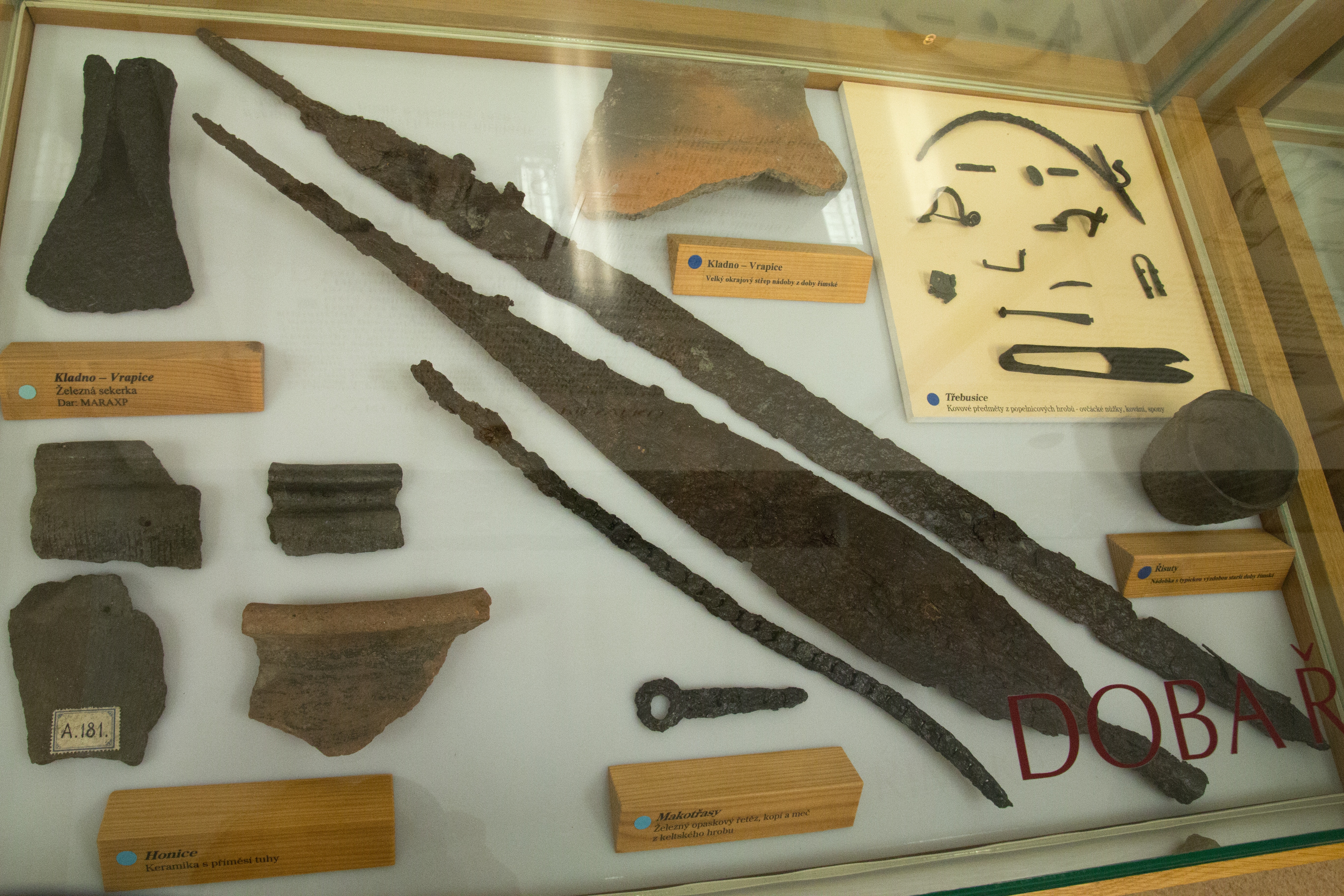
Credit: Zde · CC BY-SA 4.0
The Iron Age was a period in human history when people learned to make tools and weapons out of iron. It came after the Stone Age and the Bronze Age. The Iron Age began at different times in different parts of the world. In the Middle East, it started around 1200 BCE. In China, it began around 600 BCE. In parts of Africa south of the Sahara, people may have started working iron just as early. The Iron Age ended whenever a region began keeping written records of its own history.
Iron is much harder than bronze. It also stays sharp longer. But iron is harder to work with. To shape it, a smith must heat it in a very hot fire and pound it on an anvil. Bronze can simply be melted and poured into a mold. For a long time, people knew iron existed but could not make fires hot enough to use it well.
The change came when blacksmiths learned to build better furnaces and hammer iron into shape while it was red-hot. Iron ore is also far more common than the metals used to make bronze. That meant tools and weapons could be made cheaply and in large numbers. Iron plows broke through tough soils that bronze plows could not. Farmers grew more food. Villages grew into cities. Armies grew larger.
Many famous civilizations rose during the Iron Age. The Greeks built their city-states. The Romans began their long climb toward empire. The Celts spread across much of Europe. In Africa, the Nok people of what is now Nigeria made detailed clay sculptures and worked iron skillfully. In India, the kingdoms along the Ganges River grew rich and powerful.
Historians still argue about how iron-working spread. Some think the skill was invented once, probably by the Hittites in what is now Turkey, and then carried outward by traders and travelers. Others think different peoples figured it out on their own. The evidence from Africa is especially debated, because some African iron sites are surprisingly old.
Iron changed daily life for ordinary people. A farmer with an iron axe could clear a forest in a season instead of a lifetime. A cook could use iron pots that lasted for years. We still live in the long shadow of the Iron Age. The steel in cars, bridges, and skyscrapers is made mostly of iron, the same metal that ancient blacksmiths first learned to shape over their fires.
Related
Last updated 2026-04-26