
Mongol Empire
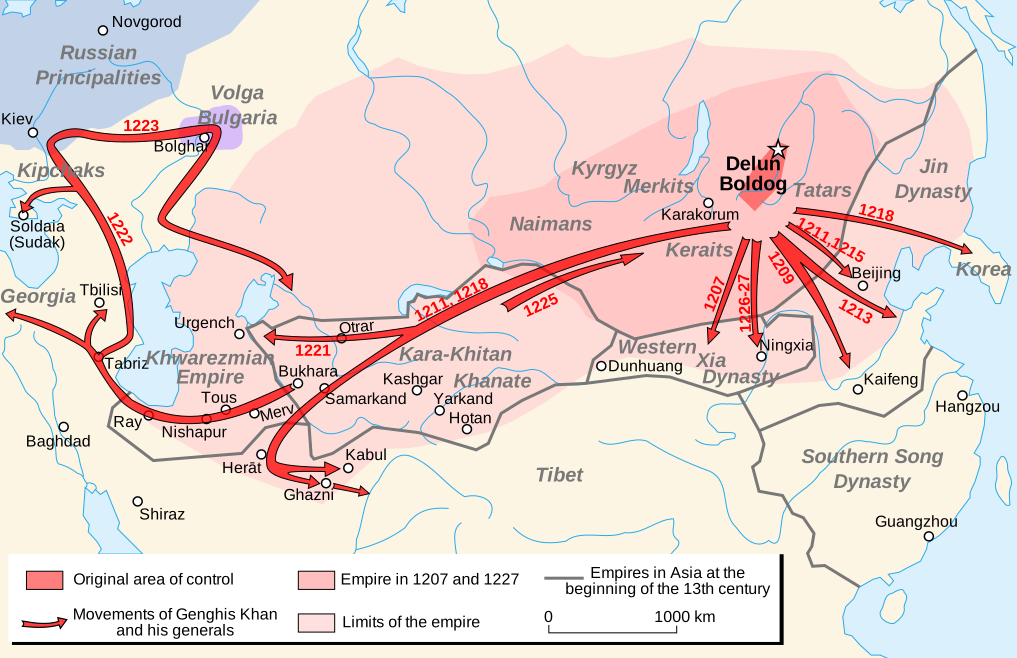
Credit: derivative work Bkkbrad / *File:Gengis Khan empire-fr.svg: historicair 17:01, 8 October 2007 (UTC) · CC BY-SA 3.0
The Mongol Empire was the largest connected land empire in human history. It began in 1206 in the grasslands of Central Asia, when a leader named Temüjin united the Mongol tribes and took the title Genghis Khan, meaning "great ruler." Within 80 years, the Mongols ruled most of Asia and parts of Europe and the Middle East. At its biggest, the empire stretched from the Pacific Ocean all the way to Eastern Europe.
The Mongols were nomads, which means they moved from place to place with their herds of horses, sheep, and goats. They lived in round tents called gers, also known as yurts. Mongol children learned to ride horses almost as soon as they could walk. This made Mongol soldiers some of the best horse riders in history. They could shoot arrows accurately while riding at full speed.
Mongol armies conquered cities and kingdoms much larger than their own. How did they do it? They used speed, surprise, and clever tactics. A Mongol soldier traveled with several horses and switched between them, so he could ride for days without stopping. The Mongols also copied useful ideas from the people they conquered, like Chinese siege weapons that could break down city walls.
The fighting was often brutal. Cities that resisted were sometimes destroyed completely. But once the empire was set up, Genghis Khan and his grandsons brought a long period of peace called the Pax Mongolica, or "Mongol Peace." Traders, travelers, and ideas moved safely along the Silk Road from China to the Mediterranean. The Italian traveler Marco Polo crossed the empire in the 1270s and wrote a famous book about the wonders he saw at the court of Kublai Khan, the grandson of Genghis.
The Mongols also brought ideas from one end of the empire to the other. Paper money, gunpowder, the magnetic compass, and printing all moved from China toward Europe during this time. Sadly, something else may have moved too. Many historians think the Black Death, the plague that killed millions of people in the 1300s, spread along Mongol trade routes from Asia into Europe.
The empire did not last. After about 1260 it split into four smaller kingdoms, and the pieces slowly broke apart. China kicked out the Mongols in 1368 and started the Ming Dynasty. By the late 1300s, the great empire was gone.
Today, around 10 million people in Mongolia and nearby regions still speak Mongolian. Genghis Khan, once feared as a destroyer, is now honored as the founder of their nation.
Related
Last updated 2026-04-26