
Rise of Nazism
Credit: Unknown author · CC BY-SA 3.0 de
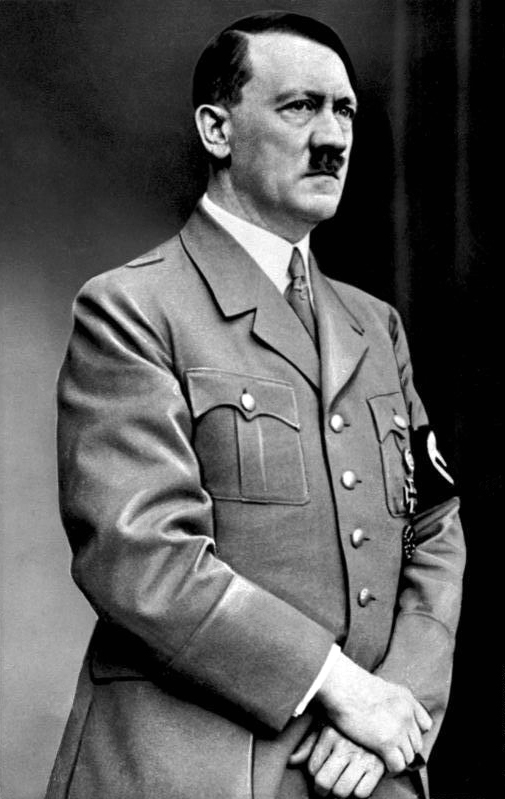
The Rise of Nazism was the period when a hateful political group called the Nazi Party gained power in Germany. The party rose to power between 1920 and 1933. Its leader was Adolf Hitler. Once in control, the Nazis ended German democracy, persecuted Jewish people and other groups, and started World War II. Their full name was the National Socialist German Workers' Party.
To understand why the Nazis rose, you have to start with World War I. Germany lost that war in 1918. The winning countries forced Germany to sign the Treaty of Versailles. The treaty made Germany give up land, shrink its army, and pay huge sums of money. Many Germans felt angry and shamed. They were looking for someone to blame.
Then things got worse. In the 1920s, German money lost almost all its value. A loaf of bread that cost one mark in 1919 cost billions of marks by late 1923. Then the Great Depression hit in 1929. Banks failed. Factories closed. By 1932, about 6 million Germans were out of work, roughly one in three workers.
Hitler used this misery to grow his party. He gave loud speeches blaming Germany's problems on Jewish people, communists, and the leaders who signed the Treaty of Versailles. None of this blame was true or fair. But many people were desperate, and the lies sounded like simple answers. The Nazis also used a private army of fighters, called the SA, to attack their political enemies in the streets.
In 1932, the Nazi Party became the largest party in the German parliament. Older politicians thought they could control Hitler if they gave him a powerful job. They were wrong. In January 1933, Hitler was named chancellor, the head of the German government. Within weeks, a fire damaged the parliament building. Hitler used the fire as an excuse to arrest his political enemies and pass emergency laws.
Over the next year and a half, Hitler turned Germany into a dictatorship. He banned all other political parties. He shut down free newspapers. He took control of the schools and the courts. When the German president died in 1934, Hitler combined that office with his own and called himself the Führer, meaning "the leader." Germans were forced to swear loyalty to him personally.
Historians still study how this happened in a modern, educated country. Most agree there was no single cause. A lost war, a broken economy, weak leaders, deep prejudice, and political violence all came together. The Rise of Nazism is one of the clearest warnings in history about how fragile democracy can be.
Related
Last updated 2026-04-26