
Space Age
Credit: National Aeronautics and Space Administration · Public domain
The Space Age is the period in human history when people first sent machines and astronauts beyond Earth's atmosphere. It began on October 4, 1957, when the Soviet Union launched a small metal ball called Sputnik 1 into orbit. The Space Age is still going on today. Many historians count it as one of the great turning points in history, like the invention of writing or the start of the Industrial Revolution.
Sputnik shocked the world. It was about the size of a beach ball and carried only a simple radio transmitter that beeped as it circled Earth every 96 minutes. But the beeping meant something huge. For the first time, humans had built a machine that could travel above the sky.
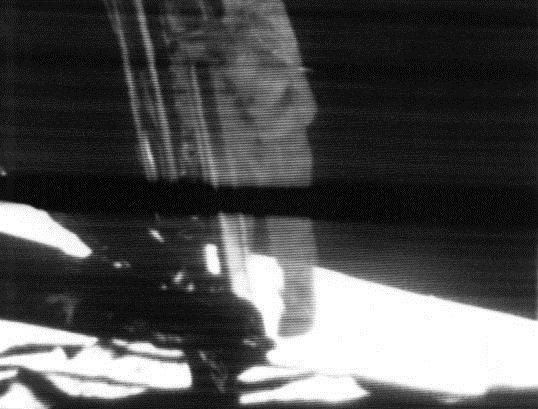
The United States and the Soviet Union were rivals during the Cold War. Each country wanted to prove its science and technology were better. This competition is called the Space Race. The Soviets sent the first person into space in 1961, a young pilot named Yuri Gagarin. The United States answered by aiming for the Moon. On July 20, 1969, American astronaut Neil Armstrong stepped onto the lunar surface. About 600 million people watched on television, the largest live audience in history at that time.
After the Moon landings, space exploration changed direction. Instead of racing each other, countries began working together. The International Space Station, built in the 1990s and 2000s, is a joint project of the United States, Russia, Europe, Japan, and Canada. Astronauts from many nations live and work there together.
The Space Age also changed daily life on the ground. Satellites now beam television signals, carry phone calls, and run the GPS in cars and phones. Weather satellites help meteorologists warn people about hurricanes days in advance. Space telescopes like Hubble and James Webb have shown us galaxies billions of light-years away. Photos of Earth from space, especially the famous "Earthrise" picture taken from the Moon in 1968, helped start the modern environmental movement.
Today the Space Age is entering a new chapter. Private companies like SpaceX and Blue Origin now build rockets that once only governments could afford. Robot rovers crawl across Mars, looking for signs that life once existed there. Scientists debate when humans will visit Mars in person. Some say within twenty years; others think it will take much longer. Whatever the answer, the Space Age that began with one beeping satellite has reshaped how humans see themselves, their planet, and the universe around them.
Related
Last updated 2026-04-26