
Apatosaurus
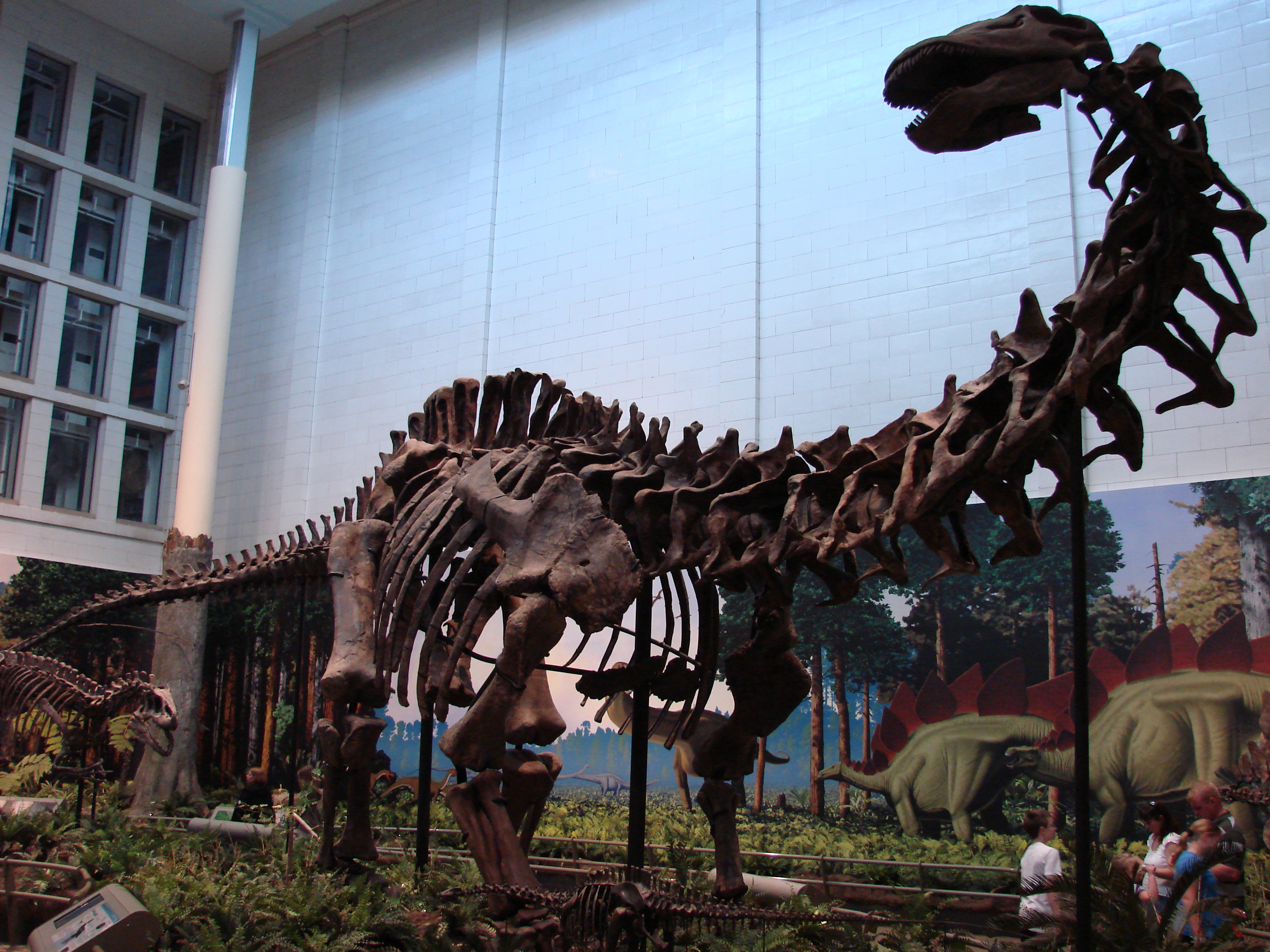
Credit: Allie_Caulfield · CC BY 2.0
Apatosaurus was a huge plant-eating dinosaur that lived in what is now western North America about 150 million years ago. It belonged to a group of dinosaurs called sauropods. Sauropods had long necks, long tails, small heads, and four thick legs like tree trunks. Apatosaurus was one of the biggest animals ever to walk on land.
An adult Apatosaurus stretched about 75 feet from nose to tail. That is longer than a school bus and a car parked end to end. It weighed around 20 to 25 tons, as heavy as four African elephants stacked together. Its neck alone was about 25 feet long, and its tail was even longer. Its head, though, was surprisingly small, only about the size of a horse's head.
Even though it was huge, Apatosaurus only ate plants. It used its peg-shaped teeth to strip leaves from branches. Like other sauropods, it swallowed its food whole without chewing. Scientists think it may have swallowed small stones called gastroliths to help grind up food inside its stomach. An animal this big had to eat a lot. Apatosaurus probably spent most of the day feeding.
Apatosaurus lived during the late Jurassic Period, alongside Stegosaurus, Allosaurus, and Brachiosaurus. Allosaurus was a fierce meat-eater that may have hunted young or sick Apatosaurus. A healthy adult had powerful defenses. Its long tail worked like a giant whip. Some scientists think Apatosaurus could crack its tail through the air fast enough to make a loud boom, like a bullwhip.
The name Apatosaurus means "deceptive lizard." It was named in 1877 by a fossil hunter named Othniel Charles Marsh. Two years later, Marsh found another set of bones and named it Brontosaurus, which means "thunder lizard." Later scientists realized the two dinosaurs were really the same kind of animal. The older name, Apatosaurus, became the correct one. But Brontosaurus was such a famous name that many books and museums kept using it for years. In 2015, a new study suggested that Brontosaurus might be its own kind of dinosaur after all. Scientists are still debating the question today.
For a long time, people drew Apatosaurus standing in lakes, thinking its body was too heavy for dry land. That idea turned out to be wrong. Fossil footprints show Apatosaurus walked on solid ground just fine. Its bones were strong and partly hollow, much like the bones of modern birds, making its giant body lighter than it looked.
Related
Last updated 2026-04-22