
Tyrannosaurus Rex
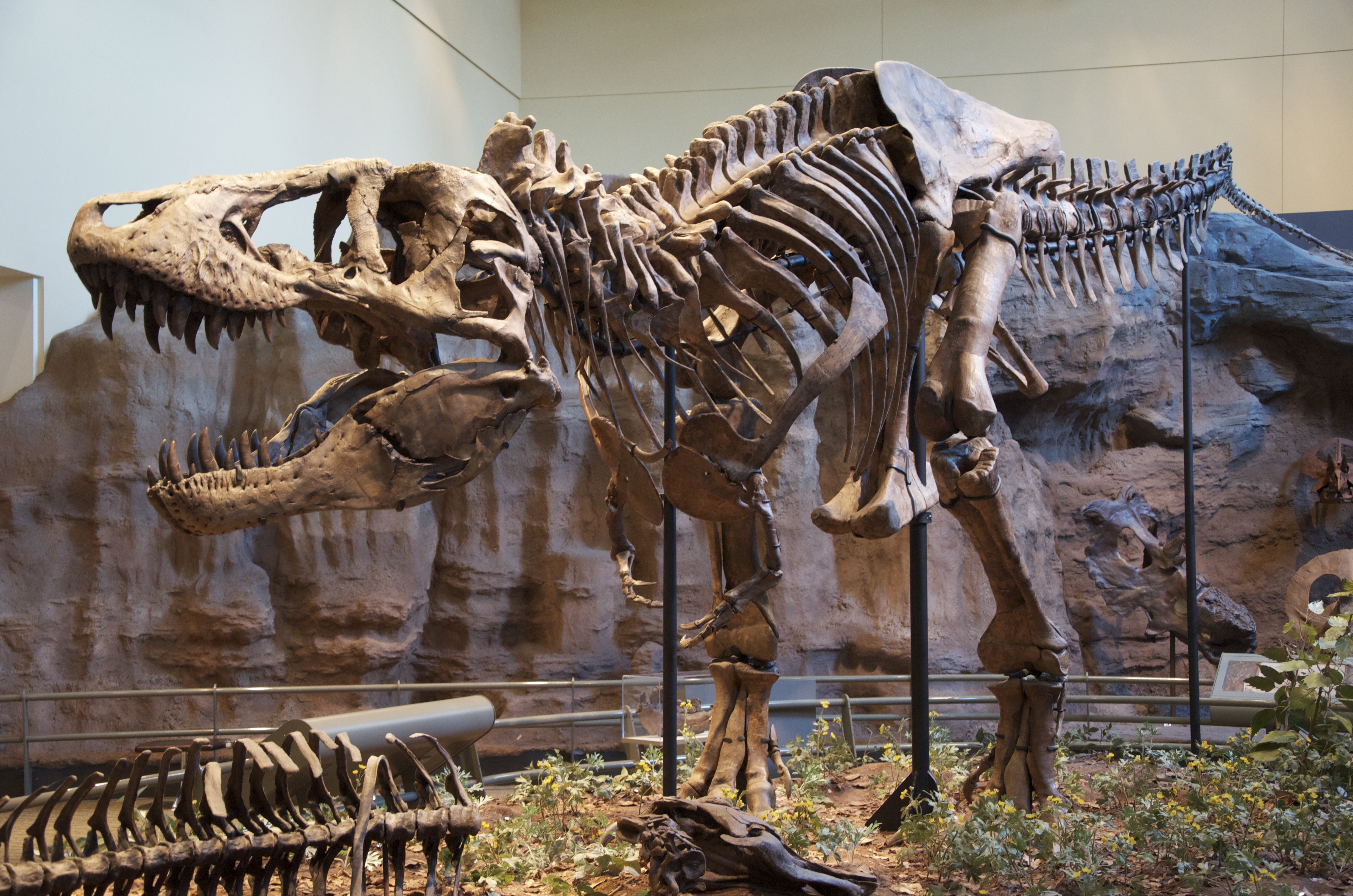
Credit: ScottRobertAnselmo · CC BY-SA 3.0
Tyrannosaurus rex was a huge meat-eating dinosaur that lived in western North America about 68 to 66 million years ago. Its name means "tyrant lizard king" in Latin and Greek. T. rex was one of the last dinosaurs to walk the Earth before most dinosaurs went extinct. Scientists know it from more than 50 fossil skeletons found in states like Montana, South Dakota, and Wyoming.
A full-grown T. rex was about 40 feet long from nose to tail. That is about as long as a school bus. It stood 12 to 13 feet tall at the hips and weighed around 9 tons, heavier than an adult elephant. It walked on two strong back legs. Its tail stuck out straight behind to help it balance.
The head of a T. rex was enormous. Its skull could be five feet long, and its jaws held about 60 teeth. The biggest teeth were the size of bananas, with sharp edges like steak knives. Scientists think T. rex had the strongest bite of any land animal that ever lived. It could crunch right through the bones of other dinosaurs. Its tiny front arms, though, were only about three feet long. Nobody is sure what the little arms were for. Some scientists think they helped the dinosaur get up off the ground. Others think they held struggling prey. It is still an open question.
What did T. rex eat? It hunted large plant-eating dinosaurs like Triceratops and Edmontosaurus. It may have also eaten animals that were already dead. Paleontologists still debate how much T. rex hunted and how much it scavenged. Most now think it did both, like a lion or a bear today.
For a long time, people pictured T. rex covered in scales like a giant lizard. New fossil evidence has changed that picture. Close relatives of T. rex had feathers, so many scientists now think T. rex had at least some feathers too, maybe fluffy patches on its back or head. Young T. rex may have been feathered all over, like huge chicks.
T. rex lived right at the end of the age of dinosaurs. About 66 million years ago, a space rock about six miles wide slammed into what is now Mexico. The crash threw dust and ash into the sky and blocked the sun for months or years. Plants died, then plant-eaters died, then meat-eaters like T. rex died. About three out of every four species on Earth disappeared. Small, feathered dinosaurs survived and slowly became the birds we see today. So in a way, T. rex still has living cousins in your backyard.
Related
Last updated 2026-04-22