
Fossil
Credit: ScottRobertAnselmo · CC BY-SA 3.0
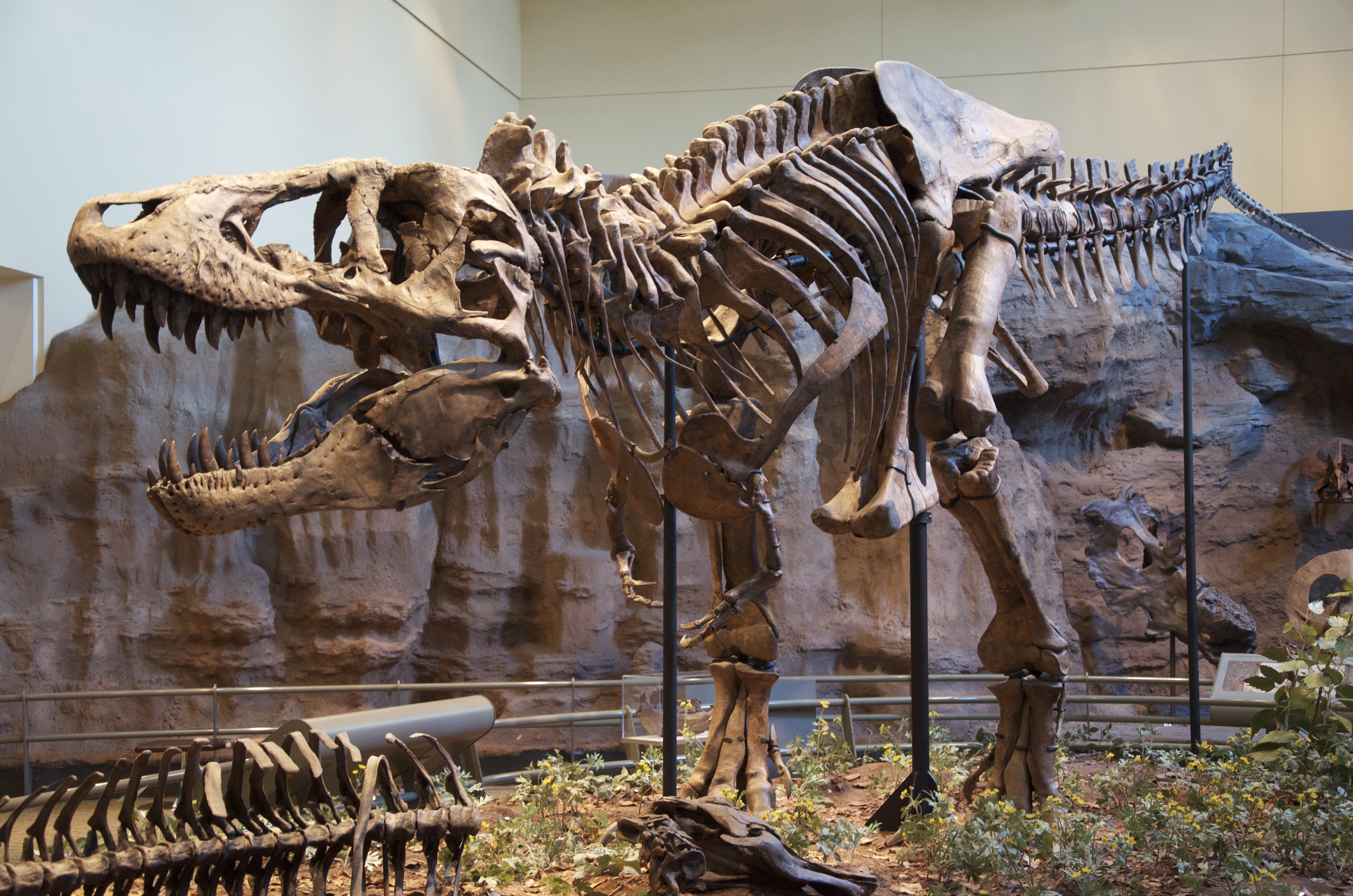
A fossil is the preserved remains or trace of a living thing from long ago. Fossils form in rock and can last for millions of years. They are how we know about animals, plants, and other living things that no longer exist. Without fossils, we would not know that dinosaurs, woolly mammoths, or giant sea reptiles ever lived.
Most fossils form in a slow, lucky process. When an animal dies, its soft parts usually rot away or get eaten. The hard parts, like bones, teeth, and shells, last longer. If the body gets buried quickly under mud or sand, those hard parts can be protected. Over thousands of years, more layers pile on top. Water seeps through the buried bone and leaves behind minerals. Bit by bit, the bone turns to stone. The shape stays the same, but the material is now rock.
Not all fossils are bones. Some are tracks, footprints, burrows, or even fossilized poop, which scientists call coprolites. These are called trace fossils. They show what an animal did, not just what it looked like. A set of dinosaur footprints can show how fast it walked and whether it traveled in a group.
Some fossils preserve soft parts in surprising ways. Insects have been found trapped in amber, which is hardened tree sap. Whole woolly mammoths have been found frozen in the ice of Siberia, with skin, fur, and stomach contents still inside. In a few rare places, even feathers and skin patterns from dinosaurs have been preserved in fine rock.
Most fossils are found in sedimentary rock, the kind made from layers of mud, sand, and tiny shells pressed together. Deeper layers are older. By looking at where a fossil sits in the rock, scientists can tell its age. The oldest dinosaur fossils are about 230 million years old, from a time long before flowers existed.
Scientists who study fossils are called paleontologists. They argue about many things. They debate what colors dinosaurs were, what sounds they made, and how some of them moved. New fossil discoveries can change the answers. In recent years, fossils with traces of feathers have shown that many dinosaurs looked more like giant birds than like the scaly monsters in older books.
Fossils are rare. Only a tiny number of living things ever become one. The chance that any single animal alive today will end up as a fossil is almost zero. Every fossil in a museum is, in its own way, a small miracle of time.
Related
Last updated 2026-04-25