
Cheetah
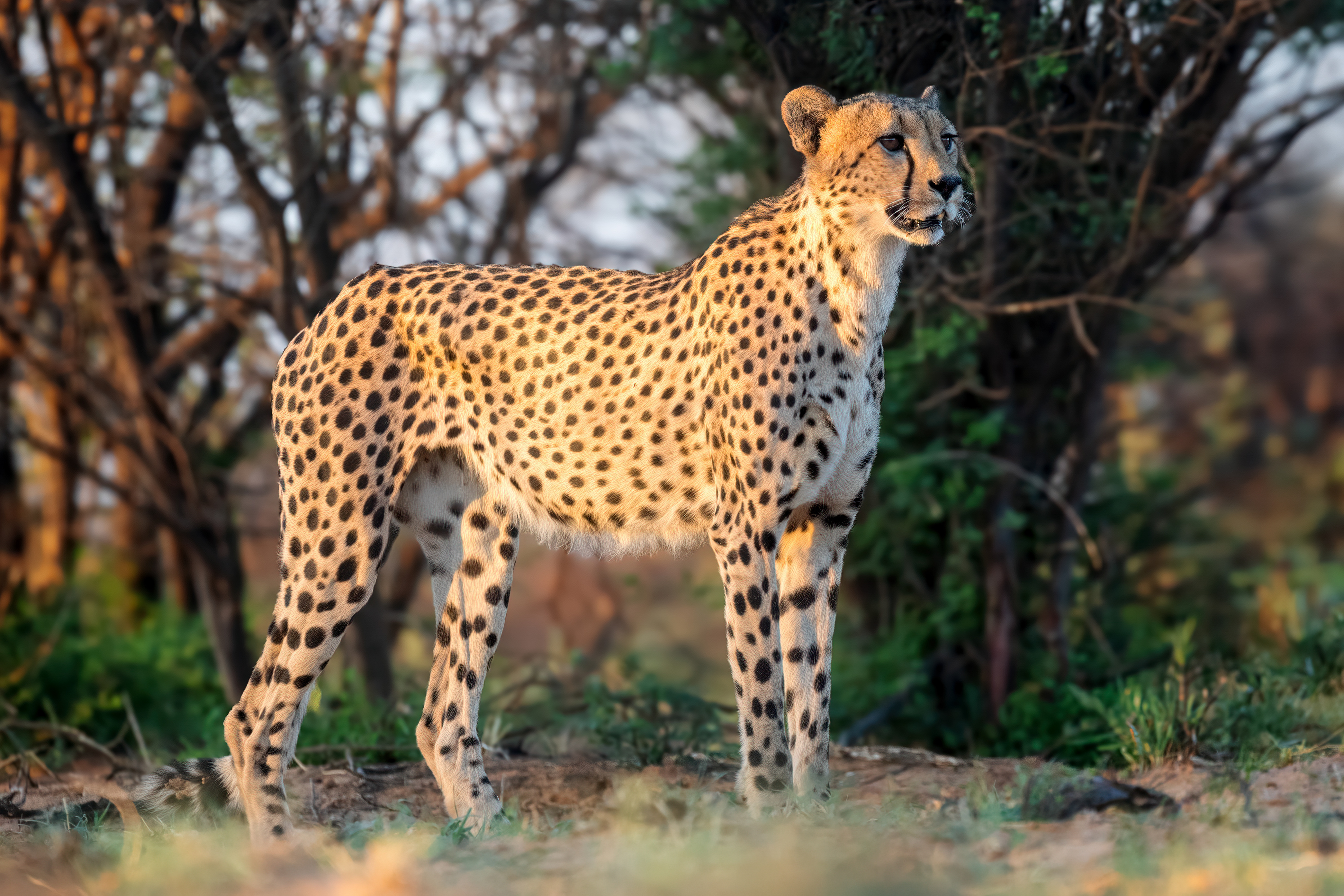
Credit: AfricanConservation · CC BY-SA 4.0
The cheetah is a large spotted cat that lives on the grasslands of Africa. A small number also live in Iran. It is the fastest land animal on Earth. An adult cheetah weighs 75 to 140 pounds and stands about three feet tall at the shoulder. Its body is built for speed, with long thin legs, a small head, and a deep chest full of lungs.
A running cheetah can reach 70 miles per hour. That is as fast as a car on the highway. It covers about 23 feet in a single stride, which is longer than a school bus is wide. But a cheetah can only run that fast for about 20 to 30 seconds. After a sprint, it has to rest and cool down for up to half an hour before it can eat.
Cheetahs hunt during the day, when lions and leopards are usually asleep. Their main prey is gazelle and other small, fast antelope. A cheetah sneaks close through the tall grass, then bursts into a sprint. The black lines under its eyes, called tear marks, soak up sunlight and reduce glare, sort of like the eye black football players wear.
A cheetah is not built like other big cats. Its claws do not fully pull back into its paws, which gives it extra grip when running, like the spikes on a runner's shoes. Its tail works like the rudder on a boat, swinging side to side to help the cat turn at high speed. And unlike a lion or a tiger, a cheetah cannot roar. It chirps, purrs, and makes a high sound that almost sounds like a bird.
Mother cheetahs raise their cubs alone. A litter usually has three to five cubs, and they stay with their mother for about 18 months while she teaches them to hunt. Cubs have a long gray mane of fur down their backs when they are small. Scientists think this mane may help them hide in the grass, or make them look like a fierce animal called a honey badger that most predators avoid.
Cheetahs are in trouble. Only about 7,000 are left in the wild. Farms and cities have taken over much of the land where they used to hunt. Cheetahs also have very low genetic variety, which means most cheetahs alive today are almost like cousins to one another. This makes it harder for them to fight off disease. Scientists and African wildlife groups are working to protect the grasslands cheetahs need, so the world's fastest runner does not disappear.
Related
Last updated 2026-04-22