
Pond
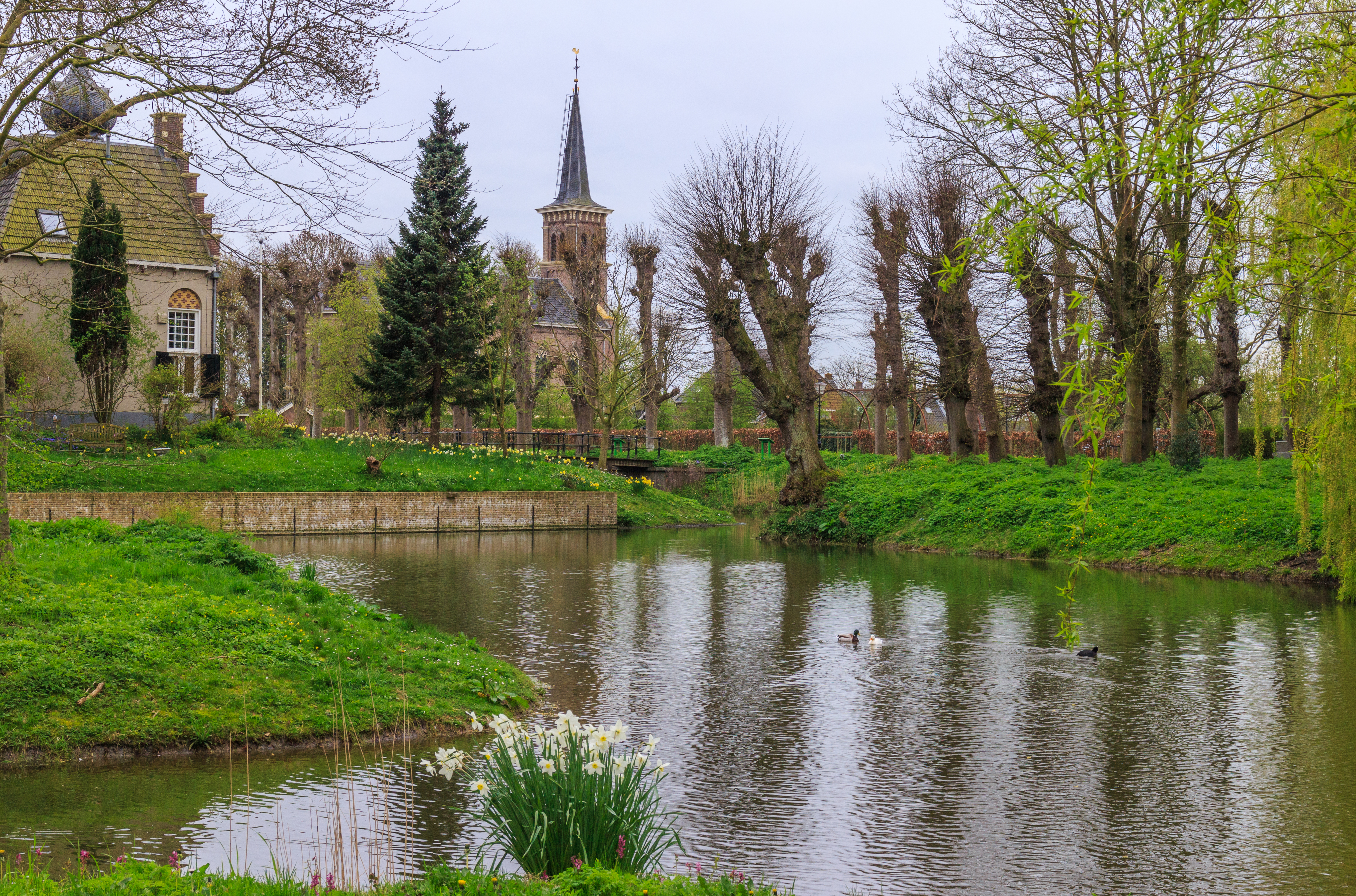
Credit: Agnes Monkelbaan · CC BY-SA 4.0
A pond is a small body of still freshwater surrounded by land. Ponds are smaller and shallower than lakes. Sunlight can usually reach all the way to the bottom, even in the middle. This is the main difference scientists use to tell a pond from a lake. If plants can grow across the whole bottom, it is probably a pond.
Most ponds are less than 15 feet deep. Many are only a few feet deep. They form in low spots where water collects, like an old streambed, a hollow left by a glacier, or a dip in a forest floor. Some ponds are made by people. Farmers dig them for cattle. Cities build them in parks. Beavers create them by damming streams with sticks and mud.
A pond is packed with life. The shallow, sunny water lets plants grow everywhere. Cattails and reeds line the edges. Lily pads float on the surface. Underwater, tiny green algae feed almost everything else. Frogs lay jelly-covered eggs in the spring. Tadpoles hatch and swim in clouds. Dragonflies dart above the water, while their young, called nymphs, hunt below. Turtles bask on logs. Ducks paddle along the top, dipping for food. Even raccoons and herons visit the edges to fish.
A pond changes through the year. In spring, frogs and toads sing so loudly at night that you can hear them from far away. In summer, the water can grow thick with algae and warm up like a bath. In fall, leaves drop in and sink, feeding bacteria at the bottom. In winter, the surface may freeze over, but life keeps going underneath. Fish slow down, and frogs bury themselves in the mud until spring.
Ponds also do not last forever. Over many years, dead leaves, mud, and plant matter pile up on the bottom. The pond gets shallower. Plants from the edges creep inward. Slowly, the pond turns into a marsh, then a meadow, and finally maybe a forest. This natural process is called succession. It can take decades or hundreds of years.
Scientists love ponds because they are tiny, complete worlds you can study all at once. A single small pond may hold hundreds of different species, from microscopic creatures to fish, plants, insects, and birds. Drop a jar into pond water and look at what comes up. Even in a teaspoon, you can find a whole busy neighborhood.
Related
Last updated 2026-04-25