
Hawk
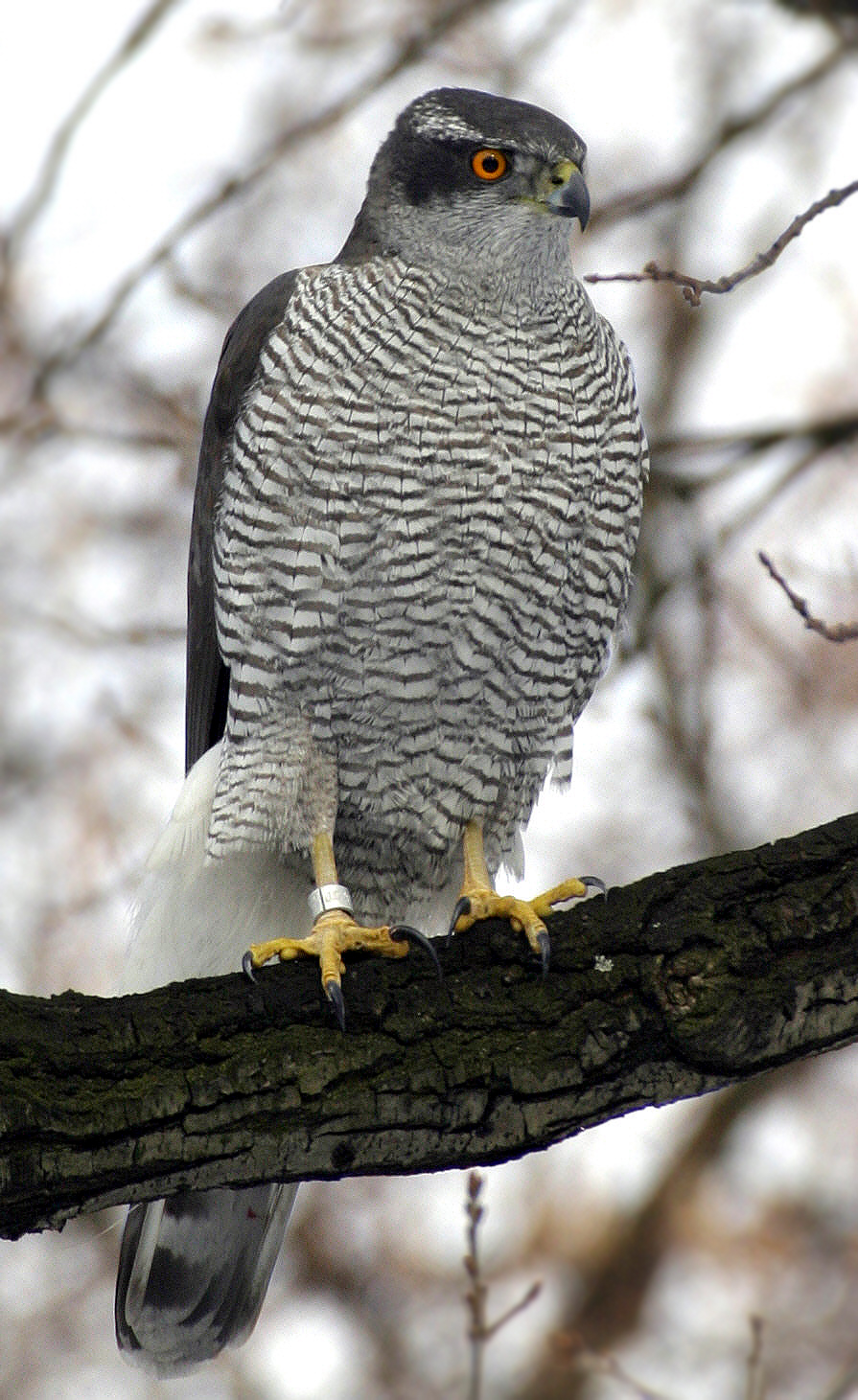
Credit: Norbert Kenntner, Berlin · CC BY-SA 3.0
A hawk is a medium-sized bird of prey found on every continent except Antarctica. Hawks hunt other animals for food, using sharp claws called talons and hooked beaks to catch and tear their meals. There are more than 200 kinds of hawks in the world. They range from the small sharp-shinned hawk, about the size of a blue jay, to the ferruginous hawk, which can have a wingspan of nearly five feet.
Hawks are built for hunting. Their eyes are huge for their heads and face mostly forward, which helps them judge distance. They can see colors humans cannot see, including some ultraviolet light. This lets them spot the urine trails left by mice and voles, which glow under ultraviolet, leading the hawk straight to its next meal.
Different hawks hunt in different ways. Red-tailed hawks perch on high branches or telephone poles and drop down on prey in open fields. Cooper's hawks twist through thick forests at high speed, chasing small birds. Harris's hawks of the American Southwest even hunt in family groups, which is very unusual among birds. A group of Harris's hawks will surround a rabbit together, then take turns flushing it out.
Hawks build large stick nests high in trees or on cliffs. A female usually lays two to four eggs. Both parents help feed the chicks, which are called eyases. Young hawks learn to hunt by watching their parents and then practicing on easy targets like grasshoppers before moving on to mice and birds.
Many hawks migrate long distances each year. In the fall, thousands gather at places like Hawk Mountain in Pennsylvania, where they ride rising columns of warm air called thermals. Riding thermals saves energy, so hawks can travel hundreds of miles without flapping much.
People have hunted with trained hawks for thousands of years. This practice, called falconry, started in Central Asia more than 4,000 years ago. Kings and nobles in medieval Europe kept hawks as symbols of status. Falconry is still practiced today in many countries, and some falconers help airports keep smaller birds away from runways.
Hawks almost disappeared from parts of North America in the 1960s because of a pesticide called DDT, which weakened their eggshells. After DDT was banned in 1972, hawk populations slowly recovered. Today red-tailed hawks are a common sight circling over highways and fields. Their sharp "keeeeer" cry is so striking that movies often play it whenever any bird of prey appears on screen, even if the bird shown is actually a bald eagle.
Related
Last updated 2026-04-22