
Vulture
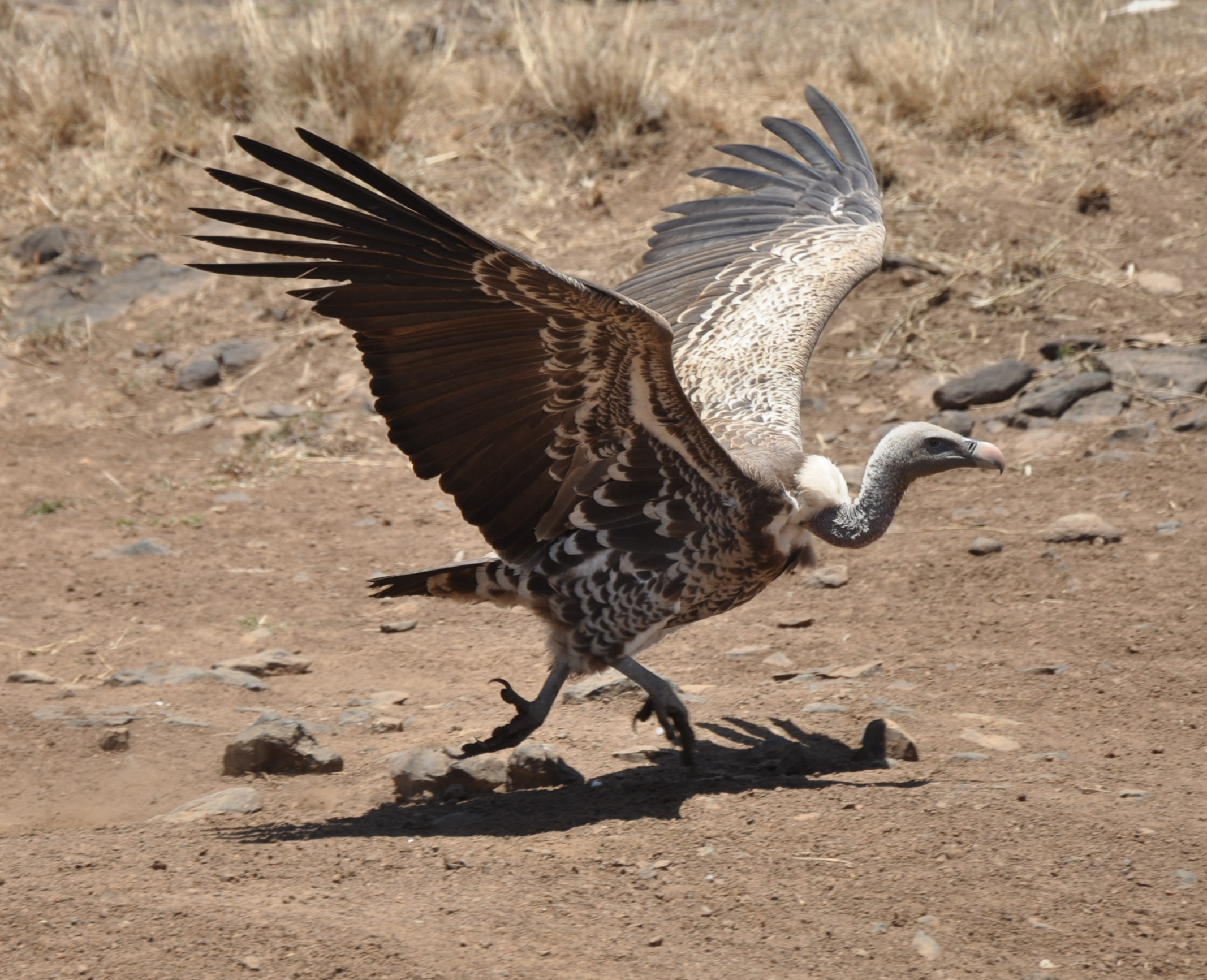
Credit: Gyps_rueppellii_-Nairobi_National_Park,_Kenya-8.jpg: Jorge Láscar from Bogotá, Colombia derivative work: Snowmanradio (talk) · CC BY-SA 2.0
A vulture is a large bird that eats dead animals. Scientists call an animal that does this a scavenger. Vultures live on every continent except Antarctica and Australia. There are 23 species in all. They are split into two groups: Old World vultures in Africa, Asia, and Europe, and New World vultures in the Americas.
Most vultures have a bald head and neck. This might look strange, but it is useful. Vultures push their heads deep into dead animals to feed. Feathers would get messy and spread germs. Bare skin is easier to keep clean and lets the sun bake off any bacteria.
Vultures are built to soar. Their wings are long and wide, sometimes stretching more than nine feet from tip to tip. Instead of flapping, vultures ride rising columns of warm air called thermals. A single vulture can glide for hours without a single wingbeat. From high up, it watches the ground for its next meal.
Different vultures find food in different ways. Turkey vultures have an amazing sense of smell. They can sniff out a dead animal from a mile away, even one hidden under the trees. Most other vultures have a weak sense of smell and hunt with their eyes instead. They also watch each other. When one vulture drops down to feed, others nearby see it and follow.
Vultures do a huge favor for the planet. By eating dead animals quickly, they stop diseases from spreading to other wildlife and to people. A group of vultures can strip a cow-sized carcass in under an hour. Their stomach acid is one of the strongest in the animal kingdom. It kills germs that would make most other animals very sick.
Sadly, many vultures are in serious trouble. In the 1990s, vulture populations in India crashed by more than 99 percent. The cause was a medicine given to cattle called diclofenac. When vultures ate the bodies of treated cows, the drug killed them. Millions of vultures died in just a few years. Without them, rotting animals piled up, and packs of wild dogs spread. India has since banned the drug, and slowly the birds are coming back.
People have long had mixed feelings about vultures. In ancient Egypt, the vulture was a symbol of motherhood and protection, and a vulture goddess named Nekhbet guarded the pharaohs. In many modern stories, though, vultures show up as creepy sidekicks circling in the desert. The real bird is neither villain nor monster. It is a quiet, careful cleanup crew that keeps the world healthier than most people realize.
Related
Last updated 2026-04-22