
Komodo Dragon
Credit: James Jolokia (james1203) · CC BY 4.0
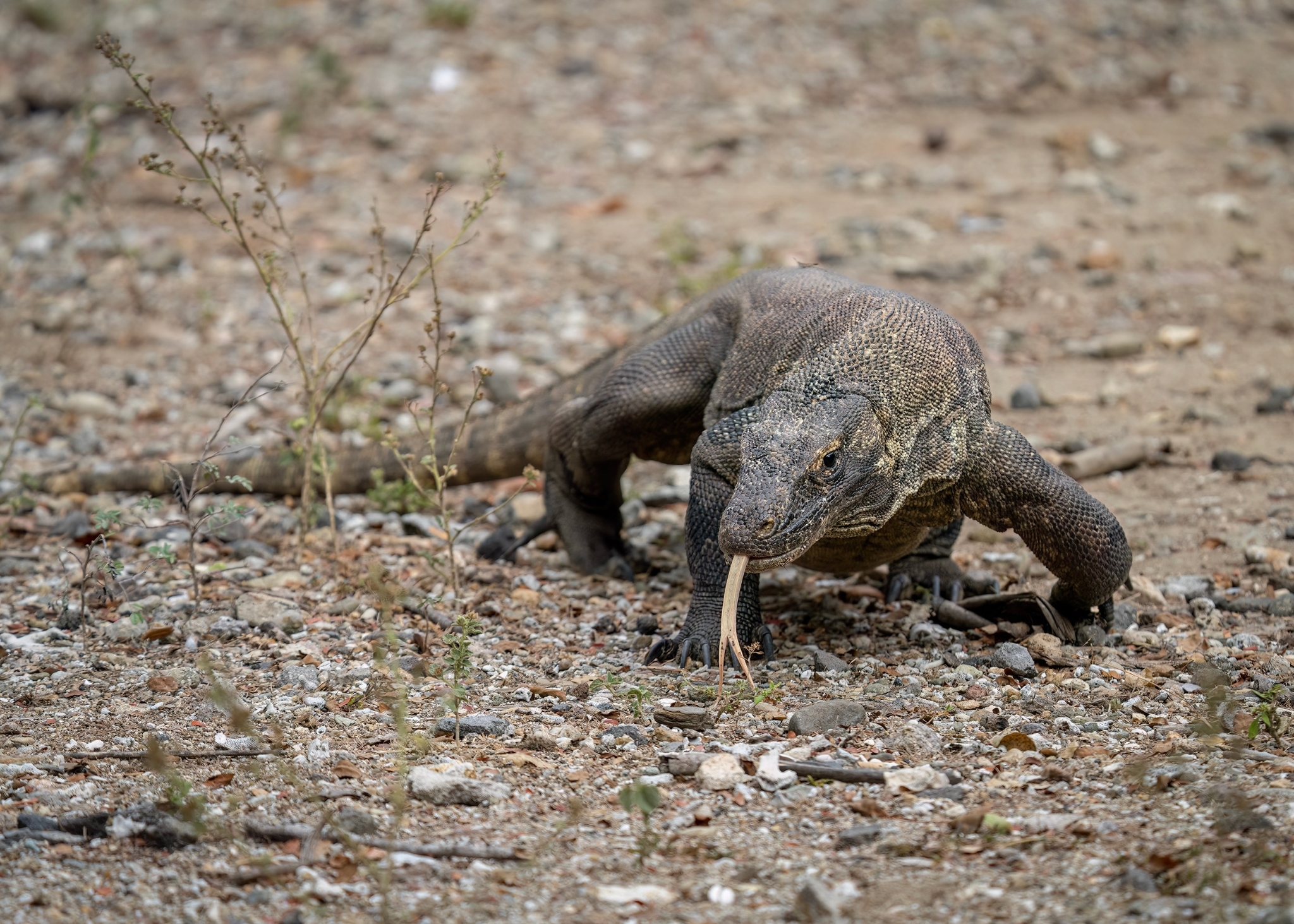
The Komodo dragon is the largest lizard in the world. It lives on a few small islands in Indonesia, mostly Komodo, Rinca, Flores, and Gili Motang. A full-grown male can be 10 feet long and weigh 150 pounds. That is about as long as a small car and as heavy as a grown man. Komodo dragons have rough gray or brown skin, strong legs, long claws, and a powerful tail.
Komodo dragons are top predators on their islands. They hunt deer, wild pigs, water buffalo, and smaller lizards. They also eat dead animals they find. A Komodo dragon can smell a rotting carcass from nearly six miles away. It uses its long yellow tongue to pick up scents from the air, much like a snake does.
When a Komodo dragon attacks, it often waits quietly in tall grass and then lunges. Its bite is dangerous in two ways. First, the mouth is full of bacteria that can cause infections. Second, scientists discovered in 2009 that the Komodo dragon also has real venom glands in its lower jaw. The venom keeps wounds from clotting, so the prey loses blood and grows weak. Sometimes a buffalo bitten by a Komodo dragon takes days to die. The dragon follows at a distance and waits.
For a long time, people argued about how Komodo dragons killed their prey. Some scientists thought only the bacteria did the job. The discovery of venom changed that story. Experts still study exactly how the bite works.
Female Komodo dragons lay about 20 eggs at a time in nests dug into the ground. The eggs hatch after eight or nine months. Baby dragons are only about 16 inches long, and they spend their first few years up in trees. They have to. Adult Komodo dragons will eat young ones, so trees are the safest place for a baby. Young dragons climb down once they get too heavy for the branches.
Komodo dragons can live about 30 years in the wild. There are only around 3,000 left, and they live in a very small part of the world. The International Union for Conservation of Nature lists them as endangered. Rising sea levels from climate change threaten their island homes. Indonesia has protected the dragons inside Komodo National Park since 1980. Scientists and park rangers carefully track the wild population each year. For many visitors, seeing a Komodo dragon in person is the closest thing to meeting a real dragon from a storybook.
Related
Last updated 2026-04-22