
Moose
Credit: Paxson Woelber · CC BY-SA 4.0
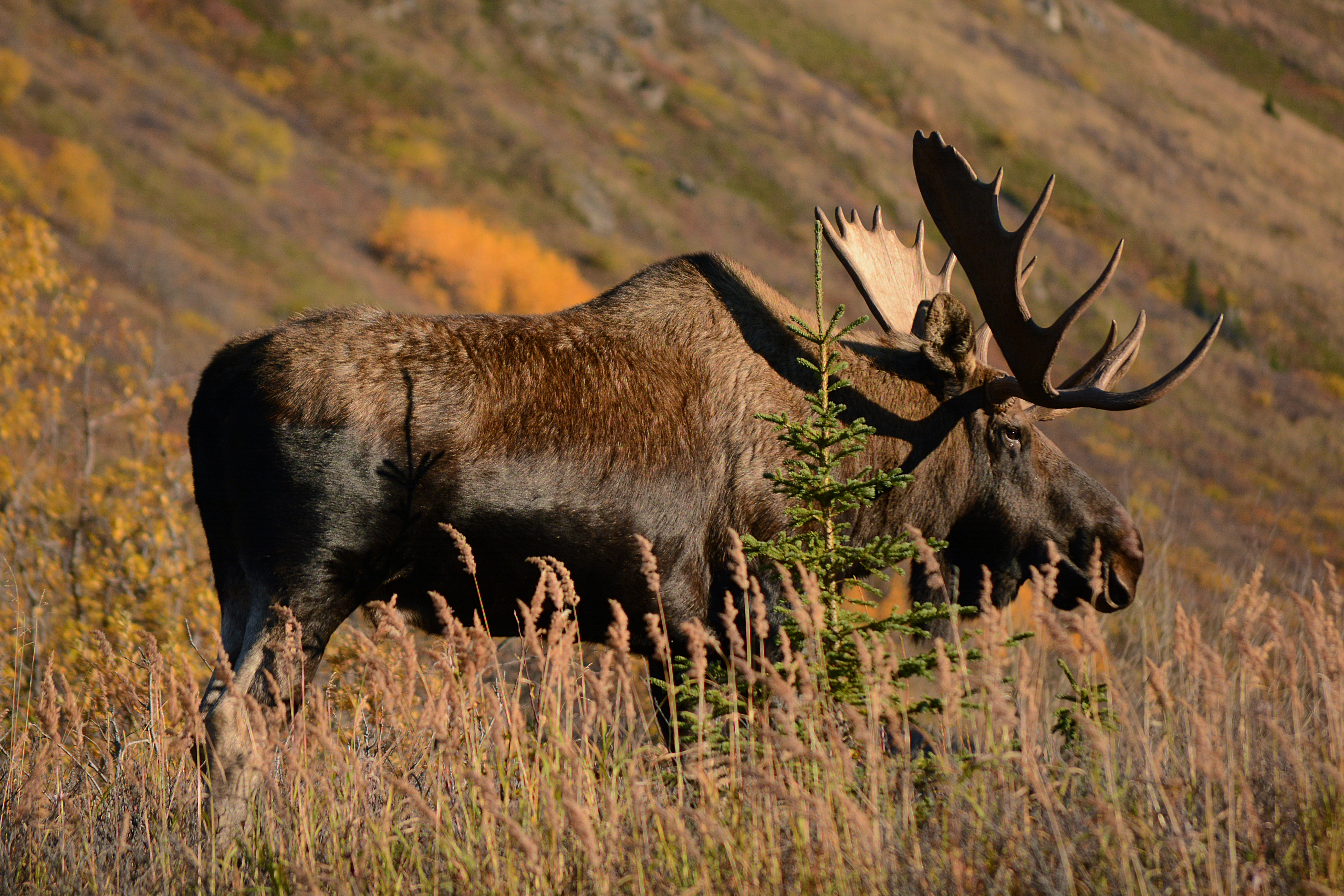
The moose is the largest member of the deer family. It lives in the cold forests of Canada, Alaska, the northern United States, Russia, and Scandinavia. A full-grown male, called a bull, can stand seven feet tall at the shoulder. That is taller than most doorways. A big bull can weigh up to 1,500 pounds, about as much as a small horse. Females, called cows, are smaller but still huge.
Moose are easy to recognize. They have long legs, a heavy body, a humped back, and a long face with a drooping upper lip. A flap of furry skin called a bell hangs under the throat. Only bulls grow antlers. Their antlers are wide and flat, shaped like open hands, and can stretch six feet from tip to tip. Bulls use the antlers to fight other males during mating season. Then they shed the antlers every winter and grow a new pair in the spring.
Moose eat plants. In summer, they wade into ponds and lakes to feed on water plants. A moose can hold its breath and dive more than 15 feet down to reach food on the bottom. In winter, they strip bark, twigs, and buds from trees. An adult moose eats about 40 to 60 pounds of plants a day.
Moose are strong swimmers and surprisingly fast runners. They can swim for hours and run up to 35 miles per hour through thick forest. Their long legs work like stilts in deep snow. Wolves and bears hunt moose, especially calves, but a healthy adult moose is dangerous prey. One kick from a back leg can break a wolf's ribs.
Moose usually live alone. A cow gives birth to one or two calves in late spring, and she guards them closely. Mother moose are known to charge people, dogs, and cars if they think their calves are in danger. Park rangers warn hikers to give moose plenty of room. More people in North America are hurt by moose each year than by bears.
In some places, moose populations are shrinking. Warmer winters caused by climate change have let tiny parasites called winter ticks spread farther north. A single moose can be covered in tens of thousands of ticks, which weakens the animal and can kill calves. Scientists are watching closely to see how moose adapt. For now, the giant of the northern forest is still out there, wading through ponds and trotting through snow.
Last updated 2026-04-22