
Ostrich
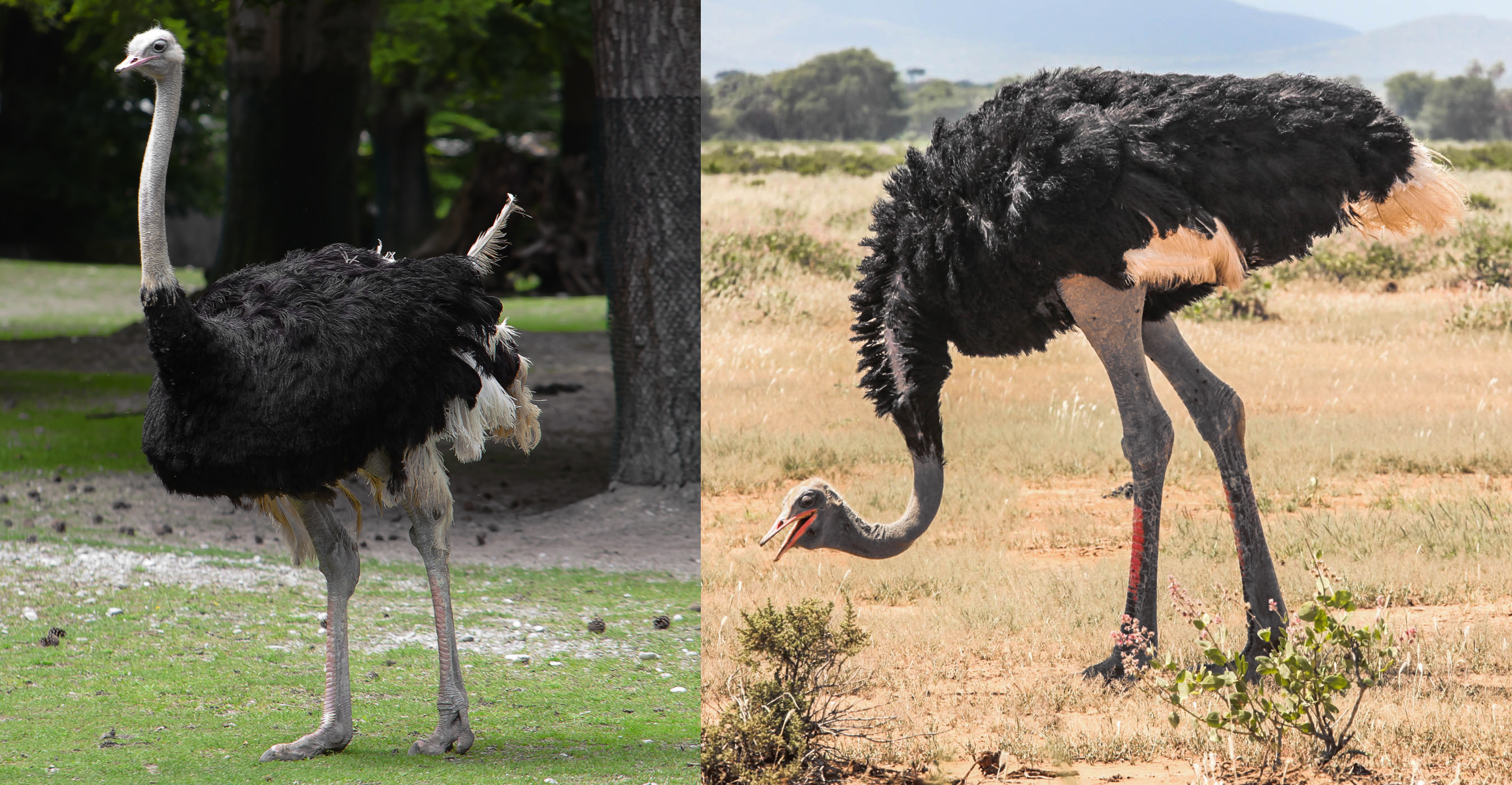
Credit: PaleoNeolitic (montage creator) Diego Delso ninara · CC BY 2.0
The ostrich is the largest living bird in the world. It lives in the dry grasslands and savannas of Africa. An adult ostrich can stand 9 feet tall, which is higher than a basketball hoop. A big male can weigh up to 320 pounds, about as much as two grown men. Ostriches belong to a group of birds called ratites, which also includes emus and kiwis.
Ostriches cannot fly. Their wings are too small to lift such a heavy body off the ground. Instead, they have become the fastest runners on two legs of any animal alive. An ostrich can sprint at 45 miles per hour, faster than a car driving through a neighborhood. It can keep up a steady run of 30 miles per hour for a long time. Its legs are so strong that a single kick can injure a lion.
Each foot has only two toes. One toe is huge and works almost like a hoof. Most birds have three or four toes, so the ostrich is unusual. The big toe helps the bird push off the ground with great force when it runs.
Ostriches eat plants, seeds, roots, and flowers. They also swallow small stones. The stones sit in a part of the stomach called the gizzard and help grind up tough food. Ostriches can go for days without drinking water. They get most of the water they need from the plants they eat.
A female ostrich lays the biggest eggs of any bird. One egg can weigh 3 pounds, about the same as two dozen chicken eggs. Several females often lay their eggs in the same nest, which is just a shallow hole scraped in the sand. The main female and the male take turns sitting on the eggs to keep them warm.
You may have heard that ostriches stick their heads in the sand when they are scared. That is a myth. Ostriches do lower their heads close to the ground, but they are checking on their eggs or looking for food. From far away, it can look like the head has disappeared. People probably started the legend by watching from a distance.
Ostriches have lived alongside humans for thousands of years. Ancient Egyptians kept them and used their feathers for fans and decorations. Today, ostriches are also raised on farms for their meat, leather, and feathers. In the wild, they are not endangered, but they have disappeared from much of the land where they once roamed.
Last updated 2026-04-22