
Penguin
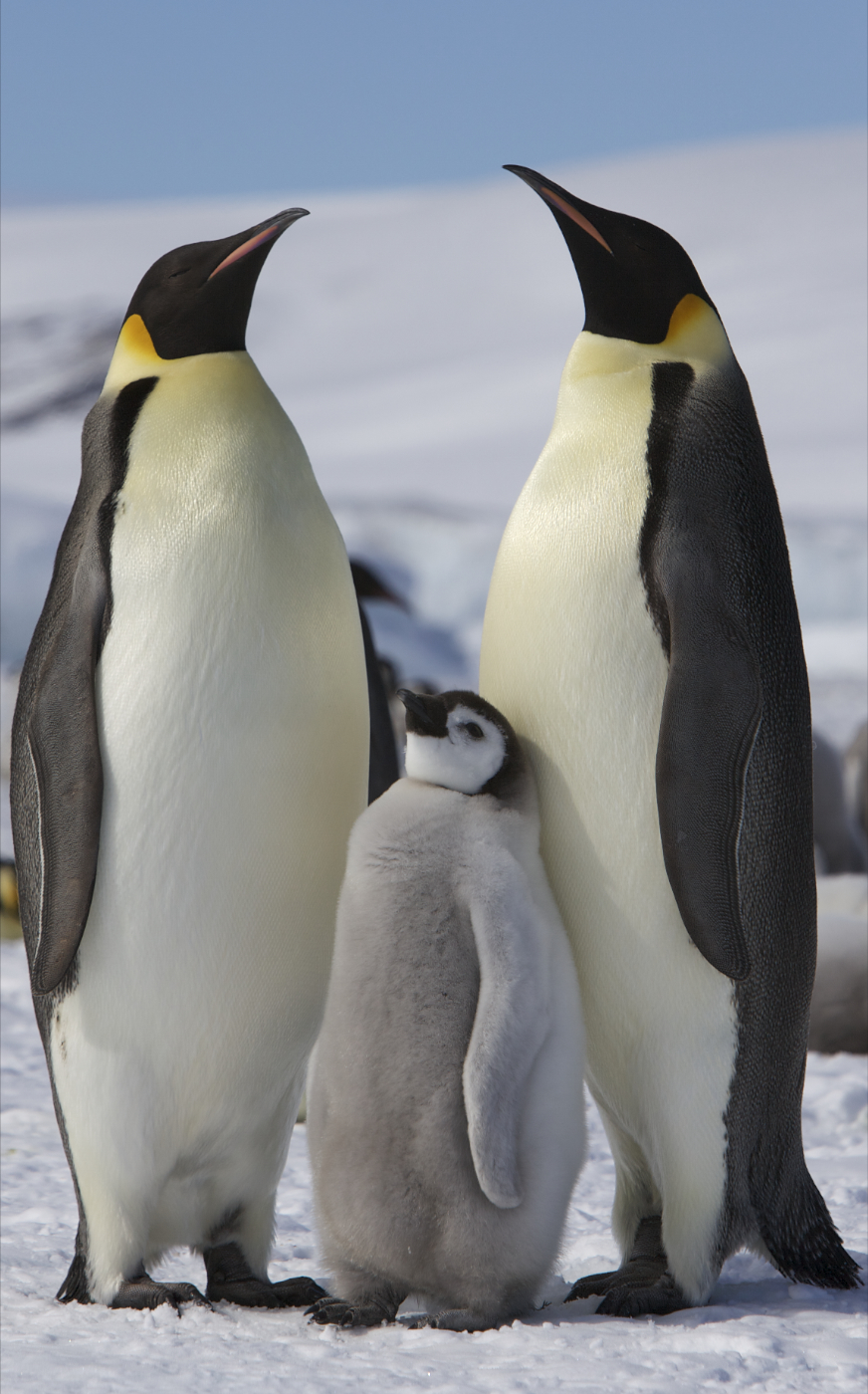
Credit: Ian Duffy from UK · CC BY 2.0
A penguin is a kind of bird that cannot fly but is a powerful swimmer. Penguins live almost entirely in the Southern Hemisphere, the half of the Earth south of the equator. There are about 18 different species. They range from the tiny little blue penguin, which stands about a foot tall, to the emperor penguin, which can reach nearly four feet.
Penguins are built for the water, not the air. Their wings have turned into stiff, narrow flippers. Their bones are heavy and solid, which helps them dive instead of float. A penguin can zip through the sea at speeds up to 20 miles per hour. Emperor penguins can dive more than 1,800 feet below the surface and hold their breath for over 20 minutes. That is deeper than most submarines go.
On land, penguins waddle. Their short legs sit far back on their bodies, which makes walking slow and tippy. To move faster over ice, many penguins flop onto their bellies and slide. This is called tobogganing.
Most people picture penguins on Antarctic ice, but only a few species actually live there. Others live on the coasts of South America, Africa, Australia, and New Zealand. The Galápagos penguin lives right at the equator, where the water is surprisingly cold thanks to ocean currents from the south.
Penguins eat fish, squid, and tiny shrimp-like animals called krill. Their black-and-white coloring helps them hunt. From above, a predator looking down sees the dark back blending into the deep water. From below, another predator looking up sees the white belly blending into the bright sky. This trick is called countershading.
Penguin parents share the work of raising chicks. Emperor penguins do it in the hardest place on Earth. The female lays a single egg, then heads back to the sea to feed. The father balances the egg on his feet under a warm flap of skin. He stands through the Antarctic winter, where temperatures can drop to negative 60 degrees Fahrenheit. Males huddle together in tight groups, taking turns on the cold outside edge.
Climate change is a growing danger to many penguin species. Warmer oceans and melting sea ice are shrinking the spaces where they hunt and breed. Scientists are especially worried about emperor penguins, because their chicks need stable sea ice to survive their first year. Several penguin species are now listed as threatened or endangered. How many will still thrive by the end of this century depends largely on what humans do next.
Related
Last updated 2026-04-22