
Seahorse
Credit: Wikimedia Commons · Public domain
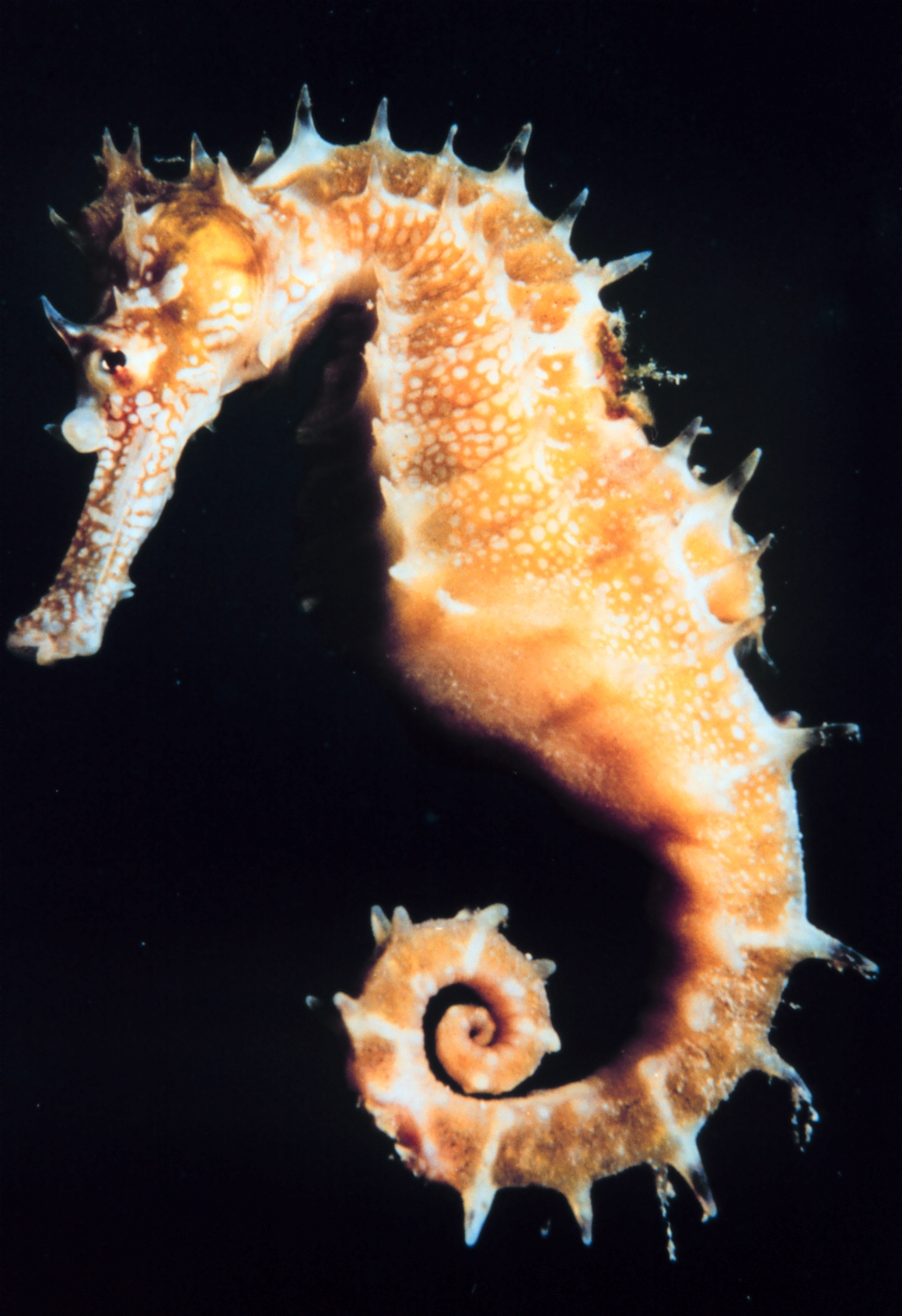
The seahorse is a small ocean fish with a head shaped like a horse and a curling tail. Seahorses belong to a group of fish called Hippocampus, which is Greek for "horse sea monster." About 47 different species live in warm and mild waters around the world. Most seahorses are found in shallow areas like coral reefs, seagrass meadows, and mangrove roots.
Seahorses do not look or swim like most fish. Their bodies stand upright in the water. A thin fin on the back flutters up to 35 times a second to push them forward. Two tiny fins near the head steer. Seahorses are some of the slowest swimmers in the ocean. The dwarf seahorse moves only about five feet per hour, which is slower than a person can walk in their sleep.
Instead of scales, seahorses have bony plates covered in thin skin. These plates act like armor. A seahorse can also change color to match its surroundings. Some species grow little skin flaps that look just like seaweed. This camouflage helps them hide from bigger fish that would eat them.
Seahorses do not have teeth or a stomach. They suck up food through their long, tube-shaped snouts like tiny vacuum cleaners. Their main meal is tiny shrimp and plankton. Because they have no stomach to store food, they eat almost constantly. A seahorse may eat 3,000 small shrimp in a single day.
The strangest thing about seahorses is how they have babies. In nearly every other animal on Earth, the mother carries the young. In seahorses, it is the father. The female lays her eggs into a pouch on the male's belly. He carries them for two to four weeks, depending on the species. Then he gives birth to hundreds or even thousands of tiny seahorses at once. Only a few will survive to adulthood.
Many seahorse species pair up and stay together. Some pairs greet each other every morning with a "dance," twisting their tails together and changing color. Scientists are still studying how long these bonds last and why some species form them while others do not.
Seahorses are in trouble today. Millions are caught each year for use in traditional medicine, for the pet trade, and as dried souvenirs. Pollution and the loss of seagrass and coral reefs also threaten them. Many species are listed as vulnerable or endangered. Protecting the shallow coastal waters where seahorses live is the best way to help them survive.
Related
Last updated 2026-04-22