
Snow Leopard
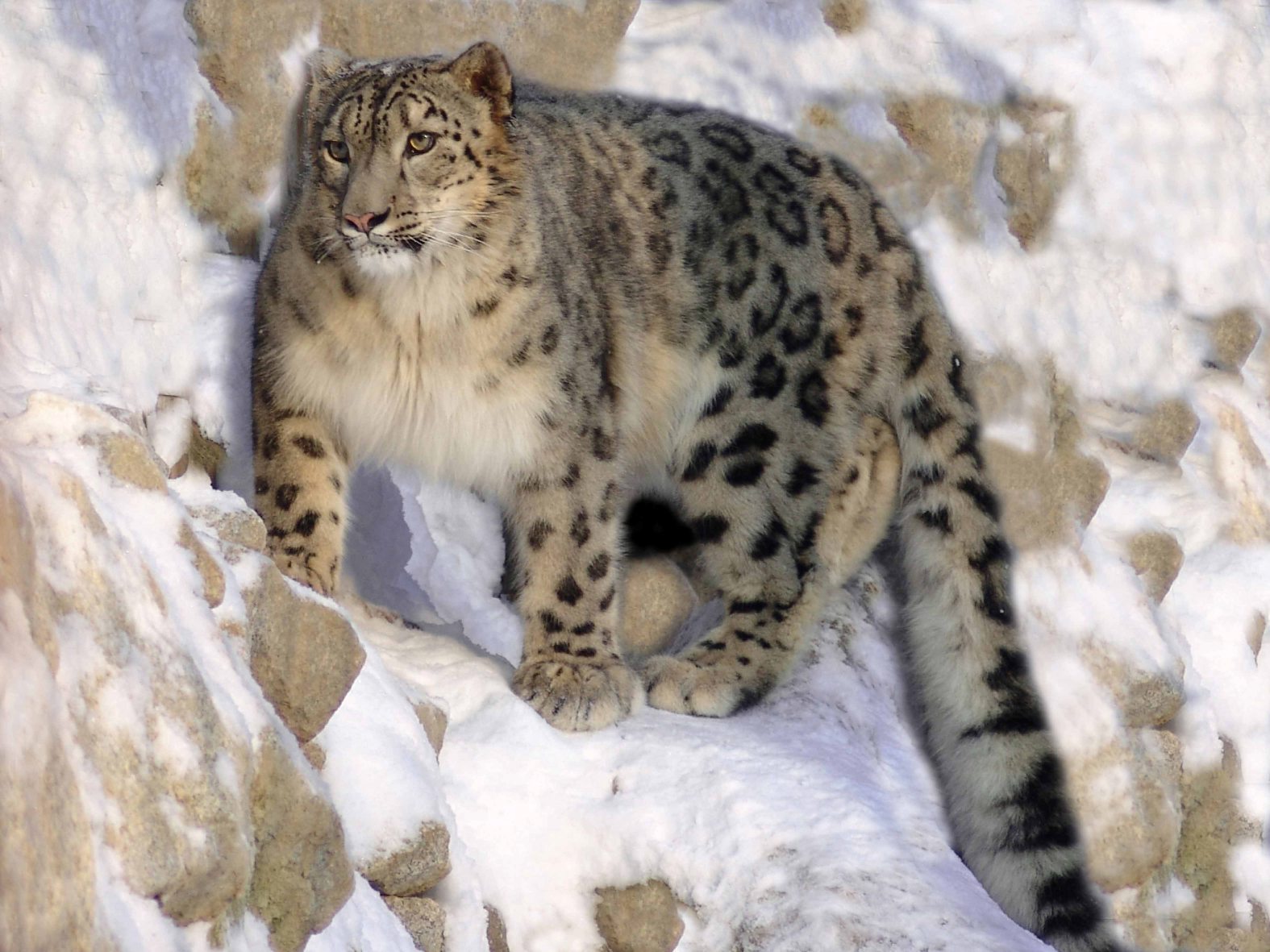
Credit: Irbis1983 · Public domain
The snow leopard is a large wild cat that lives high in the mountains of Central Asia. It has thick gray-white fur covered in dark spots and rings called rosettes. These markings help it blend into the rocks and snow of its home. An adult snow leopard weighs between 60 and 120 pounds. That is about the size of a large dog.
Snow leopards live in some of the harshest places on Earth. They are found in twelve countries, including parts of China, Mongolia, Nepal, India, and Russia. Their favorite home is the Himalayas and other mountain ranges nearby. In summer, they sometimes climb as high as 18,000 feet. That is higher than any mountain in the lower 48 United States.
The snow leopard's body is built for cold and climbing. Its fur is almost five inches thick in winter. Its wide, furry paws work like snowshoes, spreading its weight on soft snow. Its nose has a large inside space that warms cold air before it reaches the lungs. And its long, thick tail, almost as long as its body, helps it balance on narrow rocky ledges. Snow leopards also wrap their tails around their faces like scarves when they sleep.
Snow leopards hunt alone, usually at dawn or dusk. Their main prey are wild sheep and goats called blue sheep and ibex. A snow leopard can take down an animal three times its own size. It sneaks close using the rocks for cover, then leaps with huge power. Unlike lions and tigers, snow leopards cannot roar. Instead they chuff, growl, hiss, and make a soft puffing sound to greet each other.
Cubs are born in spring, usually two or three at a time. The mother hides them in a rocky den lined with her own fur. The cubs stay with her for up to two years, learning to hunt before they live on their own.
Snow leopards are hard to find and hard to count. Scientists think only about 4,000 to 6,500 are left in the wild. They are listed as vulnerable, which means they could become endangered if we do not protect them. The biggest threats are poaching, loss of habitat, and farmers who kill them to protect livestock. Because snow leopards are so rarely seen, local people in the mountains sometimes call them "ghosts of the mountains." Scientists now use hidden cameras to study them, catching quick glimpses of a cat that has spent millions of years learning how to disappear.
Related
Last updated 2026-04-22