
Turtle
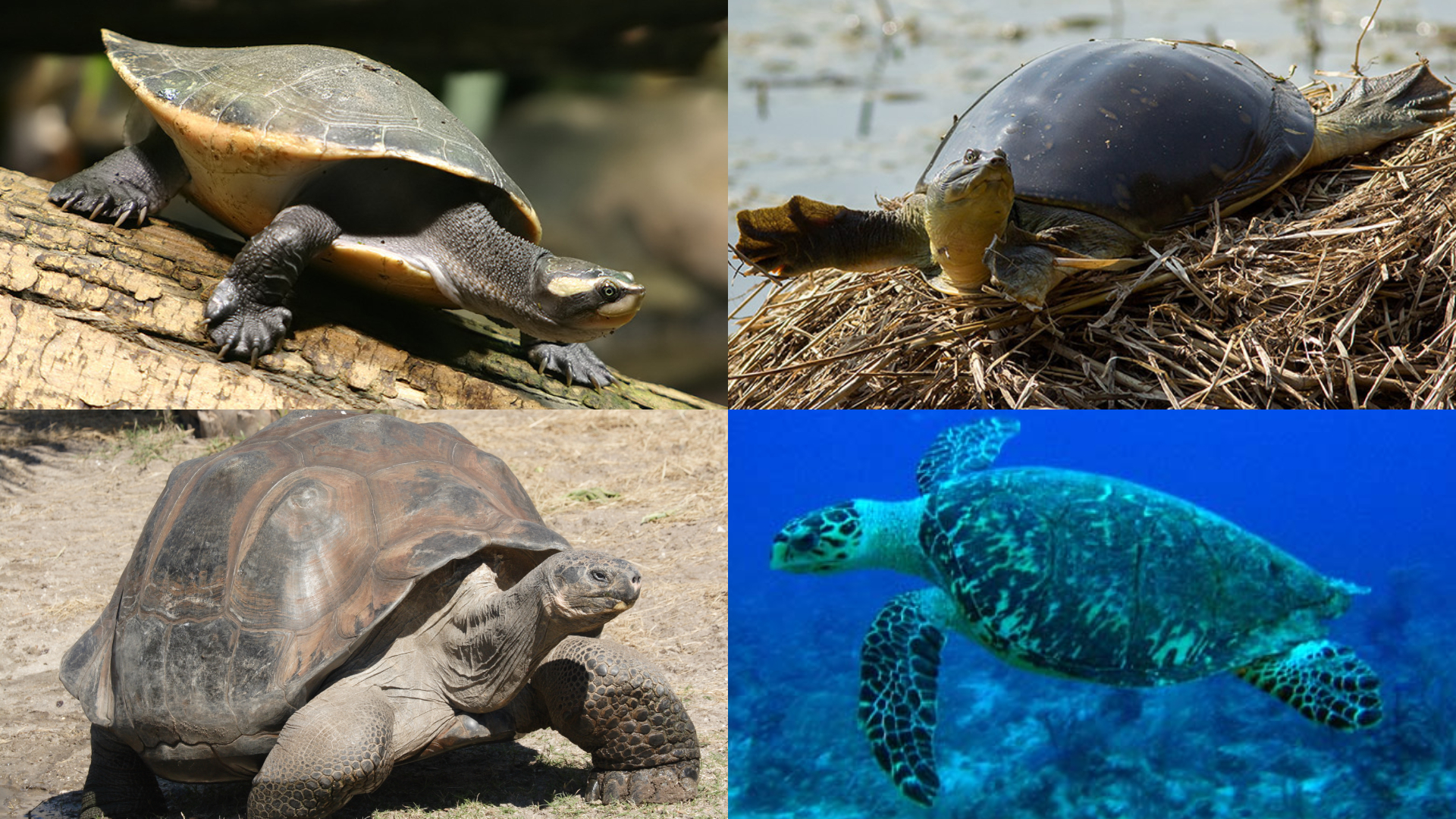
Credit: See his respective owners · CC BY-SA 4.0
A turtle is a reptile with a hard shell on its back. Turtles live on almost every continent except Antarctica. Some live in oceans, some live in rivers and ponds, and some live only on land. Land-dwelling turtles are often called tortoises. There are about 350 different kinds of turtles in the world today.
The shell is the most famous part of a turtle. It is not a house the turtle carries. The shell is part of the turtle's body, made from about 60 bones that are fused together. The turtle's spine and ribs grow right into the top of the shell. This means a turtle can never leave its shell, not even for a moment.
The top part of the shell is called the carapace. The bottom part is called the plastron. When a turtle feels scared, many kinds can pull their head, legs, and tail inside for safety. A few kinds, like sea turtles, cannot tuck in at all.
Turtles have no teeth. Instead, they have a sharp, hard beak a bit like a bird's. They use the beak to bite and tear food. What they eat depends on the species. Some turtles munch only plants. Others hunt fish, worms, jellyfish, or insects. Many eat a mix of both.
Like all reptiles, turtles are cold-blooded. Their body temperature changes with the air or water around them. That is why you often see pond turtles stacked on logs in the sun. They are warming up.
Turtles are some of the oldest animals on Earth. The first turtles appeared about 200 million years ago, before the big dinosaurs. They have survived ice ages, asteroid strikes, and huge changes in climate. They are also some of the longest-living animals. Giant tortoises can live more than 150 years. A tortoise named Jonathan, who lives on an island in the Atlantic Ocean, was born around 1832 and is still alive today.
Many turtles are in trouble now. People hunt them for meat and shells. Plastic trash in the ocean looks like jellyfish to sea turtles, and eating it can kill them. Roads cut through the ponds and forests where freshwater turtles lay their eggs. About half of all turtle species are now at risk of dying out. Scientists and volunteers around the world are working to protect nests, clean up beaches, and help baby turtles reach the water safely.
Last updated 2026-04-22