
Sea Turtle
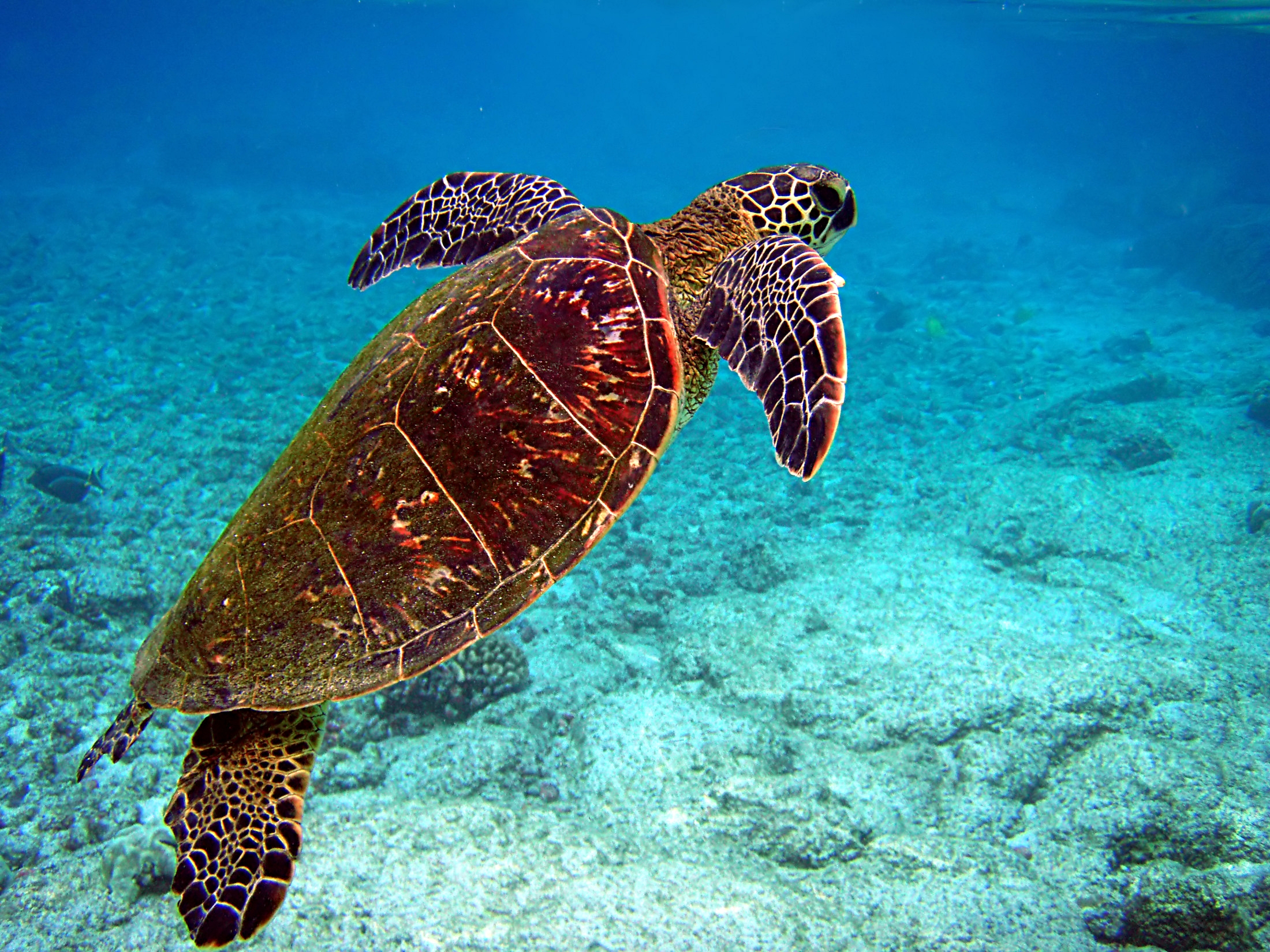
Credit: Brocken Inaglory · CC BY-SA 3.0
The sea turtle is a large reptile that lives in warm oceans around the world. Unlike land turtles, sea turtles spend almost their whole lives in the water. Their arms and legs have become flippers shaped like paddles. There are seven kinds of sea turtles alive today. The smallest is the Kemp's ridley, at about 100 pounds. The biggest is the leatherback, which can weigh 2,000 pounds, as much as a small car.
Sea turtles cannot pull their heads into their shells the way most other turtles can. Their shells are lighter and more streamlined, which helps them glide through the water. A green sea turtle can swim at almost 20 miles per hour when it needs to. Most of the time, though, it cruises slowly and eats sea grass, jellyfish, crabs, or sponges, depending on the species.
Females come ashore to lay eggs, and it is one of the strangest trips in nature. A female will swim thousands of miles back to the very same beach where she herself hatched. Scientists think she uses Earth's magnetic field like a map. She digs a hole in the sand with her back flippers, lays about 100 soft eggs, covers them up, and crawls back to the sea.
About two months later, the babies hatch all at once, usually at night. They scramble across the sand toward the brightest light on the horizon, which is normally the moon reflecting off the water. Only about 1 in 1,000 hatchlings will live long enough to become an adult. Crabs, birds, and fish eat most of them in the first days of life.
Something strange happens inside the nest while the eggs grow. The temperature of the sand decides whether a baby will be male or female. Cooler sand makes more males. Warmer sand makes more females. As oceans and beaches heat up, scientists have found nests where almost every hatchling is female. This worries researchers, because a species needs both sexes to keep going.
Sea turtles have lived on Earth for more than 100 million years. They swam past dinosaurs and survived the asteroid that killed them. Today, though, six of the seven species are threatened or endangered. Plastic bags in the ocean look like jellyfish, and turtles eat them and die. Boats hit them. Fishing nets drown them. Beaches where they nest are lit up and built over.
People are fighting to save them. Volunteers guard nests, turn off lights near beaches, and cut turtles free from nets. A sea turtle can live 80 years or more, so a hatchling protected today may still be swimming when today's fifth graders are grandparents.
Related
Last updated 2026-04-22