
Whale Shark
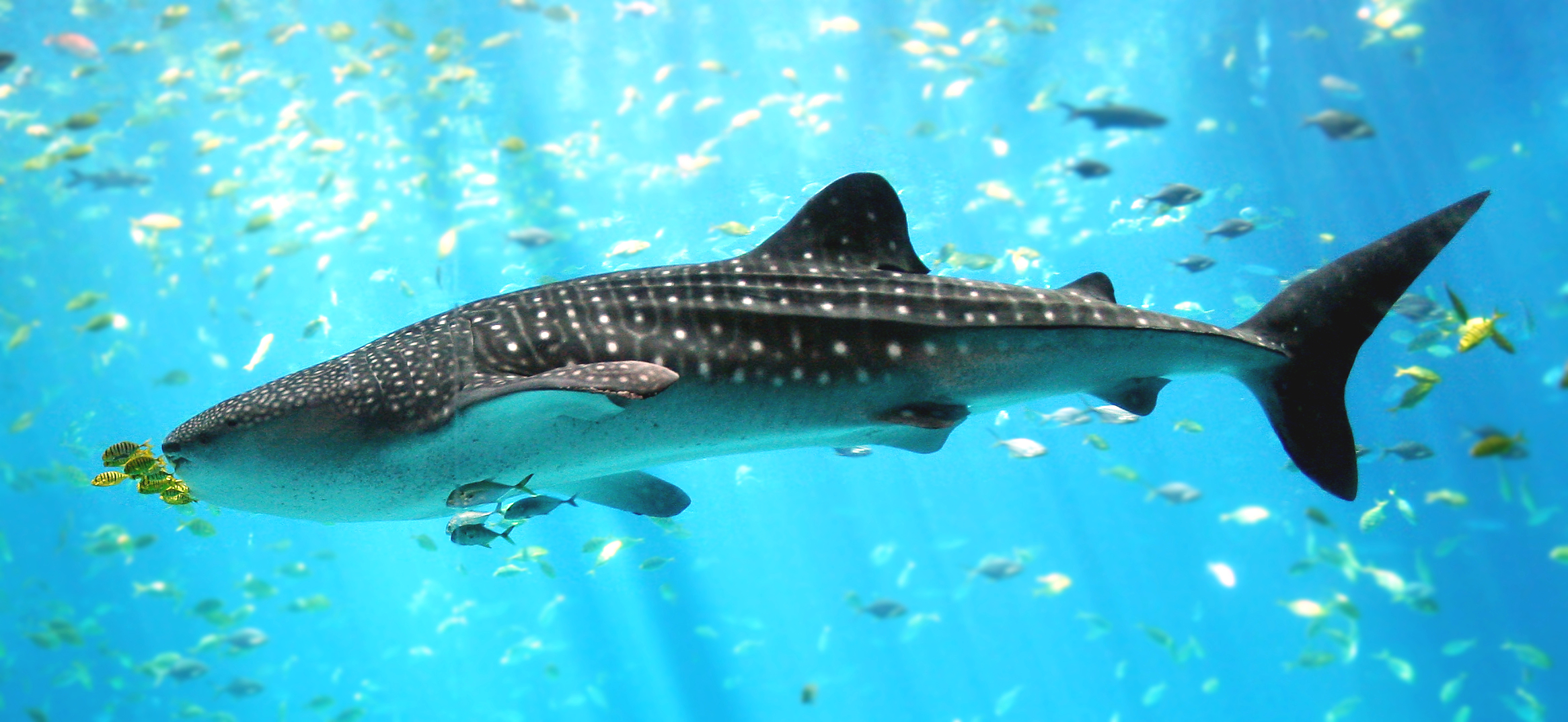
Credit: User:Zac Wolf (original), en:User:Stefan (cropping) · CC BY-SA 2.5
The whale shark is the largest fish in the world. It lives in warm oceans near the equator, including parts of the Atlantic, Pacific, and Indian Oceans. Despite its huge size, the whale shark is gentle and does not hunt people. It is a shark, not a whale. Like other sharks, it breathes through gills and has a skeleton made of soft, bendy cartilage instead of bone.
Whale sharks can grow more than 40 feet long. That is about the length of a school bus. The biggest ones ever measured weighed close to 20 tons, more than two adult elephants put together. Their mouths can stretch nearly five feet wide, wide enough to swallow a kid sitting down. But the whale shark's throat is only about the size of a quarter.
With such a tiny throat, the whale shark cannot eat big prey. Instead, it is a filter feeder. It swims slowly with its enormous mouth open, scooping in seawater full of tiny animals. Then it pushes the water back out through its gills. Special pads inside the gills trap the food. A whale shark eats mostly plankton, krill, fish eggs, and small fish. A full-grown whale shark can filter more than 1,500 gallons of water every hour.
The skin of a whale shark is covered in rows of pale spots and stripes against a dark gray or blue background. The pattern is different on every shark. Scientists take photos of the spots near a shark's gills and use computer programs to match them, the same way police match fingerprints.
Whale sharks are slow swimmers. They cruise along at about three miles per hour, slower than most people walk. They travel huge distances across the ocean. One female was tracked swimming more than 12,000 miles from Central America to the waters near Africa.
Much about whale sharks is still a mystery. Scientists are not sure where they go to give birth, or where the youngest ones spend their early years. Baby whale sharks are rarely seen in the wild. In 1995, a fisherman caught a female carrying about 300 babies inside her, which showed that whale sharks hatch from eggs while still inside their mother.
The whale shark is listed as endangered. People hunt them for their fins and meat in some parts of the world, and boat propellers injure them in busy waters. Many countries now protect whale sharks, and tourists travel far to swim beside the biggest fish on Earth.
Related
Last updated 2026-04-22