
Wombat
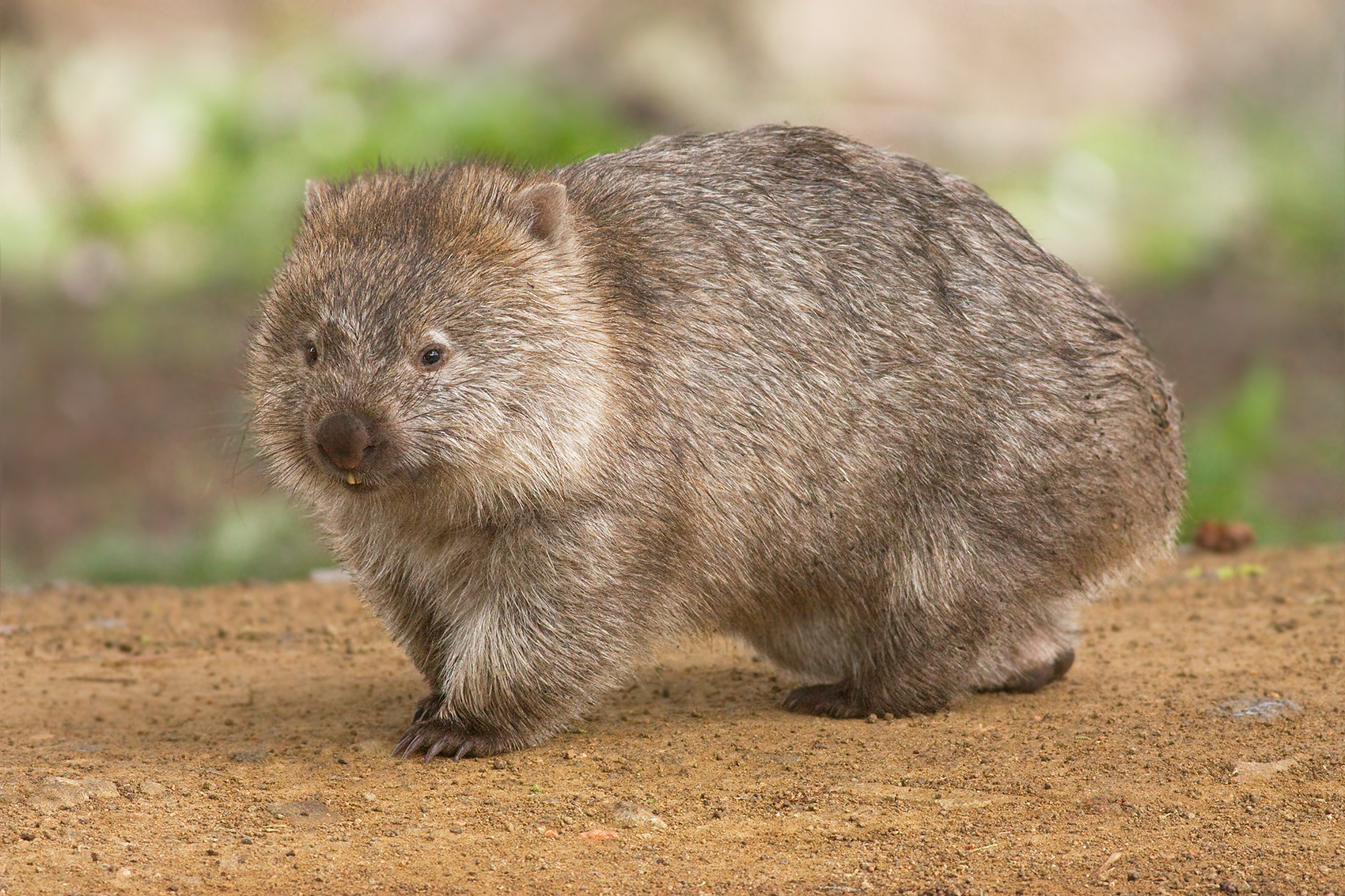
Credit: JJ Harrison (jjharrison89@facebook.com) · CC BY-SA 3.0
The wombat is a short, stocky marsupial that lives in Australia. A marsupial is a mammal whose babies are born tiny and finish growing inside a pouch on the mother's body. Wombats look a bit like small bears, but they are more closely related to koalas. An adult wombat is about three feet long and weighs between 45 and 80 pounds, roughly the size of a medium dog.
There are three kinds of wombats. The common wombat lives in forests and mountains in southeastern Australia. The southern hairy-nosed wombat lives in dry grasslands. The northern hairy-nosed wombat is one of the rarest mammals on Earth, with only about 400 left in the wild. All three kinds eat grass, roots, bark, and moss.
Wombats are master diggers. They use strong legs and thick claws to carve tunnels called burrows into the ground. A single wombat burrow can be 100 feet long, with side rooms and several entrances. One wombat may use more than a dozen burrows across its territory. Inside the burrow, the temperature stays steady all year, which keeps the wombat cool in summer and warm in winter.
A wombat's pouch opens backward, facing the mother's rear legs. This might sound strange, but it makes sense for an animal that digs. If the pouch opened forward, it would fill with dirt every time the mother tunneled. A baby wombat, called a joey, stays in the pouch for about six months and then rides on its mother's back for several more.
Wombats have one of the strangest defenses in the animal world. Their rear end is covered in tough, thick skin and cartilage, almost like a built-in shield. If a predator such as a dingo chases a wombat into its burrow, the wombat blocks the entrance with its rump. Some scientists think wombats can even crush a predator's skull against the roof of the tunnel, though this is still debated.
Wombats may look slow, but they can run up to 25 miles per hour for short bursts, faster than most humans can sprint. They are mostly active at night, which helps them avoid the heat of the Australian day.
During the huge bushfires of 2019 and 2020, stories spread online that wombats were herding other animals into their burrows to save them. The truth is less heroic. Wombats did not lead rescues, but their deep, cool burrows did shelter many small animals from the flames by accident.
Related
Last updated 2026-04-22