
Circus
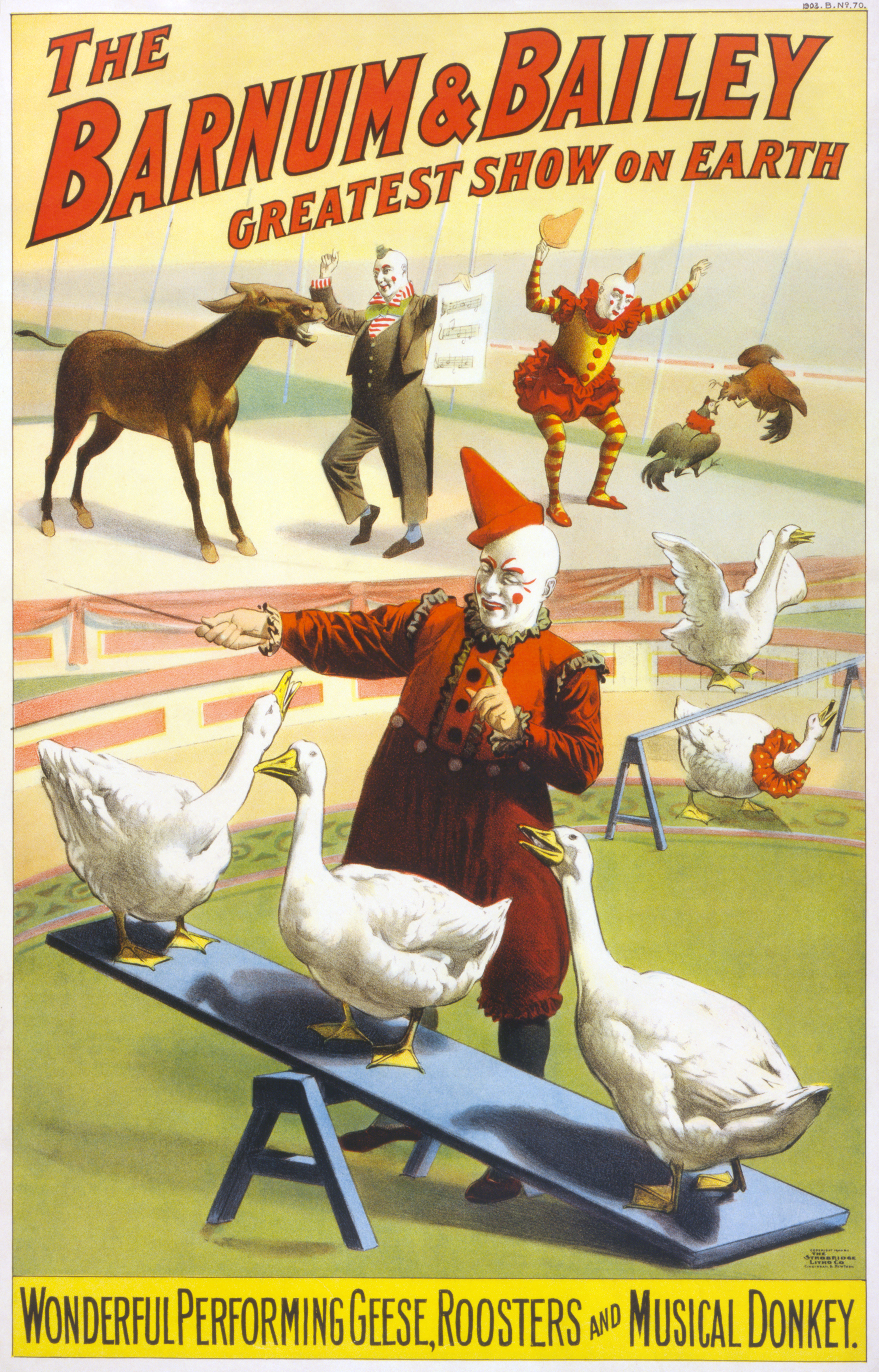
Credit: The Strobridge Litho. Co., Cincinnati & New York. · Public domain
A circus is a traveling show that mixes acrobats, clowns, jugglers, and other skilled performers into one big performance. Circus shows usually happen in a round ring inside a large tent or arena. The audience sits in a circle around the ring and watches the action from every side. Circuses have been entertaining people for more than 200 years.
The word "circus" comes from a Latin word that means "circle." In ancient Rome, a circus was a long oval track where people watched chariot races and other contests. The Circus Maximus in Rome could hold around 150,000 people, more than most football stadiums today. But the Roman circus was very different from the modern one. It was mostly racing and dangerous games, not acrobats and clowns.
The modern circus began in London in 1768. A former soldier named Philip Astley rode his horse in a tight circle while standing on its back. He found that the circle helped push him outward and keep his balance. Astley added clowns, jugglers, and tightrope walkers between his riding tricks. Other showmen copied him, and the idea spread across Europe and to the United States.
A circus performance brings together many different acts. Acrobats flip through the air on a trapeze high above the ring. Tightrope walkers cross a thin wire stretched between two platforms. Jugglers toss balls, clubs, and rings. Clowns make people laugh with silly costumes and tumbling. Ringmasters in tall hats tell the audience what is coming next. In older circuses, trained elephants, tigers, and lions were often part of the show too.
The use of wild animals has changed a lot. Many people now believe it is wrong to make tigers, elephants, and other big animals perform tricks. Several countries have banned wild animal acts, and some famous circuses have stopped using them. Ringling Bros. and Barnum & Bailey, which once called itself "The Greatest Show on Earth," closed in 2017 after 146 years. It reopened in 2023 with no animal acts at all.
A new style called "contemporary circus" has grown popular since the 1980s. The most famous example is Cirque du Soleil, which started in Canada in 1984. These shows skip the animals and focus on human skill, music, costumes, and stories. The performers do things that look almost impossible, like spinning from long silk ropes hung from the ceiling. The circus is still changing, but the tent, the ring, and the gasps from the crowd remain the same.
Last updated 2026-04-26