
Classical Music
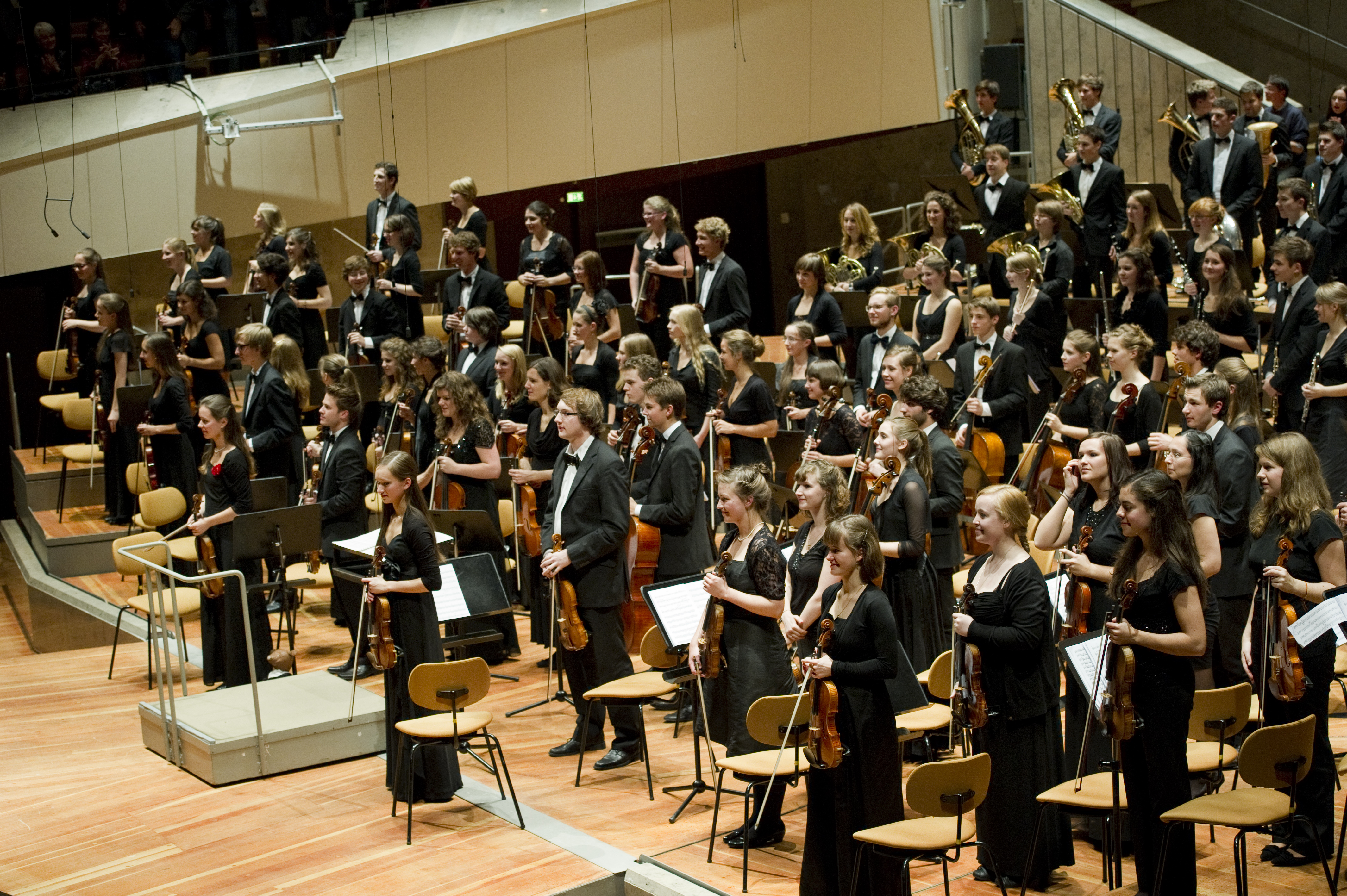
Credit: Steffen Kugler, Berlin / Bundesjugendorchester · CC BY-SA 3.0 de
Classical music is a kind of music with roots in Europe, going back about a thousand years. It is usually written down on paper using musical notes. The same piece can be played the same way hundreds of years later. Classical music is often performed by orchestras, small groups, or solo musicians on instruments like the violin, piano, cello, and flute.
The word "classical" can be confusing. In a broad sense, it covers all written European art music from the Middle Ages to today. In a stricter sense, "Classical" with a capital C means music from one specific period, the late 1700s, when Mozart and Haydn were writing.
Music historians usually split classical music into a few main eras. The Medieval era, from about 500 to 1400, included plain singing in churches called chant. The Renaissance era, from 1400 to 1600, added more voices and harmony. The Baroque era, from 1600 to 1750, brought fancy melodies and composers like Bach and Handel. The Classical era, from 1750 to 1820, gave us Mozart, Haydn, and the early works of Beethoven. The Romantic era, from 1820 to 1900, was bigger and more emotional, with composers like Tchaikovsky and Brahms. After 1900, modern composers tried bold new ideas, sometimes leaving regular melodies behind.
Classical music comes in many forms. A symphony is a long piece for a full orchestra, usually in four parts called movements. A concerto features one solo instrument playing with the orchestra. A sonata is for one or two instruments. An opera is a story sung on stage with costumes and scenery. A ballet uses orchestra music to go with dance.
The instruments of an orchestra are sorted into four groups, called sections. The strings include violins, violas, cellos, and basses. The woodwinds include flutes, clarinets, and oboes. The brass section has trumpets, trombones, and French horns. The percussion includes drums, cymbals, and the triangle. A full orchestra can have more than 80 players, all reading from the same written score.
A conductor stands in front of the orchestra. The conductor does not play an instrument during the performance. Instead, the conductor uses a small stick called a baton to keep time and shape how loudly or softly each section plays.
Classical music still shapes the music people hear every day. Movie scores, video game soundtracks, and many pop songs use ideas borrowed from classical composers. The next time you hear a sweeping melody during a movie chase scene, listen closely. The strings, brass, and drums are doing what orchestras have done for hundreds of years.
Last updated 2026-04-26