
Beethoven
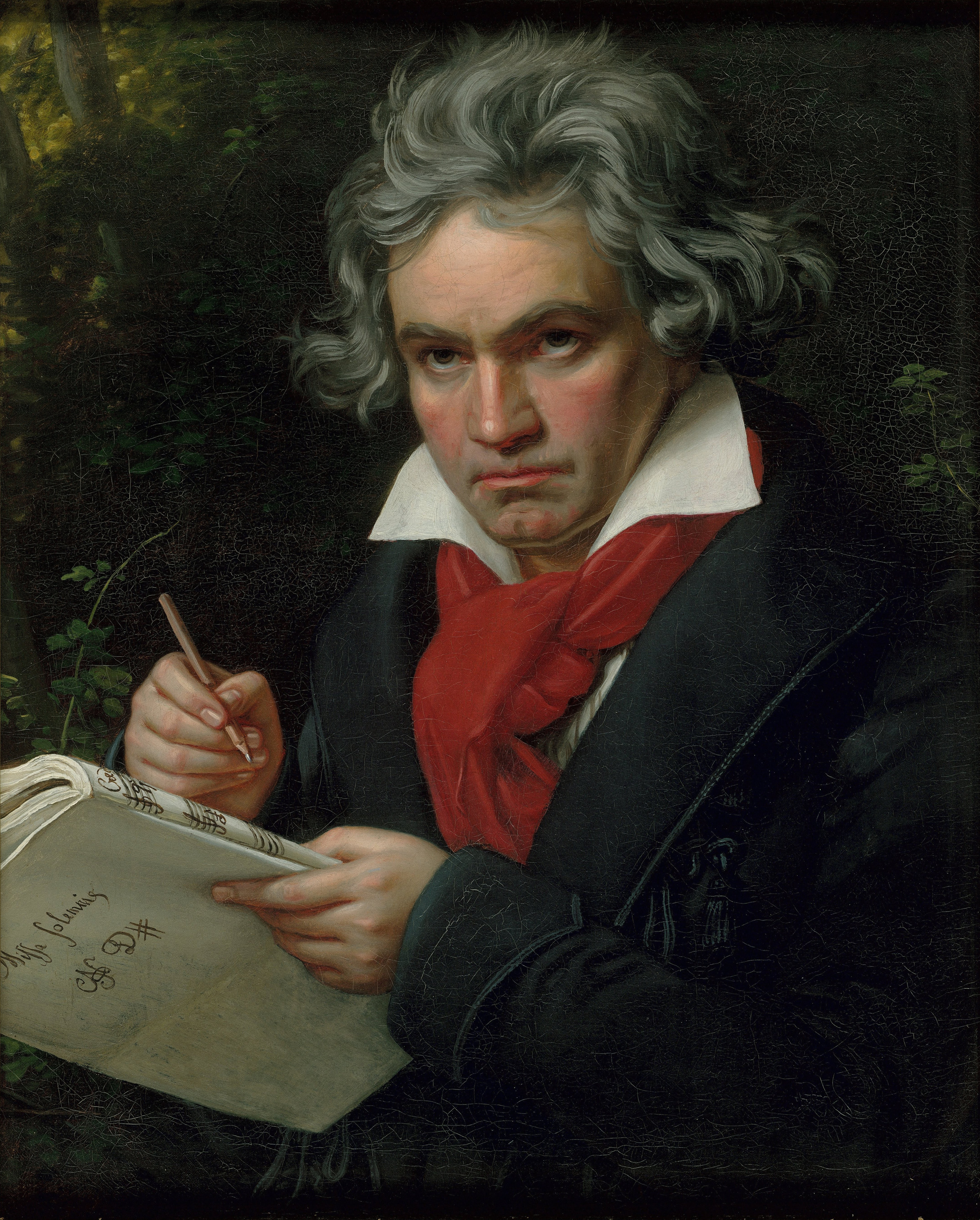
Credit: Joseph Karl Stieler · Public domain
Ludwig van Beethoven was a German composer who wrote some of the most famous music in the world. He lived from 1770 to 1827. Beethoven wrote symphonies, piano pieces, string quartets, and one opera. He is often called one of the greatest composers who ever lived.
Beethoven was born in the city of Bonn, in what is now Germany. His father was a music teacher who pushed him hard, sometimes cruelly. By age seven, Ludwig was already performing in public. By his teens, he was earning money as a court musician to help support his family. When he was about 21, he moved to Vienna, the music capital of Europe at the time. He studied there with the older composer Joseph Haydn.
In Vienna, Beethoven became famous fast. People crowded into concerts to hear him play the piano. He was known for being bold and emotional at the keyboard. He could also make up new music on the spot, a skill called improvisation.
Then something terrible happened. In his late twenties, Beethoven started to lose his hearing. For a musician, this was a nightmare. He grew sad and withdrew from people. In 1802, he wrote a letter saying he had even thought about giving up. But he chose to keep working. "I will seize fate by the throat," he wrote.
Over the next 25 years, Beethoven kept composing as his hearing got worse. By the end of his life, he was almost completely deaf. He wrote his Ninth Symphony, one of the most famous pieces of music ever written, when he could barely hear at all. The Ninth includes a section for singers called the "Ode to Joy." Today it is the official anthem of the European Union.
Beethoven changed what music could do. Before him, most composers wrote music for kings, churches, or rich families who paid them. Beethoven wrote music for himself, about his own feelings, and sold it to the public. He made music longer, louder, and more dramatic. Composers who came after him had to deal with his shadow for the next hundred years.
Beethoven died in Vienna in 1827. About 20,000 people came to his funeral, in a city of around 300,000. That is roughly one out of every 15 people. His music is still performed every day, all over the world. The four short notes that open his Fifth Symphony, da-da-da-DUM, may be the most recognized notes in music history.
Last updated 2026-04-26