
Delta
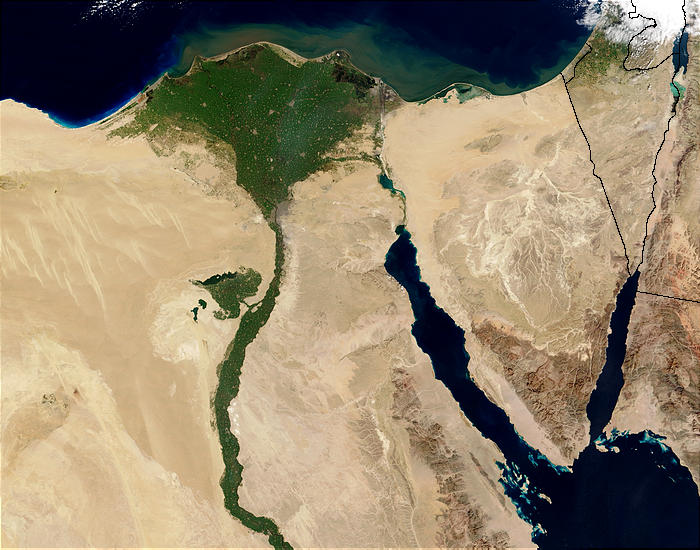
Credit: Jacques Descloitres, MODIS Rapid Response Team, NASA/sh · Public domain
A delta is a flat area of land that forms where a river flows into a larger body of water. Most deltas form where rivers meet the ocean, but some form at lakes or seas. The river drops the dirt, sand, and small rocks it has been carrying. Over time, this material piles up and builds new land at the river's mouth.
Rivers act like giant conveyor belts. As water flows downstream, it picks up tiny bits of soil and rock called sediment. A fast river can carry a lot of sediment. But when the river meets a still ocean or lake, the water slows down. Slow water cannot carry as much. So the sediment sinks and settles to the bottom.
Year after year, the settled sediment grows higher. It splits the river into smaller channels that branch out like the fingers of a hand. These smaller channels are called distributaries. The land between them is often soft, muddy, and full of plants.
Deltas come in different shapes. The Nile Delta in Egypt has a triangle shape, like a fan opening toward the sea. The Mississippi River Delta in Louisiana has a long, branching shape that scientists call a "bird's foot." The Ganges-Brahmaputra Delta in Bangladesh and India is the largest delta in the world. It covers an area bigger than the state of West Virginia.
Deltas are some of the best places on Earth for farming. The sediment a river drops is rich in nutrients that plants need. Ancient Egyptians depended on the yearly flooding of the Nile to grow wheat and other crops. Today, hundreds of millions of people live on deltas because the soil is so good.
Deltas are also important for wildlife. They are full of marshes, swamps, and shallow water. Fish lay eggs there. Birds stop to rest during long migrations. Crabs, shrimp, and oysters thrive in the mix of fresh river water and salty ocean water.
But deltas are in trouble. Many are sinking and shrinking. Dams built upstream trap sediment before it can reach the delta, so new land does not form fast enough to replace what washes away. Rising sea levels from climate change make the problem worse. The Mississippi Delta loses about a football field of land every 100 minutes. Scientists and engineers are working on ways to bring sediment back, but saving the world's deltas will be a long fight.
Related
Last updated 2026-04-25