
Sedimentary Rock
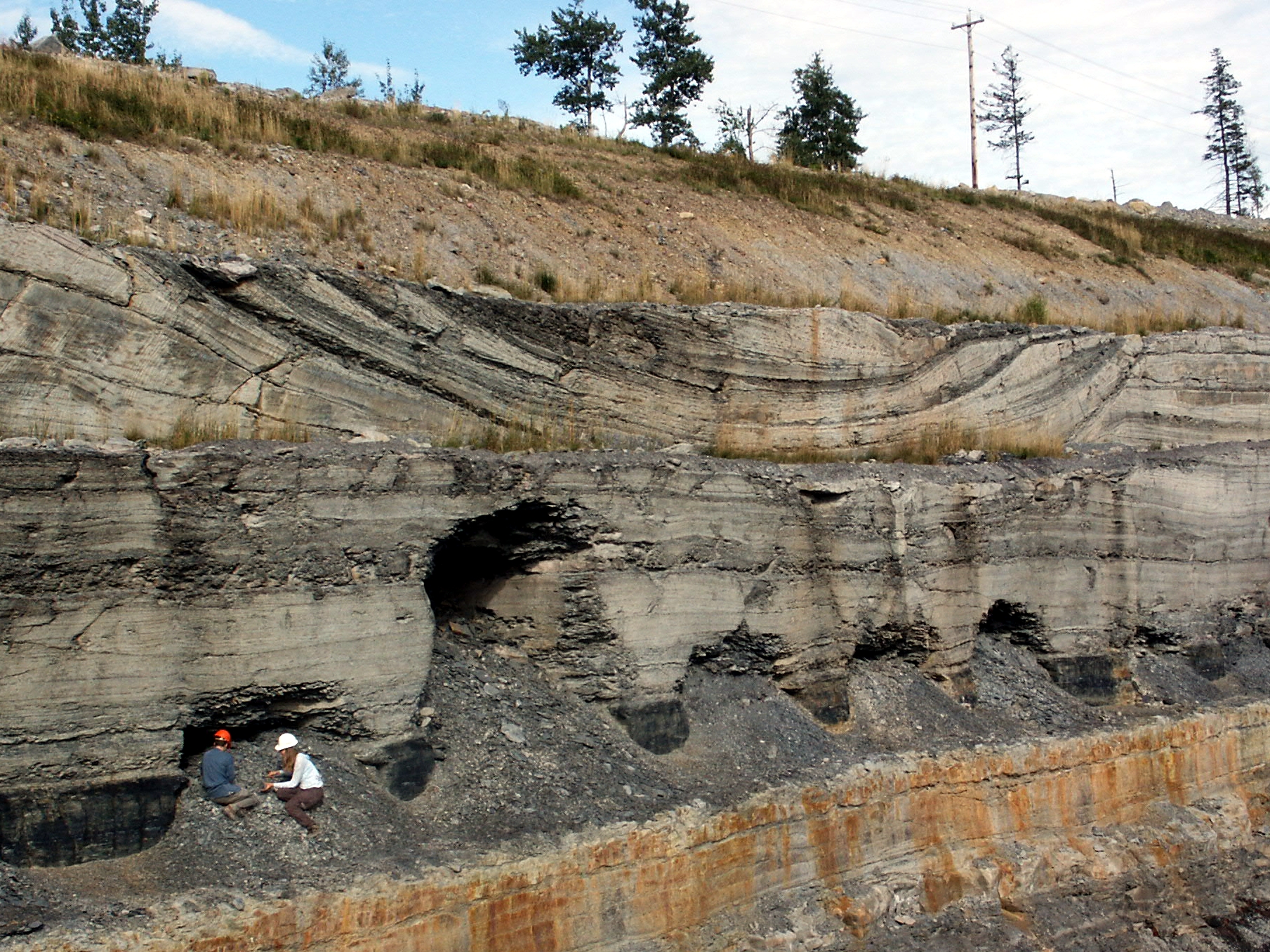
Credit: Michael C. Rygel · CC BY-SA 3.0
Sedimentary rock is rock made from layers of small bits of material that piled up over time and got pressed together. The bits are called sediment. Sediment can be tiny pieces of broken rock, grains of sand, mud, or even the shells and bones of dead animals. Sedimentary rock is one of the three main types of rock on Earth, along with igneous rock and metamorphic rock.
Most sedimentary rock forms in water. Rivers carry mud and sand down to lakes and oceans. The pieces sink to the bottom and settle in flat layers. Over thousands or millions of years, more and more layers pile on top. The weight of all that material squeezes the lower layers. Minerals in the water act like glue, sticking the grains together. Slowly, soft mud turns into solid rock.
There are three main kinds of sedimentary rock. Sandstone is made from grains of sand pressed together. Shale is made from very fine mud. Limestone is made from the shells and skeletons of tiny sea creatures that piled up on the ocean floor. The white cliffs of Dover in England are made of a kind of limestone called chalk, formed from the shells of plankton that lived in a sea more than 65 million years ago, when dinosaurs still walked the Earth.
Sedimentary rock is the only kind of rock that holds fossils. When a plant or animal dies and gets buried in sediment, hard parts like bones, teeth, and shells can be preserved. As the sediment turns to stone, so does the buried creature. Almost everything we know about dinosaurs, ancient fish, and early humans comes from fossils trapped in sedimentary rock.
The layers in sedimentary rock work like pages in a book. The oldest pages are at the bottom, and newer ones lie on top. Geologists read these layers to learn what Earth was like long ago. The walls of the Grand Canyon show nearly two billion years of history this way, with each band of color marking a different time period.
Sedimentary rock covers about three-quarters of all the land on Earth's surface, even though it makes up only a small part of the planet's crust by weight. So when you walk outside and look at a cliff, a riverbank, or a road cut through a hill, you are probably looking at pages from Earth's own history book.
Related
Last updated 2026-04-25