
Ecosystem
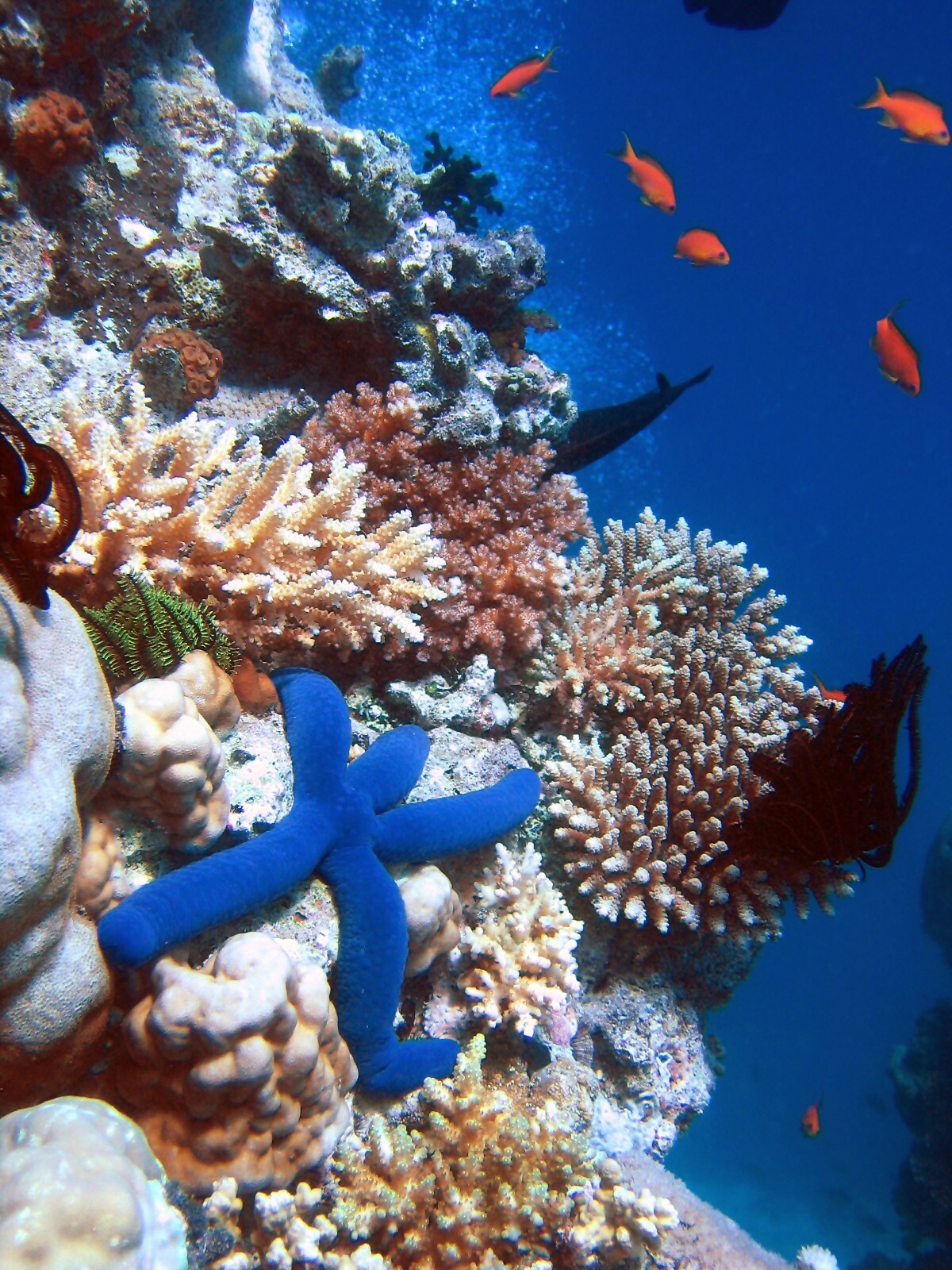
Credit: Richard Ling <wikipedia@rling.com> · CC BY-SA 3.0
An ecosystem is a community of living things and the non-living parts of their surroundings, working together as a system. The living parts include plants, animals, fungi, and tiny things like bacteria. The non-living parts include sunlight, air, water, soil, and temperature. Scientists who study ecosystems are called ecologists.
Ecosystems come in all sizes. A rotting log on the forest floor is an ecosystem. So is a pond, a coral reef, a desert, or the entire Amazon rainforest. Even your mouth is an ecosystem. Hundreds of kinds of bacteria live there, using the warmth and moisture to survive.
Every ecosystem has the same basic jobs to fill. Producers, mostly plants and algae, make food from sunlight through photosynthesis. Consumers eat other living things to get energy. A rabbit eating clover is a consumer. So is a fox eating the rabbit. Decomposers, like mushrooms, worms, and bacteria, break down dead plants and animals. They return nutrients to the soil so producers can use them again.
Energy flows in one direction through an ecosystem. It comes in from the Sun, passes from producers to consumers, and is slowly lost as heat. Nutrients, on the other hand, cycle around and around. The same atoms of carbon and nitrogen have been used by living things for billions of years.
Ecosystems depend on balance. If one part changes, the others feel it. When gray wolves were brought back to Yellowstone National Park in 1995, the elk herds shrank and moved around more. Young trees could finally grow tall. Beavers returned to build dams, and songbirds came back to the new willows. One predator changed the whole landscape.
Humans are part of ecosystems too, and we change them more than any other species. Cutting down forests, polluting rivers, and warming the climate all shift the balance. Some changes happen fast. A new highway can split a forest in half in a single year. Other changes take longer to notice.
Ecosystems are also surprisingly tough. After the 1980 eruption of Mount St. Helens, the blast zone looked completely dead. But within a few years, plants were pushing up through the ash. Insects came back. Then birds and mammals followed. Scientists still study this recovery today.
The next time you walk outside, look at one small patch of ground. The ants, the grass, the soil, and the sunlight hitting it are all part of an ecosystem that has been running long before you showed up.
Related
Last updated 2026-04-23