
Thunder
Credit: Mircea Madau · Public domain
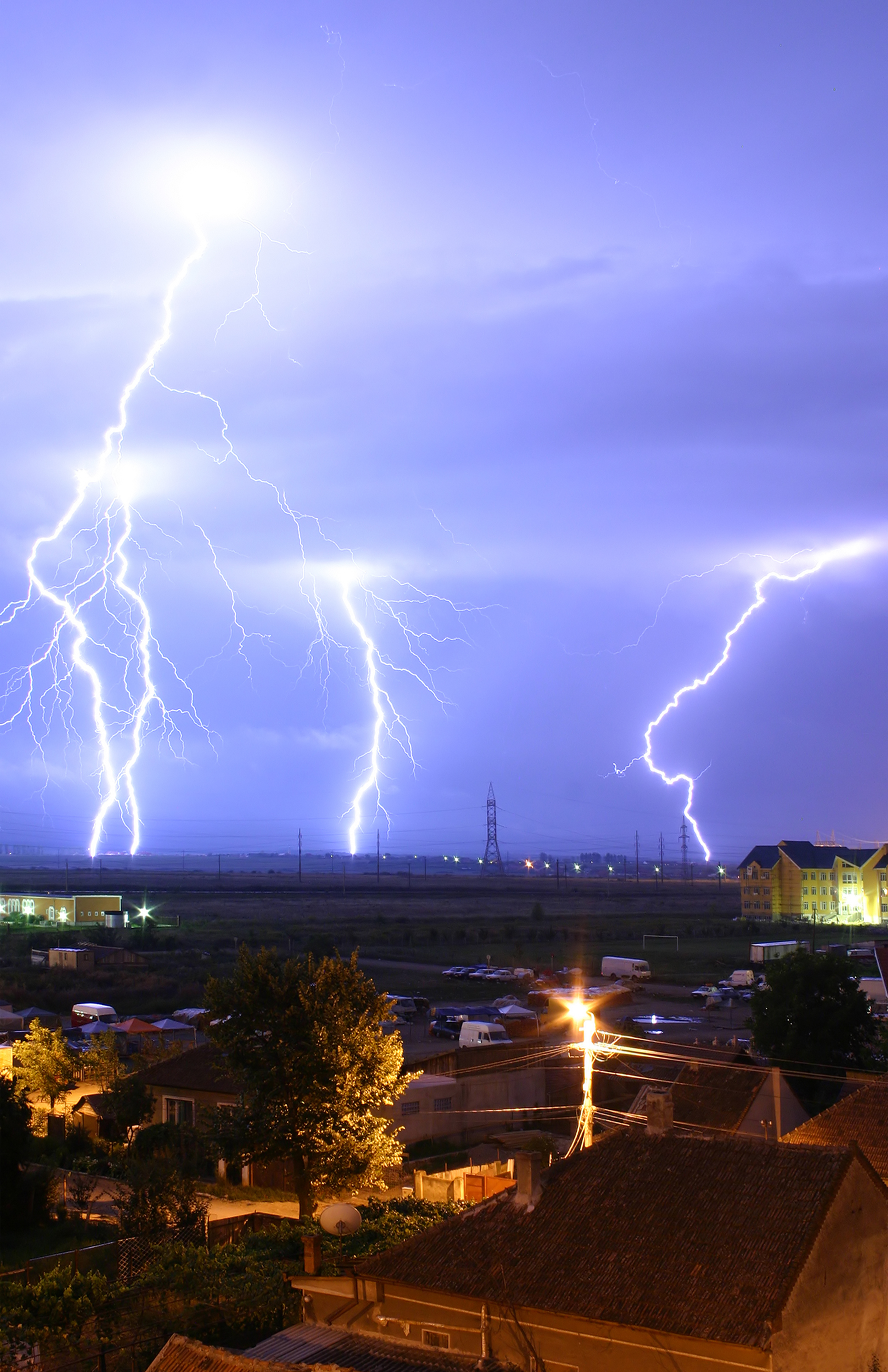
Thunder is the loud sound that follows a flash of lightning during a storm. It is made by the lightning itself, not by the clouds bumping together. When lightning shoots through the sky, it heats the air around it almost instantly. The air explodes outward, and that explosion is what your ears pick up as thunder.
Lightning is incredibly hot. The air inside a bolt can reach 50,000 degrees Fahrenheit. That is about five times hotter than the surface of the Sun. When air heats up that fast, it expands at huge speed. The expanding air pushes against the cooler air around it and creates a shock wave. The shock wave spreads out in every direction. By the time it reaches your ears, it has slowed down into a sound wave: the boom of thunder.
Thunder can sound different from one storm to the next. Sometimes it is a sharp crack. Sometimes it is a long, low rumble that rolls on for many seconds. The sharp cracks usually come from lightning that is close by. The long rumbles come from lightning farther away, or from a long bolt where different parts of the sound reach you at different times.
Light travels much faster than sound. Light moves about 186,000 miles per second. Sound only moves about one mile every five seconds. That is why you almost always see lightning before you hear thunder. You can use this gap to guess how far away a storm is. Count the seconds between the flash and the boom, then divide by five. The answer is about how many miles away the lightning struck.
If you can hear thunder, you are close enough to be hit by lightning. Weather experts use a simple rule: "When thunder roars, go indoors." Lightning can strike up to 10 miles from the storm cloud, sometimes from a sky that still looks blue.
Long ago, many cultures believed thunder was made by gods. The Norse said it came from the god Thor swinging his hammer. The ancient Greeks said Zeus threw thunderbolts when he was angry. Many Native American stories tell of the Thunderbird, a giant bird whose flapping wings shake the sky. Today scientists understand the physics, but the sound still feels powerful.
Related
Last updated 2026-04-25