
Tsunami
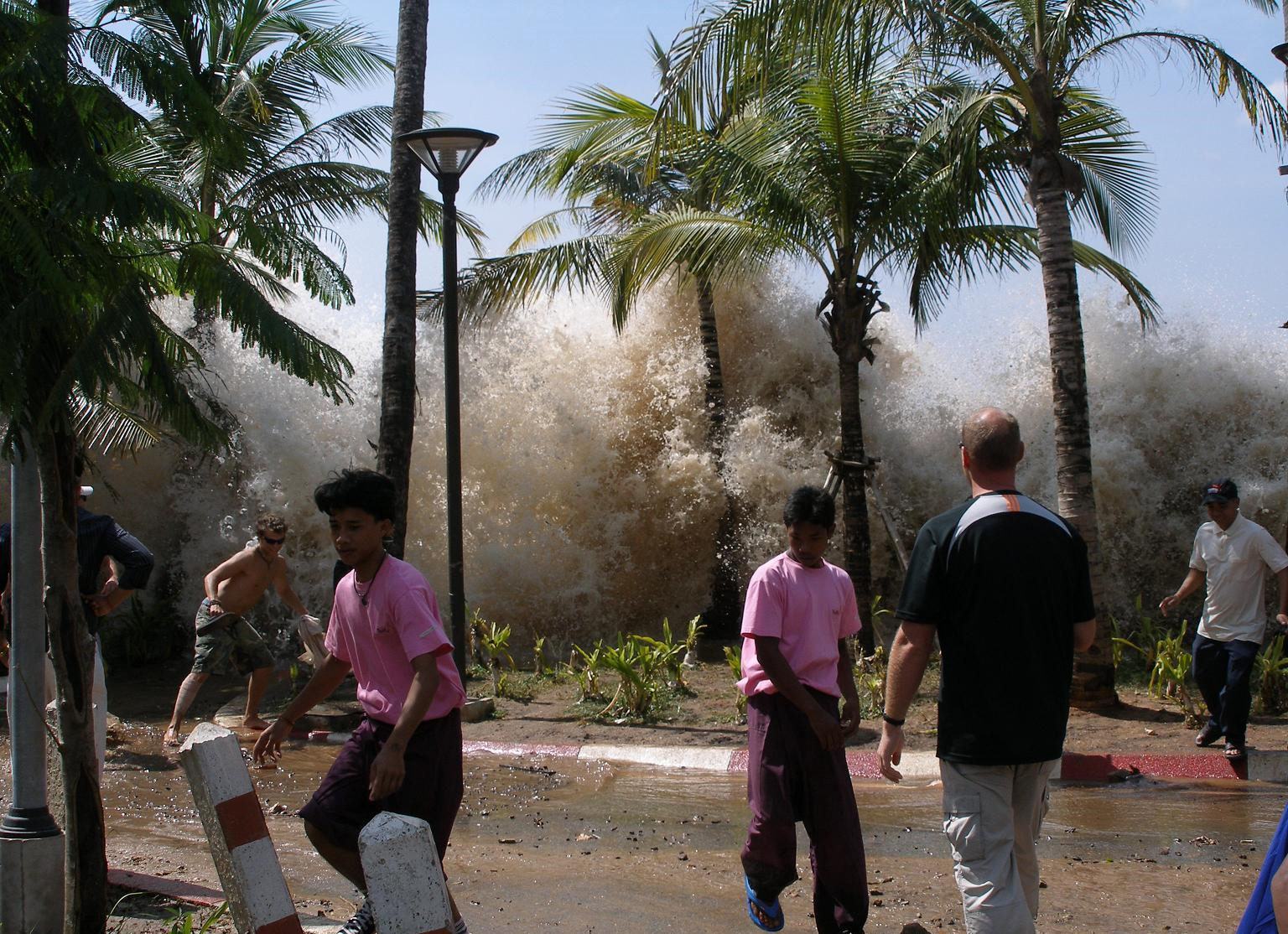
Credit: David Rydevik (email: david.rydevikgmail.com), Stockholm, Sweden. · Public domain
A tsunami is a series of huge ocean waves caused by a sudden movement of the seafloor. The word comes from Japanese and means "harbor wave." Most tsunamis are set off by underwater earthquakes. They can also be triggered by underwater volcanoes, big landslides into the sea, or, very rarely, an asteroid hitting the ocean. Tsunamis are different from regular waves, which are made by wind blowing across the surface.
A tsunami starts when the seafloor shifts. During an underwater earthquake, a huge slab of rock can suddenly drop or rise. This pushes the water above it up or down. The water then spreads out in waves that travel in every direction, like ripples in a pond after a stone falls in. Except this "pond" is an ocean, and the ripples can cross it.
In deep water, a tsunami is hard to notice. The wave may be only a few feet tall, but it stretches across hundreds of miles. A ship sailing over one might not feel a thing. The trouble starts when the wave reaches shallow water near a coast. The bottom of the wave drags on the seafloor and slows down. The top keeps moving fast and piles up. By the time it hits the shore, the wave can be 30, 50, or even 100 feet tall.
A tsunami is not really one wave. It is a train of waves, sometimes spaced 10 minutes or an hour apart. The first wave is often not the biggest. People who run back to the beach after the first wave are sometimes caught by a larger one. Just before a tsunami arrives, the ocean often pulls back from the shore, leaving fish flopping on the bare seafloor. That strange retreat is a warning sign.
Two huge tsunamis shaped recent history. In December 2004, an earthquake near Indonesia sent waves across the Indian Ocean. They killed about 230,000 people in 14 countries. In March 2011, an earthquake off Japan sent a wall of water over coastal towns and damaged the Fukushima nuclear power plant. Both events pushed countries to build better warning systems.
Today, sensors on the seafloor and buoys on the surface watch for tsunamis. When they detect a sudden change, they send signals to warning centers within minutes. Sirens, radios, and phone alerts then tell coastal towns to move to high ground. The waves still come, but with warning, more people get out of their way.
Related
Last updated 2026-04-25