
Lewis and Clark
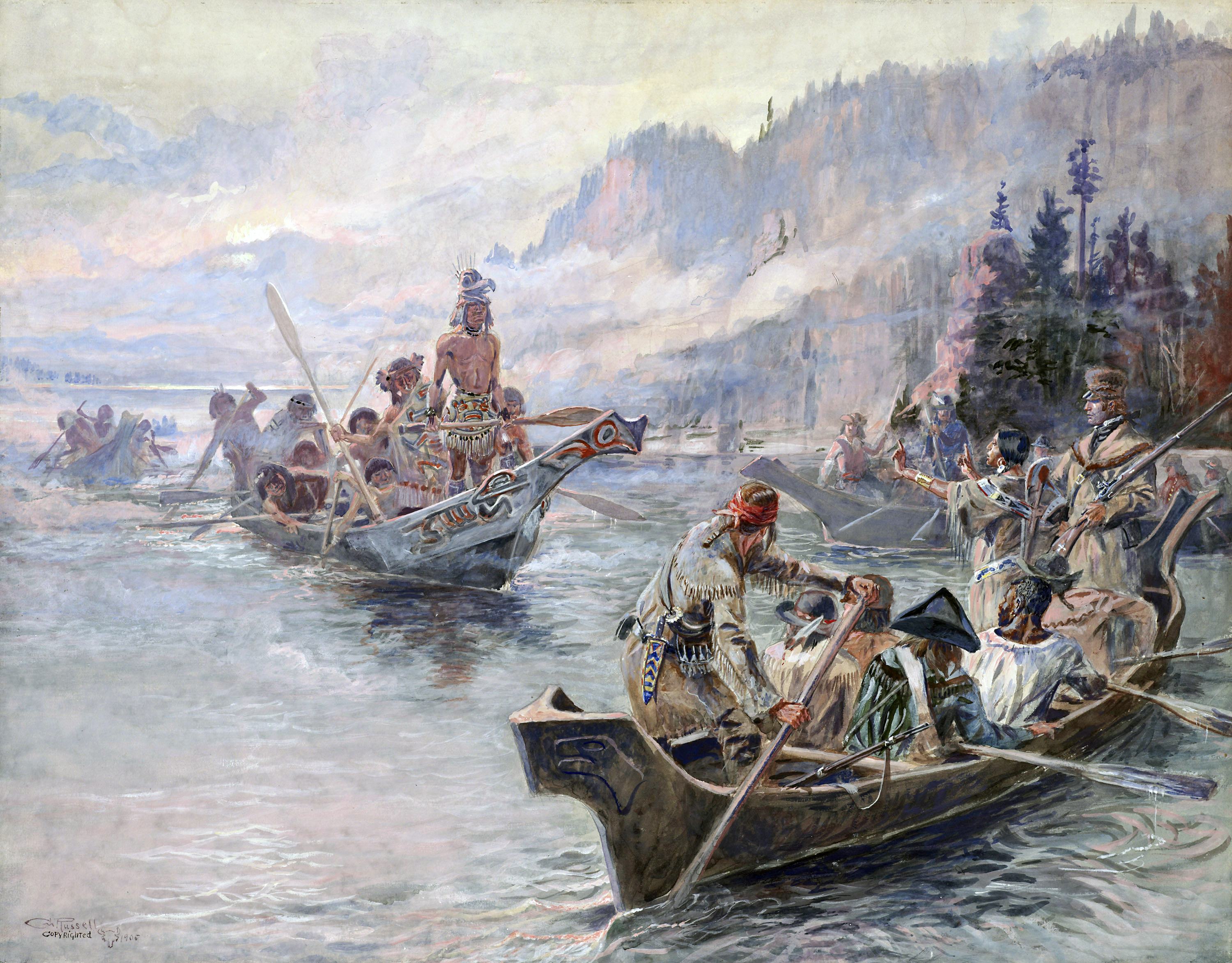
Credit: Charles Marion Russell · Public domain
Lewis and Clark were two American explorers who led a famous journey across the western United States from 1804 to 1806. Meriwether Lewis and William Clark were army officers and friends. President Thomas Jefferson chose them to lead a team called the Corps of Discovery. Their job was to explore the huge area of land the United States had just bought from France in the Louisiana Purchase.
The Louisiana Purchase doubled the size of the country overnight. But almost no one in the United States government knew what was actually out there. Jefferson wanted maps, lists of plants and animals, and friendly meetings with Native American tribes. He also hoped the explorers could find a water route across the continent to the Pacific Ocean.
The team set out from near St. Louis, Missouri in May of 1804. There were about 33 people in the main group. They traveled up the Missouri River in boats, then crossed the Rocky Mountains, then rode rivers down to the Pacific coast. The whole trip covered roughly 8,000 miles. That is more than twice the distance across the United States today.
The expedition would have failed without help from Native American tribes. The travelers stopped to spend the winter with the Mandan people in what is now North Dakota. There they met Sacagawea, a young Shoshone woman, and her French husband. Sacagawea joined the team and became one of its most important members. She helped translate, found food, and guided the group through her home country. Just by being there with her baby son, she also signaled to other tribes that the group came in peace.
Lewis and Clark reached the Pacific Ocean in November of 1805. Clark wrote in his journal, "Ocian in view! O! the joy." They built a fort on the Oregon coast, waited out the wet winter, and then headed home. They arrived back in St. Louis in September of 1806. Many people had assumed they were dead.
The journey changed the country. Lewis and Clark brought back detailed maps, journals, and samples that taught Americans about the West for the first time. But the expedition also opened the door to settlers, traders, and soldiers moving into lands where Native nations had lived for thousands of years. For the tribes who lived there, the changes that followed were often disastrous.
Today the route Lewis and Clark traveled is a national trail. You can still hike or drive along parts of it, past the same rivers and mountains they wrote about in their journals.
Related
Last updated 2026-04-26