
Lewis and Clark Expedition
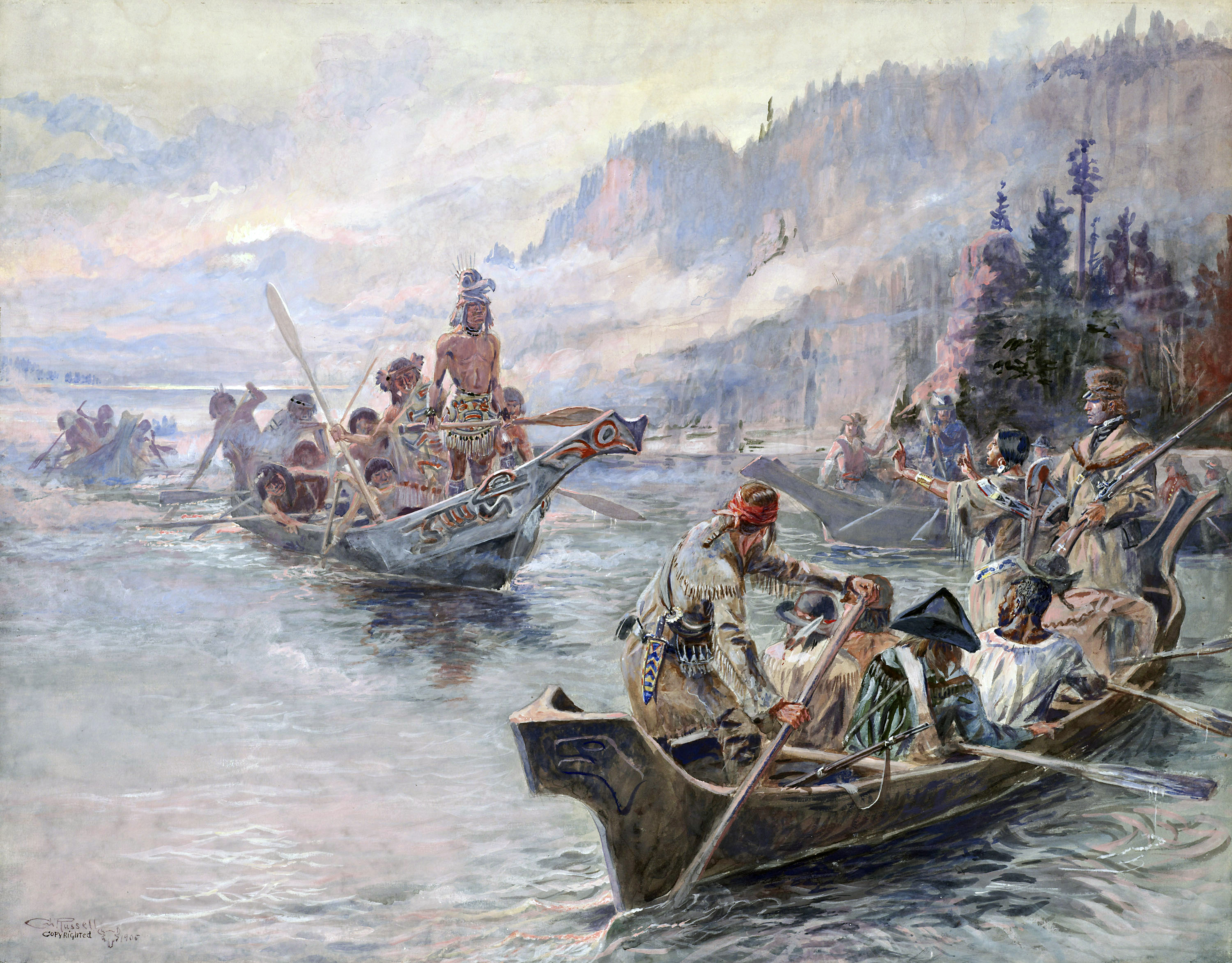
Credit: Charles Marion Russell · Public domain
The Lewis and Clark Expedition was a journey across western North America that took place from 1804 to 1806. President Thomas Jefferson sent the trip to explore the huge piece of land the United States had just bought from France, called the Louisiana Purchase. The expedition was led by two army officers, Meriwether Lewis and William Clark. Their group was called the Corps of Discovery.
Jefferson wanted answers to many questions. What did the new land look like? What plants and animals lived there? Which Native American nations lived on it? And was there a river route that could carry boats all the way to the Pacific Ocean? Jefferson hoped the expedition would find one. There was no such route, but the explorers did not know that yet.
The Corps of Discovery set out from near St. Louis in May 1804. About 33 people made the full trip. They traveled up the Missouri River in boats, paddling and pulling against the current. They spent the first winter in what is now North Dakota, near villages of the Mandan and Hidatsa people. There they met a young Shoshone woman named Sacagawea. She joined the expedition with her husband and her newborn son. She helped the group talk with other tribes and find food. Her presence also signaled to strangers that the group came in peace, since war parties did not travel with women and babies.
The journey covered more than 8,000 miles round trip, longer than the distance across the United States and back. The group crossed the Rocky Mountains on horses, nearly starving in deep snow. They reached the Pacific Ocean in November 1805. Clark wrote in his journal, "Ocian in view! O! the joy."
Lewis and Clark kept careful notebooks the whole way. They drew maps and described 178 plants and 122 animals that were new to American science, including the grizzly bear and the prairie dog. They met with dozens of Native American nations. Some meetings were friendly trades; others were tense. The expedition only lost one man during the whole trip.
The group returned to St. Louis in September 1806. Most people had given them up for dead. Their maps and journals helped open the West to American settlers. That had hard consequences for the Native peoples already living there, who would lose much of their land in the years that followed.
Today you can follow the Lewis and Clark National Historic Trail across 11 states. It traces the route the Corps of Discovery walked, paddled, and rode more than 200 years ago.
Related
Last updated 2026-04-26