
Westward Expansion
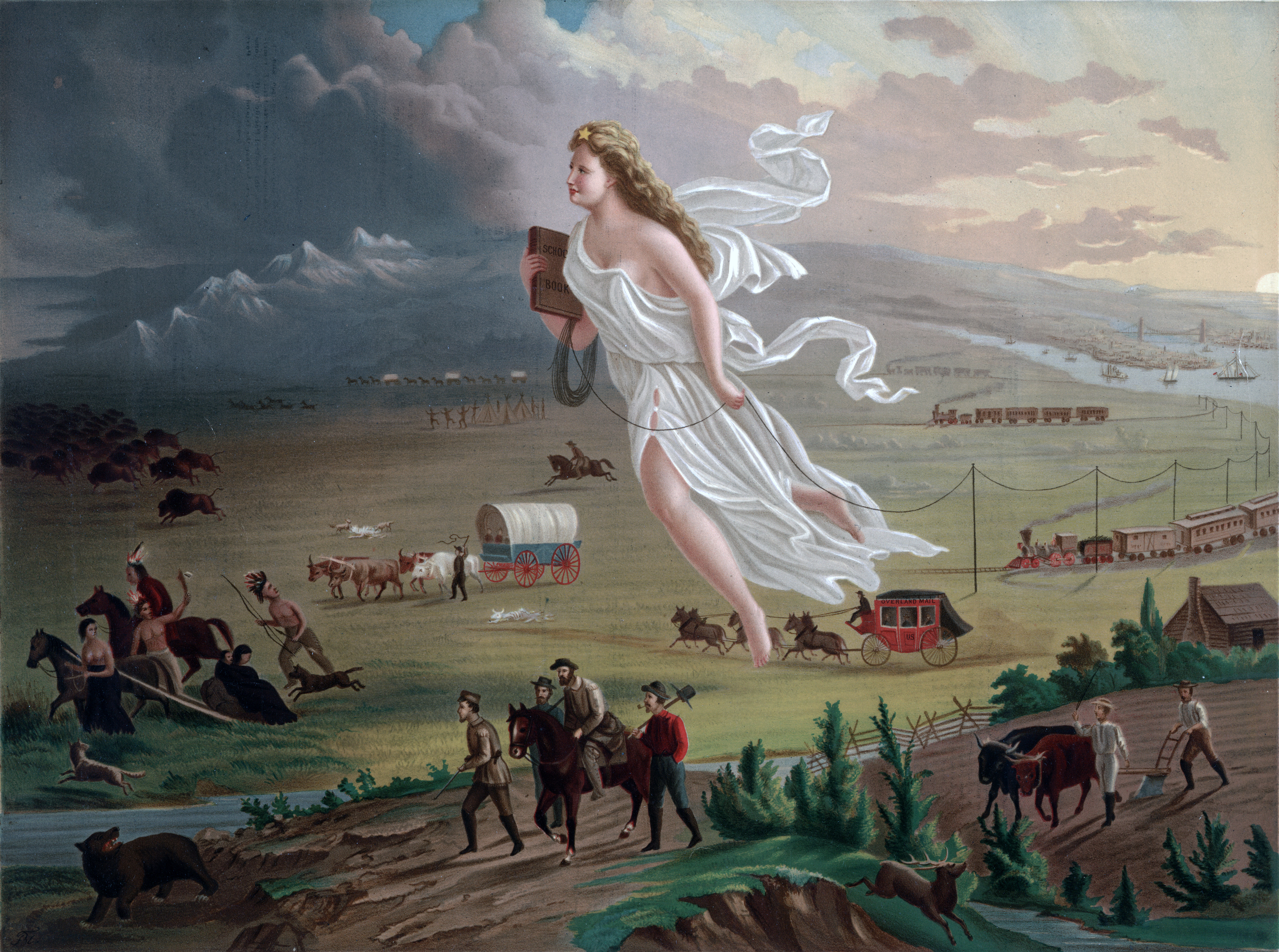
Credit: John Gast · Public domain
Westward Expansion was the movement of settlers from the eastern United States into lands farther and farther west. It happened mostly during the 1800s. When the country began in 1776, the United States ended at the Mississippi River. By 1900, it stretched all the way to the Pacific Ocean. The country had grown to about three times its original size.
The first big jump west came in 1803. President Thomas Jefferson bought a huge piece of land from France called the Louisiana Purchase. It cost about 15 million dollars. Overnight, the United States doubled in size. Jefferson sent two explorers, Meriwether Lewis and William Clark, to map the new land. A young Shoshone woman named Sacagawea helped guide them.
After that, settlers kept pushing west. They wanted cheap farmland, gold, fur, or a fresh start. Many traveled in covered wagons along long routes like the Oregon Trail and the Santa Fe Trail. The Oregon Trail stretched 2,000 miles from Missouri to Oregon. A wagon trip took four to six months. About one in ten travelers died along the way from disease, accidents, or harsh weather.
In 1848, gold was discovered in California. Within a year, more than 80,000 people rushed there to dig for it. This was called the California Gold Rush. Most miners never got rich. But the rush turned California into a state in just two years.
Many Americans believed in an idea called Manifest Destiny. This was the belief that the United States was meant by God to stretch from coast to coast. The idea pushed the country into wars and treaties to take more land. The Mexican-American War, fought from 1846 to 1848, ended with Mexico giving up a giant area that today includes California, Nevada, Utah, Arizona, and parts of other states.
For Native Americans, Westward Expansion was a disaster. Settlers took over lands where tribes had lived for thousands of years. The U.S. government forced many tribes onto small areas called reservations. In the 1830s, the Cherokee, Creek, Choctaw, Chickasaw, and Seminole were forced to march hundreds of miles west. Thousands died on the journey, which is now called the Trail of Tears. Hunters also nearly wiped out the bison, the animal Plains tribes depended on for food.
By 1869, the Transcontinental Railroad linked the East and West Coasts by rail. A trip that once took six months by wagon now took about a week. The frontier, as settlers had known it, was almost gone.
Related
Last updated 2026-04-26