
Mark Twain
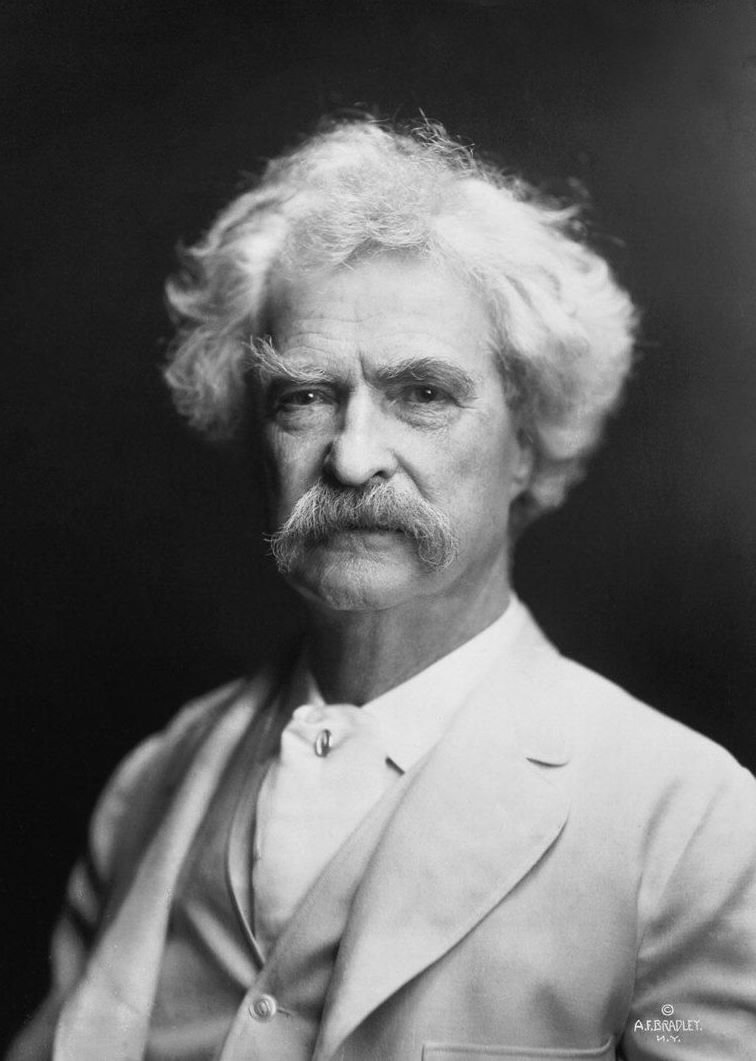
Credit: A.F. Bradley, New York · Public domain
Mark Twain was an American writer who lived from 1835 to 1910. He is best known for two novels, The Adventures of Tom Sawyer and Adventures of Huckleberry Finn. Many people call him the father of American literature. He was one of the first famous writers to capture the way real Americans actually talked.
His real name was Samuel Langhorne Clemens. He grew up in Hannibal, Missouri, a small town on the Mississippi River. As a boy he watched steamboats pull up to the docks. He listened to the stories of sailors, traders, and enslaved workers. Those memories filled his books for the rest of his life.
When Sam was 21, he became a steamboat pilot on the Mississippi. River workers shouted "mark twain" to mean the water was two fathoms deep, which was 12 feet, just safe enough for a boat to pass. He liked the sound of the phrase and later used it as his pen name.
The Civil War shut down river travel in 1861. Sam headed west to Nevada and California. He tried mining for silver and failed. Then he started writing funny stories for newspapers, and they spread across the country. His first hit was a tall tale about a jumping frog. Soon he was traveling the world and giving lectures to packed halls.
He published Tom Sawyer in 1876 and Huckleberry Finn in 1884. Both books are set along the Mississippi he remembered from his childhood. Huckleberry Finn tells the story of a poor white boy and a man named Jim, who has escaped from slavery, as they raft down the river together. The book attacks slavery and racism, but it also uses ugly language from the time period. Schools and libraries still argue today about how to teach it. Some want it removed. Others say students should read it and discuss why those words hurt.
Twain was famous for his sharp jokes about politics, religion, and human nature. "The secret of getting ahead," he wrote, "is getting started." He poured his earnings into bad inventions and lost almost everything. To pay his debts, he went on a worldwide speaking tour in his sixties.
His later years were sad. Three of his four children died before he did, and so did his wife. He kept writing anyway, often about how foolish people could be. When he died in 1910, newspapers around the world mourned him as America's greatest humorist.
Related
Last updated 2026-04-26