
Death Valley
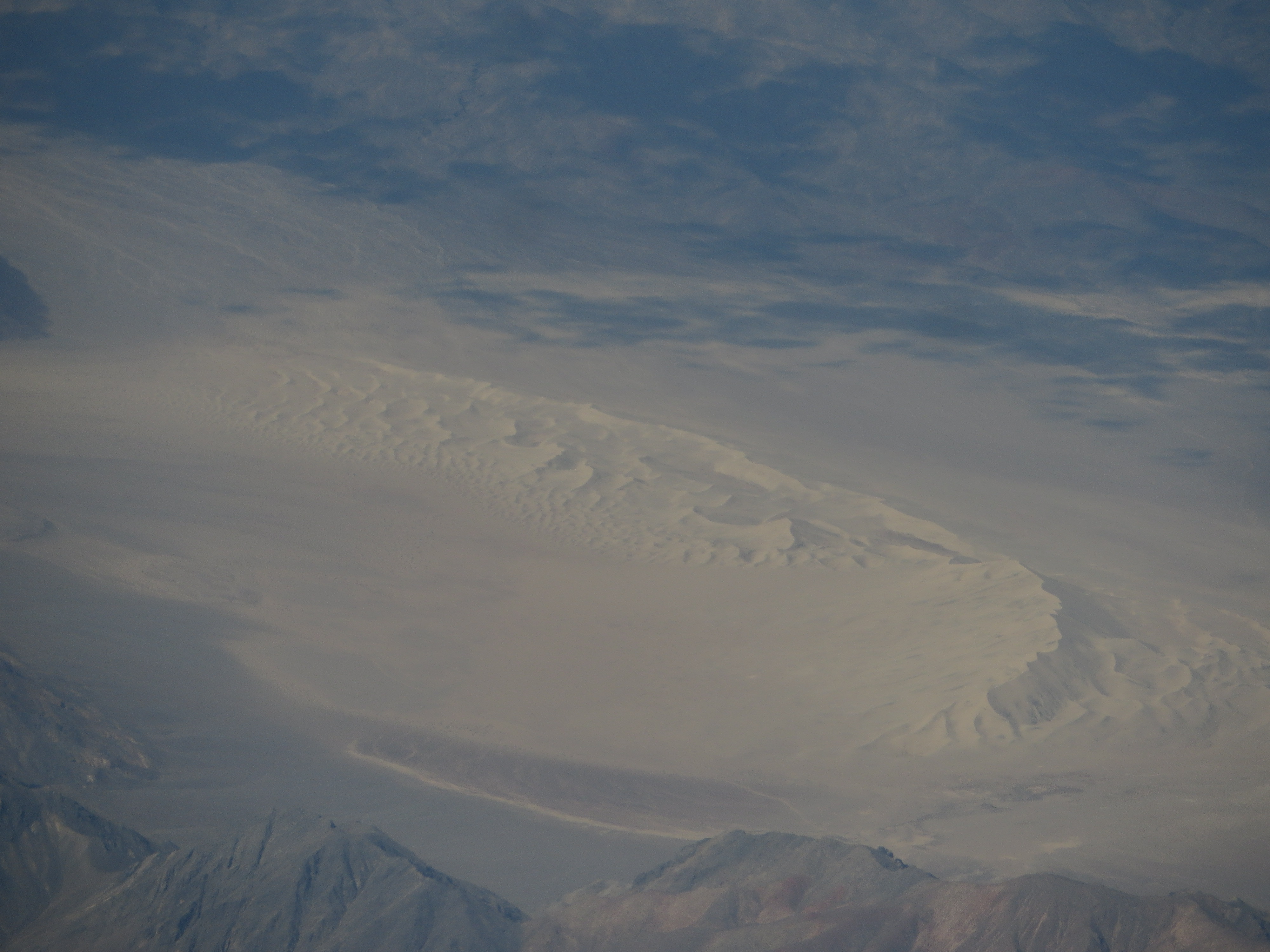
Credit: Ken Lund from Reno, Nevada, USA · CC BY-SA 2.0
Death Valley is a long, deep desert valley in eastern California, near the border with Nevada. It sits inside Death Valley National Park, the largest national park in the lower 48 states. The valley is famous for three things: extreme heat, extreme dryness, and the lowest elevation in all of North America. A spot called Badwater Basin sits 282 feet below sea level. If the ocean could reach it, the water there would be taller than a 25-story building.
The valley got its grim name in 1849. A group of pioneers trying to reach the California gold fields took a shortcut through the valley. They got stuck for weeks. Only one of them died, but as the survivors finally climbed out, one of them looked back and said, "Goodbye, Death Valley." The name stuck.
Death Valley is hot because of its shape. It is a narrow basin squeezed between tall mountain ranges. Hot air sinks into the valley and gets trapped. The rocky ground soaks up the sun all day and radiates heat back into the air all night. Summer temperatures above 120 degrees Fahrenheit are normal. The ground itself can get hot enough to cook an egg, and park rangers ask visitors not to try.
It is also one of the driest places in North America. The valley gets about two inches of rain per year. Some years it gets none. The mountains to the west block wet ocean air, so by the time clouds reach the valley, they have dropped almost all of their rain.
Even so, Death Valley is not dead. Coyotes, bighorn sheep, kit foxes, roadrunners, and dozens of lizard species live there. A tiny fish called the pupfish survives in a few warm, salty springs, holding on in pools left over from a giant ice-age lake that dried up thousands of years ago. Every few years, a wet winter triggers a "super bloom," when millions of wildflowers cover the valley floor in yellow, purple, and pink.
The valley also has a long mystery. In a dry lake bed called Racetrack Playa, large rocks slide across the ground on their own, leaving long tracks behind them. For almost a hundred years, nobody knew how. Scientists finally solved it in 2014. On rare cold nights, a thin sheet of ice forms over the mud, and gentle winds push the rocks along while the ice floats. The rocks had been sailing the whole time.
Related
Last updated 2026-04-23